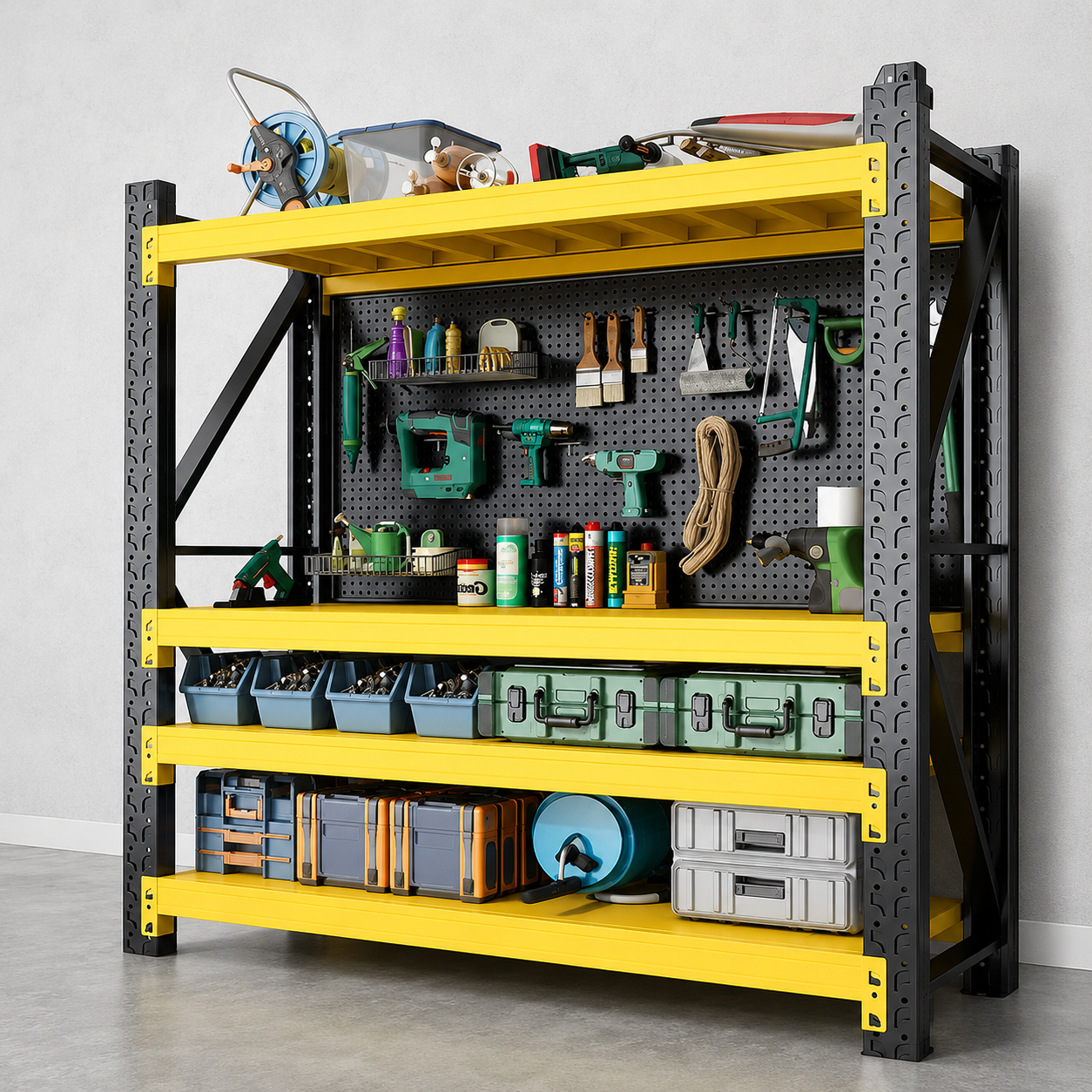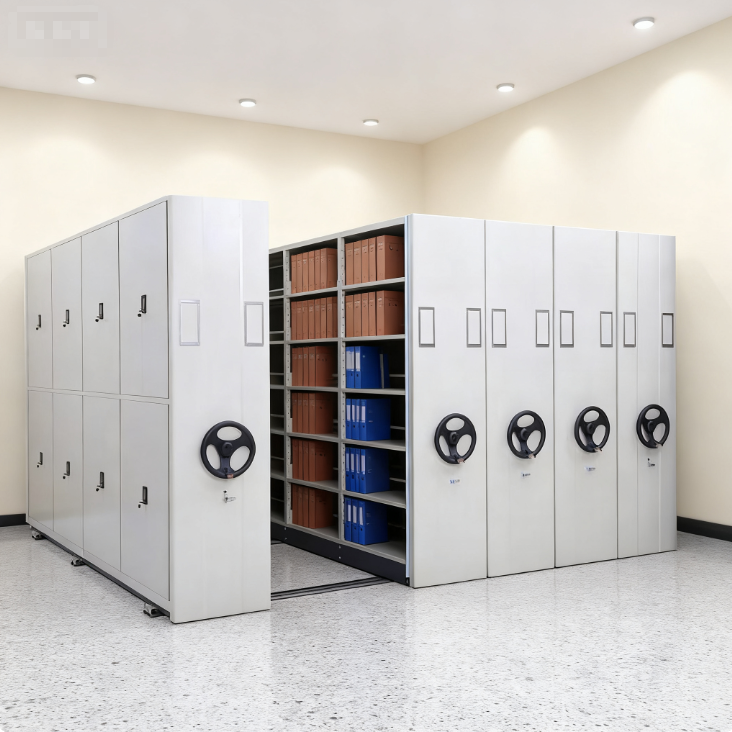

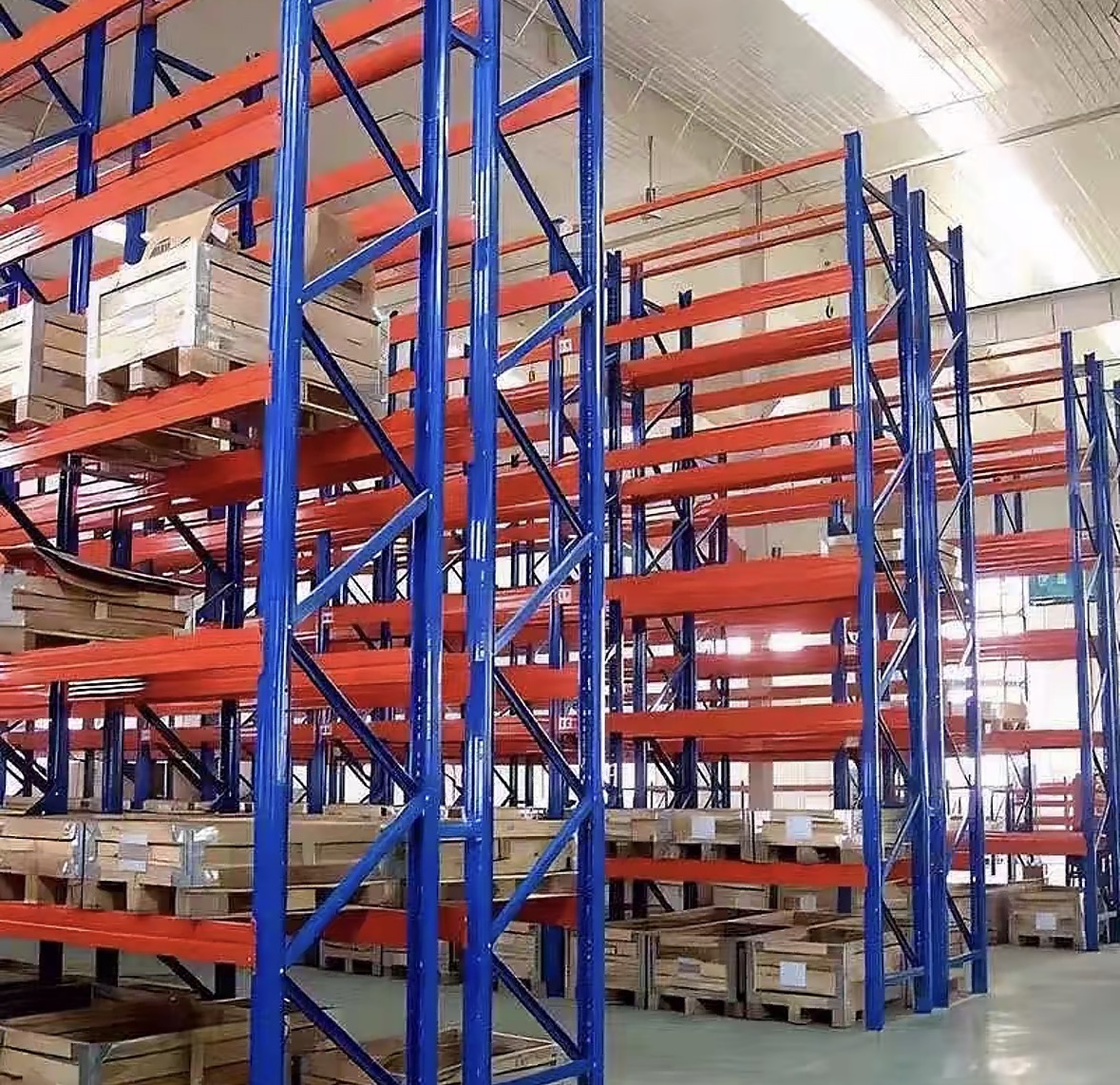
A High-Density Mobile Shelving System is designed to solve one of the most common storage problems: limited floor space. Instead of using multiple fixed aisles like traditional shelving, mobile shelving units move along tracks and create only one operating aisle when needed. This allows archives, offices, libraries, museums, warehouses and industrial storage rooms to store more items in the same space.
In simple terms, if your storage area is full, but moving to a larger building is too expensive, a mobile storage system can help increase storage density, improve file organization and reduce wasted aisle space.
According to Grand View Research, the global warehouse racking market was valued at USD 9.71 billion in 2024 and is projected to reach USD 12.41 billion by 2030, growing at a CAGR of 4.2% from 2025 to 2030. This reflects a clear trend: businesses are investing more in structured, space-saving and efficient storage systems.
Why High-Density Mobile Shelving System Demand Is Growing
1. Space Costs Are Increasing
Many offices, government departments, hospitals, universities and factories are running out of storage space. However, expanding a building or renting a larger warehouse can be costly. A High-Density Mobile Shelving System helps users make better use of the existing floor area by reducing unnecessary fixed aisles.
For example, in a traditional shelving layout, every row usually requires an aisle. In a mobile shelving layout, rows are mounted on mobile bases, and users open only the aisle they need. This makes the system ideal for:
Archive rooms
File storage centers
Libraries
Museums
Medical record rooms
Office storage areas
Industrial spare parts rooms
Warehouse inventory zones
2. Digital and Physical Records Still Coexist
Many organizations are moving toward digital documents, but physical records are still widely used. Legal files, medical records, financial documents, government archives, contracts and technical drawings often need to be stored for years.
This creates a practical challenge: companies need to protect important documents without wasting expensive office or warehouse space. A mobile storage system offers a balance between high-density storage, controlled access and organized classification.
3. Warehouse and Supply Chain Investment Is Rising
MHI and Deloitte’s 2025 industry report found that 55% of supply chain leaders are increasing investment in supply chain technology and innovation, while 60% plan to invest more than USD 1 million. This shows that storage infrastructure is becoming a strategic investment, not just a basic facility cost.
At the same time, Gartner predicts that by 2028, 80% of warehouses and distribution centers will deploy some form of warehouse automation equipment. Even though mobile shelving is often manually or electrically operated, the trend toward organized, track-based and space-efficient storage aligns with the broader direction of smarter storage management.
What Is a High-Density Mobile Shelving System?
A High-Density Mobile Shelving System is a storage system in which shelving units are installed on mobile bases that move along floor-mounted tracks. Users can open an aisle by turning a hand wheel, pressing a button or using an electric control system, depending on the design.
A standard system usually includes:
Mobile bases
Track system
Upright frames
Shelf panels
Side panels
Back panels or mesh panels
Hand wheel or electric drive system
Anti-tip device
Locking system
Safety protection device
Label holders and indexing accessories
Compared with static shelving, mobile shelving uses fewer aisles and more storage rows. This is the key reason it can improve space utilization.
Types of Mobile Storage System
Different projects require different mobile shelving structures. The best option depends on room size, load requirement, operation frequency and budget.
| System Type | Best For | Main Advantage | Buying Tip |
|---|---|---|---|
| Manual Mobile Shelving | Small archive rooms, office files | Simple operation, lower cost | Suitable for light to medium loads |
| Mechanical Assist Mobile Shelving | Medium archive rooms, libraries | Easier movement with hand wheel | Good balance of cost and efficiency |
| Electric Mobile Shelving | Large archives, museums, institutions | Button control, safer and easier operation | Best for frequent access and large systems |
| Mobile Storage System with Lock | Confidential files, medical records | Better access control | Choose central locking or row locking |
| Heavy-Duty Mobile Shelving | Industrial parts, tools, materials | Higher load capacity | Requires professional floor and load assessment |
| Compact Archive Shelving | Government, finance, legal files | High-density document storage | Best for long-term file preservation |
For most office and archive projects, mechanical assist mobile shelving is a practical choice. For large-scale institutions or high-frequency storage rooms, electric mobile shelving may provide better user experience and safety control.
High-Density Mobile Shelving System vs Traditional Shelving
Traditional shelving is simple and affordable, but it can waste floor space because each row needs a fixed aisle. Mobile shelving solves this problem by allowing shelving rows to move.
Key Differences
Traditional shelving: every row has a fixed aisle
Mobile shelving: one movable aisle serves multiple rows
Traditional shelving: lower storage density
Mobile shelving: higher storage capacity in the same room
Traditional shelving: easier to install
Mobile shelving: requires track design and floor planning
Traditional shelving: lower upfront cost
Mobile shelving: better long-term space value
If the storage area is small but the number of files or items is increasing, a High-Density Mobile Shelving System is usually more suitable than standard shelving.
How to Choose the Right High-Density Mobile Shelving System
1. Measure the Room Accurately
Before designing a mobile storage system, measure the full room carefully:
Room length, width and height
Door position
Window position
Column position
Ceiling height
Floor levelness
Lighting position
Fire equipment location
Air conditioning or ventilation position
Mobile shelving design is highly dependent on room layout. A small measurement error may affect track installation, aisle width and shelf quantity.
2. Confirm Stored Item Size
Different items require different shelf depth, height and load capacity. Before ordering, confirm:
File box size
Archive carton size
Book size
Storage bin size
Tool or spare part dimensions
Maximum item weight
Required shelf levels
For archive rooms, shelf height is often designed according to file box dimensions. For industrial storage, load capacity and shelf reinforcement are more important.
3. Check Floor Load Capacity
This is one of the most important technical steps. A High-Density Mobile Shelving System can store many items in a compact area, which means the load per square meter may become much higher than traditional shelving.
Before installation, buyers should check:
Concrete floor thickness
Floor flatness
Floor load-bearing capacity
Whether the system is installed on ground floor or upper floor
Whether floor reinforcement is required
Track fixing method
For large archive centers or heavy-duty systems, professional floor assessment is strongly recommended.
4. Select Manual or Electric Operation
Manual mobile shelving is suitable for smaller rooms and lower budgets. Electric mobile shelving is better for larger rooms, frequent use and users who require easier operation.
When choosing between manual and electric systems, consider:
Number of users
Access frequency
Shelf length
Total system weight
Budget
Safety requirements
Maintenance ability
Electric systems may include sensors, buttons, emergency stop functions and automatic lighting options, making them suitable for high-standard projects.
Safety Features Buyers Should Not Ignore
A reliable mobile storage system should include safety features, especially when used in public institutions, libraries, hospitals or large archive centers.
Important safety features include:
Anti-tip structure
Mechanical or electric locking system
Safety brake
Track end stopper
Anti-slip hand wheel
Emergency stop button for electric systems
Aisle safety sensor
Overload protection
Stable base frame design
Safety is not only about product quality. It also depends on correct installation, user training and regular inspection.
Industry Insight: The Cheapest System May Not Be the Best Choice
Many buyers compare only unit price, but mobile shelving is a project-based product. The real cost depends on design accuracy, steel thickness, track quality, load capacity, installation method and after-sales support.
Low-cost systems may create problems such as:
Shelves shaking during movement
Track deformation
Difficult hand wheel operation
Poor locking performance
Uneven movement
Paint peeling
Weak load capacity
Shorter service life
A professional High-Density Mobile Shelving System should provide smooth movement, stable structure, accurate alignment and long-term durability. For B2B buyers, project contractors and distributors, quality consistency is more important than the lowest price.
Best Applications for High-Density Mobile Shelving System
A High-Density Mobile Shelving System is suitable for many industries:
Government archive storage
Hospital medical record rooms
University libraries
Museum collection storage
Corporate document centers
Legal and financial file rooms
Factory spare parts rooms
Laboratory sample storage
Office supply storage
Warehouse small-item storage
In these environments, the main goal is not only to store more items, but also to keep them organized, protected and easy to retrieve.
How KAYOU Supports Mobile Shelving Projects
For international buyers, a mobile shelving project requires more than product selection. It requires accurate planning and reliable manufacturing.
KAYOU can support customers with:
Customized layout design
Shelf size recommendation
Load capacity calculation
Manual or electric system options
Track and base design
Color customization
OEM / ODM production
Bulk order support
Packaging and shipping planning
Installation guidance
Whether the project is for an archive room, library, office storage area or industrial parts room, the system should be designed according to real room dimensions and storage requirements.
Conclusion: High-Density Mobile Shelving System Is a Smart Space Investment
A High-Density Mobile Shelving System helps organizations solve storage problems without immediately expanding floor area. By reducing fixed aisles and creating a movable access aisle, it can improve storage density, organization, safety and long-term space efficiency.
As warehouse costs rise, physical records continue to exist and supply chain investment increases, the mobile storage system is becoming a practical solution for archives, offices, libraries, museums and industrial storage rooms.
For the best result, buyers should not only compare price. They should evaluate room layout, floor load, shelf size, operation method, safety features and supplier experience.
FAQ
1. What is a High-Density Mobile Shelving System?
A High-Density Mobile Shelving System is a storage system where shelving units move on tracks to create a movable aisle, allowing more items to be stored in the same floor space.
2. What is a mobile storage system used for?
A mobile storage system is used for archives, libraries, offices, hospitals, museums, warehouses and industrial storage areas where space-saving storage is required.
3. Is mobile shelving better than traditional shelving?
Mobile shelving is better when space is limited and high-density storage is needed. Traditional shelving is simpler and lower cost, but it uses more fixed aisles.
4. Can a High-Density Mobile Shelving System be customized?
Yes. Shelf height, depth, width, number of rows, track length, color, locking system and operation method can be customized.
5. Manual or electric mobile shelving: which is better?
Manual mobile shelving is suitable for smaller projects and lower budgets. Electric mobile shelving is better for large systems, frequent use and higher safety requirements.
6. Does mobile shelving require floor tracks?
Yes. Most high-density mobile shelving systems use floor-mounted tracks to guide smooth and stable movement.
7. What should be checked before installation?
Buyers should check room dimensions, floor load capacity, stored item size, aisle width, fire access, door position and installation conditions.
8. How can I get a mobile shelving layout design?
You can provide room dimensions, ceiling height, stored item size, load requirement and preferred operation method. KAYOU can help recommend a suitable mobile storage system layout.
Looking for a Customized High-Density Mobile Shelving System?
Looking for a customized High-Density Mobile Shelving System for your archive room, office, library or industrial storage project? Contact KAYOU to get a professional mobile storage system layout, load capacity recommendation and factory-direct solution.
Contact Us