
What Does Steel Shelving Really Cost? A Factory Owner Tells You
Ask five factories for the price of the “same” steel shelving unit and you may receive five different quotations. But are they based on the same steel weight, load capacity, surface treatment, packaging and delivery terms?
As a steel shelving manufacturer, we see this confusion every week. The honest answer is that a rack does not have one universal cost. Its real cost is created by the specification, production process, order quantity and delivery method. This guide opens the factory cost sheet so buyers can understand what they are actually paying for.
The Factory Owner's Cost Formula
At the factory level, a practical formula is:
The quotation also includes a margin and allowances for small runs, special tooling or changing input prices.
For a typical powder-coated, knock-down steel shelving order, the main shares of an EXW quotation often fall within these broad planning ranges:
| Cost item | Illustrative share of EXW price | What changes it |
|---|---|---|
| Steel and production loss | 45–65% | Net weight, grade, thickness and material utilization |
| Cutting, punching, forming and welding | 10–18% | Part complexity, tolerances and automation |
| Pretreatment and powder coating | 5–10% | Finish specification, color and environment |
| Fasteners and accessories | 3–8% | Bracing, feet, safety pins, decks and labels |
| Inspection and export packaging | 4–10% | Test scope, carton strength, pallets and protection |
| Factory overhead and service | 5–12% | Engineering, tooling, order size and documentation |
Important: These ranges are not a price list and should not be added as fixed percentages. A five-tier shelving unit and a seismic pallet-racking project have different cost structures. The table simply explains why “steel price × product weight” is not the final factory price.
1. Steel Weight Is Usually the Largest Cost—but Thickness Alone Is Not Enough
Steel is normally the biggest material cost. Buyers therefore ask about upright, beam and shelf-panel thickness, and they should. But thickness is only one part of the calculation.
The factory must also consider:
Total net steel weight
Upright and beam cross-sections
Shelf width and depth
Number of shelf levels
Bracing and reinforcement
Hole pattern and connection design
Coil width, nesting efficiency and offcuts
Imagine two racks with the same outside dimensions. One weighs 55 kg and the other 72 kg. With the same steel grade and input price, the second starts with 17 kg more material. A supplier can also reduce weight through better profiles and reinforcement, so a lighter design is not automatically unsafe. The finished structure must meet the confirmed load requirement.
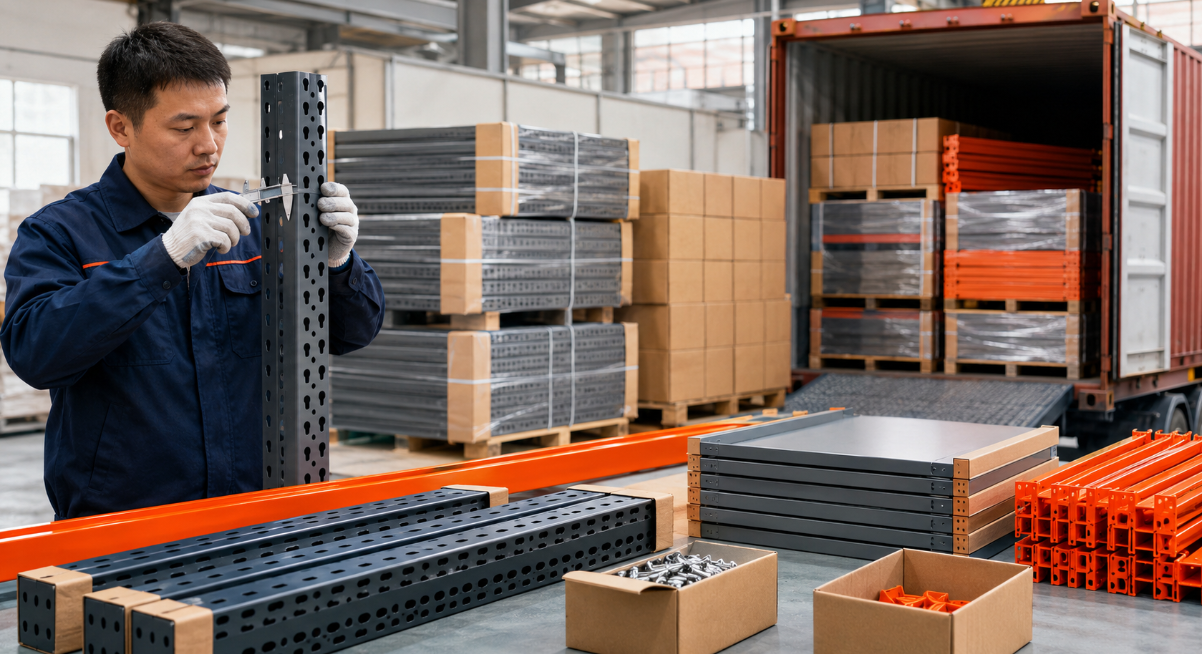
This is how KAYOU configures its medium-duty steel shelving: the upright, beam, shelf panel and reinforcement are selected together for a specified load of 100–500 kg per level under uniformly distributed load conditions. We can also measure and confirm actual material thickness before shipment. That is more meaningful than quoting one thickness without explaining the complete structure.
2. Load Capacity Is an Engineering Cost, Not a Marketing Number
A 200 kg shelf and a 500 kg shelf should not have identical structures. Increasing capacity may require deeper beam profiles, additional bends, thicker steel, more shelf-panel ribs or extra cross supports. A wider shelf span also costs more to reinforce than a narrow one carrying the same load.
Buyers should confirm whether the rating means:
Load per shelf level or load for the entire rack
Uniformly distributed load (UDL) or concentrated load
Maximum working load or laboratory failure load
Load with or without decking and accessories
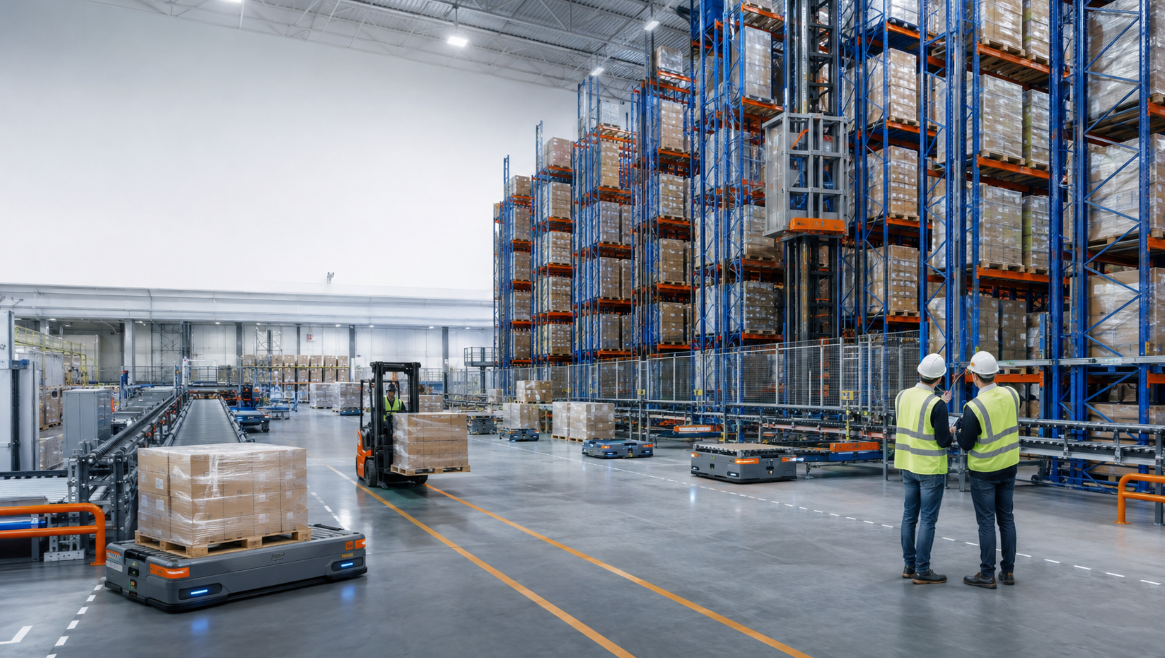
For pallet storage, the cost calculation becomes more project-specific. KAYOU warehouse pallet racking is configured around pallet dimensions, weight per pallet, beam length, number of levels, rack height, forklift access and safety accessories. Quoting before these inputs are known may produce a fast number, but not a dependable project price.
Factory principle: The cheapest safe rack is usually the one engineered for the real load—not one that is underbuilt, and not one that wastes steel on capacity the buyer will never use.
3. Fabrication Turns Sheet Steel into a Working System
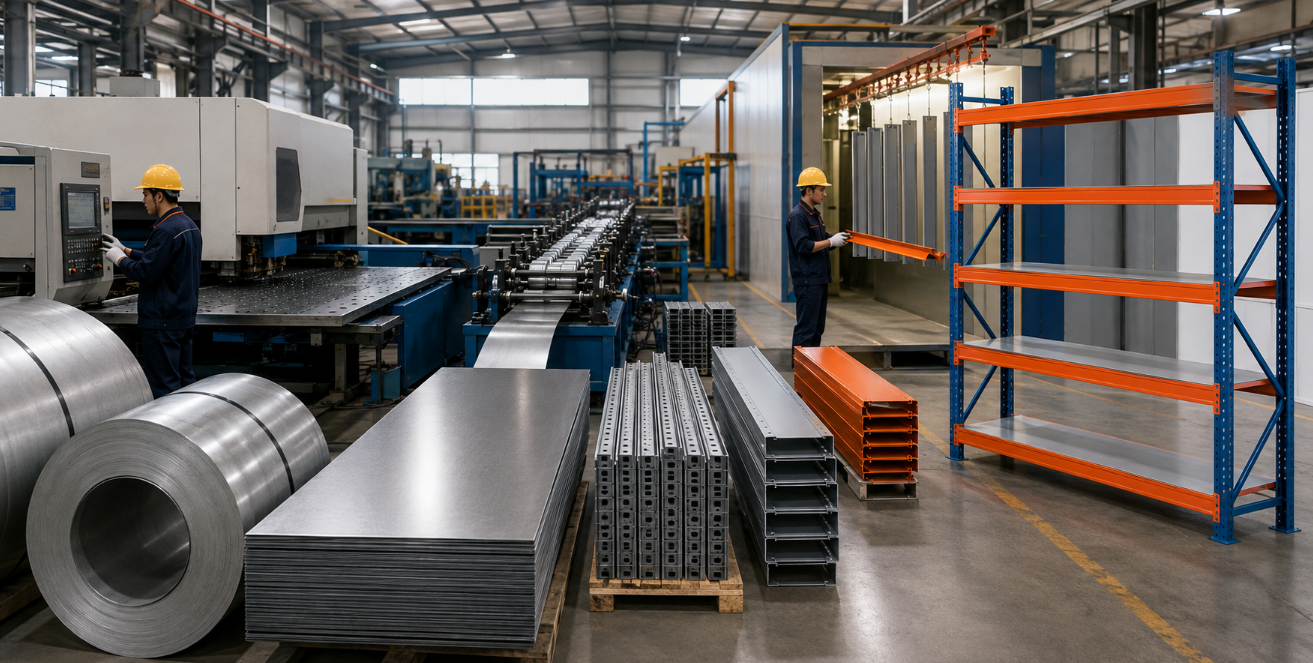
Production may include leveling, cutting, CNC punching, roll forming, bending, welding, deburring and trial assembly. Each step consumes machine time, labor, energy and tooling.
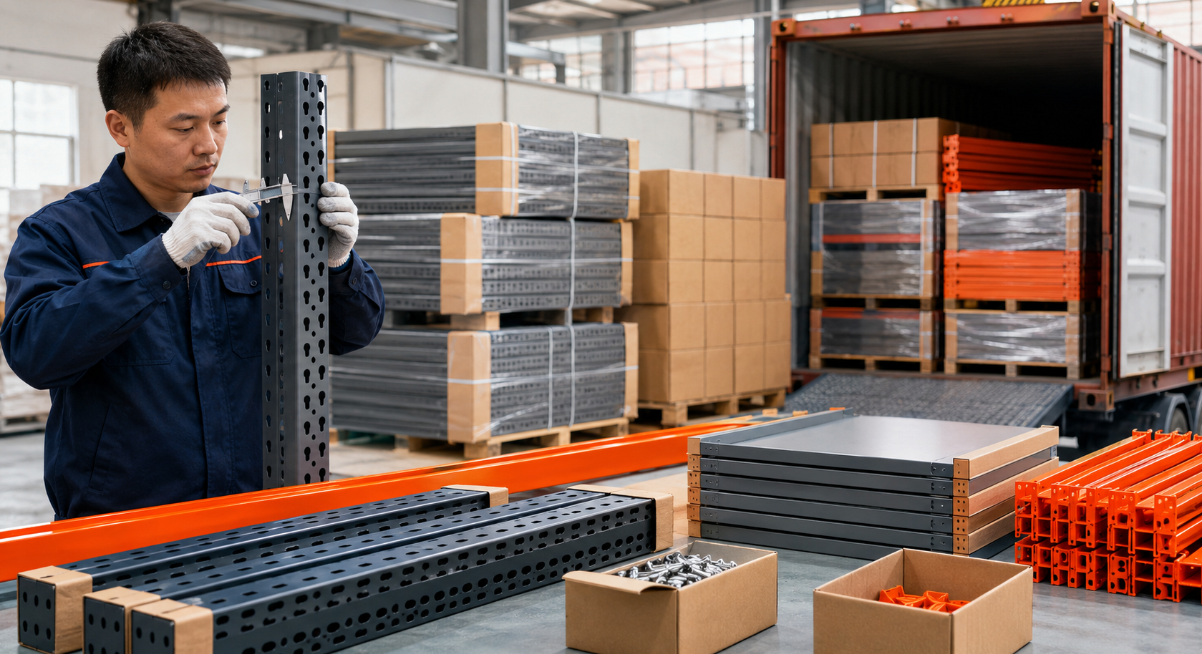
KAYOU's manufacturing process follows the product from steel preparation through cutting, CNC punching, forming, surface treatment, inspection, packing and loading. Welded parts cost differently from boltless roll-formed parts; tight tolerances, special holes and low-volume custom parts also increase setup cost.
Customization becomes expensive when it adds unique parts, tooling changes, slow operations or material waste. A good manufacturer uses common components wherever the design allows.
4. Surface Treatment Changes Both Price and Service Life
Powder coating is more than adding color. The cost includes surface cleaning and pretreatment, powder, spraying, curing, handling and inspection. Poor preparation can save money today but lead to peeling or early corrosion later.
For dry indoor warehouses, a properly prepared powder-coated finish is often the most economical option. KAYOU's standard storage shelving range includes powder-coated steel designs, while stainless steel shelving is available for kitchens, food-processing areas, cold rooms and other environments that need better corrosion resistance and easier cleaning. Pallet racking can also be evaluated with galvanized surface options when the project environment requires them.
If a corrosion test is specified, the quotation should state the test method, duration and acceptance criteria. ISO 9227:2022 defines salt-spray test procedures, but ISO itself notes that the standard does not set a universal exposure period or predict long-term corrosion resistance. A vague promise such as “passed salt spray” is therefore not enough.
5. Small Orders, Custom Colors and Tooling Affect Unit Cost
A factory spreads setup work across the order quantity. One sample and 500 identical units may use the same drawing review, machine setup and color change, but the cost per unit is very different.
Common cost additions include:
Non-standard dimensions or hole spacing
A special RAL color in a small batch
New molds, punches or roll-forming tools
Custom logos, labels and printed cartons
Mixed models in one order
Additional spare parts or retail hardware packs
For distributors, KAYOU supports OEM and ODM dimensions, capacity, color, logo and packaging. We recommend standardizing uprights, beams and connectors across several models to lower tooling, spare-parts and inventory costs.
6. Packaging and Freight Can Reverse the “Cheapest” Quote
Steel shelving is heavy and bulky. For export buyers, freight can equal a significant part of the delivered cost, especially for light-duty products with a low value per cubic meter.
A knock-down structure reduces volume and simplifies handling. KAYOU medium-duty shelving uses modular boltless or connected designs that can be packed flat and assembled at destination. But thin cartons, unprotected edges or loose hardware can cause scratches, missing parts and claims.
To compare quotations, separate these terms clearly:
Landed cost may also include inland transport, port charges, duty, tax, unloading, installation and damaged-part replacement. A lower factory price can cost more if fewer units fit in a container or damage rates rise.
7. Product Selection Often Saves More Than Negotiating the Unit Price
The correct storage system can lower total project cost even when its unit price is higher.
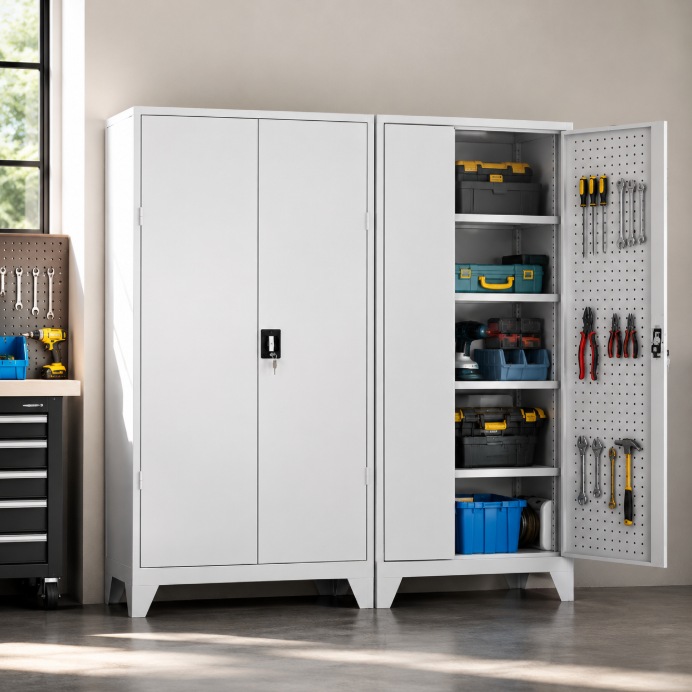
Cartons, Bins and ToolsManually handled parts often fit medium-duty shelving.
Standard PalletsUse selective pallet racking where direct forklift access improves handling.
Pipes, Timber and ProfilesKAYOU cantilever racking fits long goods better than a pallet rack modified for awkward loads.
Unused Vertical SpaceA custom mezzanine racking system may add usable area without another building.
KAYOU asks about the goods, space, load and handling method before recommending a model. The goal is the lowest sensible cost per pallet position, shelf level or usable square meter—not the heaviest rack.
8. Quality Control Has a Cost—Failure Costs More
Material inspection, production checks and final verification require time. Skipping them lowers the quote but transfers risk to the buyer.
KAYOU's quality-control process checks steel thickness and condition, dimensions, structure, load-bearing details, punching and assembly accuracy, powder coating, accessories and export packaging. Depending on the order, buyers can also request trial assembly, photos and videos, or independent third-party inspection before shipment.
Consider the failure cost: a container claim, delayed installation, replacement labor or an unsafe rack in service can cost far more than proper inspection.
How to Compare Steel Shelving Quotations Fairly
Ask every supplier to quote against the same checklist:
Overall height, width and depth
Number of shelf levels
Maximum load per level and load distribution
Steel grade and actual thickness by component
Net and gross weight per unit
Upright, beam and shelf-panel profiles
Surface pretreatment, finish and color
Bracing, feet, fasteners and safety accessories
Packaging method and packed dimensions
Units per container
Inspection and documentation included
Incoterm, named place and quotation validity
Quotation red flags: one load rating used for every rack size, refusal to state component thickness, no packing dimensions, a quotation without an Incoterm, or a price that changes after the buyer asks for inspection.
Frequently Asked Questions
Is buying directly from a steel shelving factory always cheaper?
Factory-direct purchasing can remove trading markups and improve customization, but buyers should still compare engineering, documentation, export handling and support.
Why does a heavier rack usually cost more?
It contains more steel, increasing material, coating and freight costs. Weight alone does not prove capacity; profiles, connections, bracing and load distribution also matter.
Can a factory reduce cost without reducing safety?
Yes. Common methods include optimizing profiles, reducing offcuts, sharing components between models, using a knock-down design, improving container loading and matching capacity to the real application. Secretly reducing thickness or omitting reinforcement is not legitimate cost optimization.
What information does KAYOU need for an accurate quotation?
Send the rack type, dimensions, number of levels, load per level, quantity, stored goods, operating environment, destination and any branding or packaging requirements. For warehouse projects, also provide a floor plan, pallet data and forklift information.
Get a Transparent Factory Quotation
The real cost of steel shelving is not a mystery, but it must be calculated from a complete specification. KAYOU can provide a structure recommendation, technical drawing, itemized quotation and packing plan for your shelving or warehouse-racking project.
Tell us what you need to store, the required load, available space, quantity and destination. We will build the quotation around your actual project.