

What Is Pallet Racking?
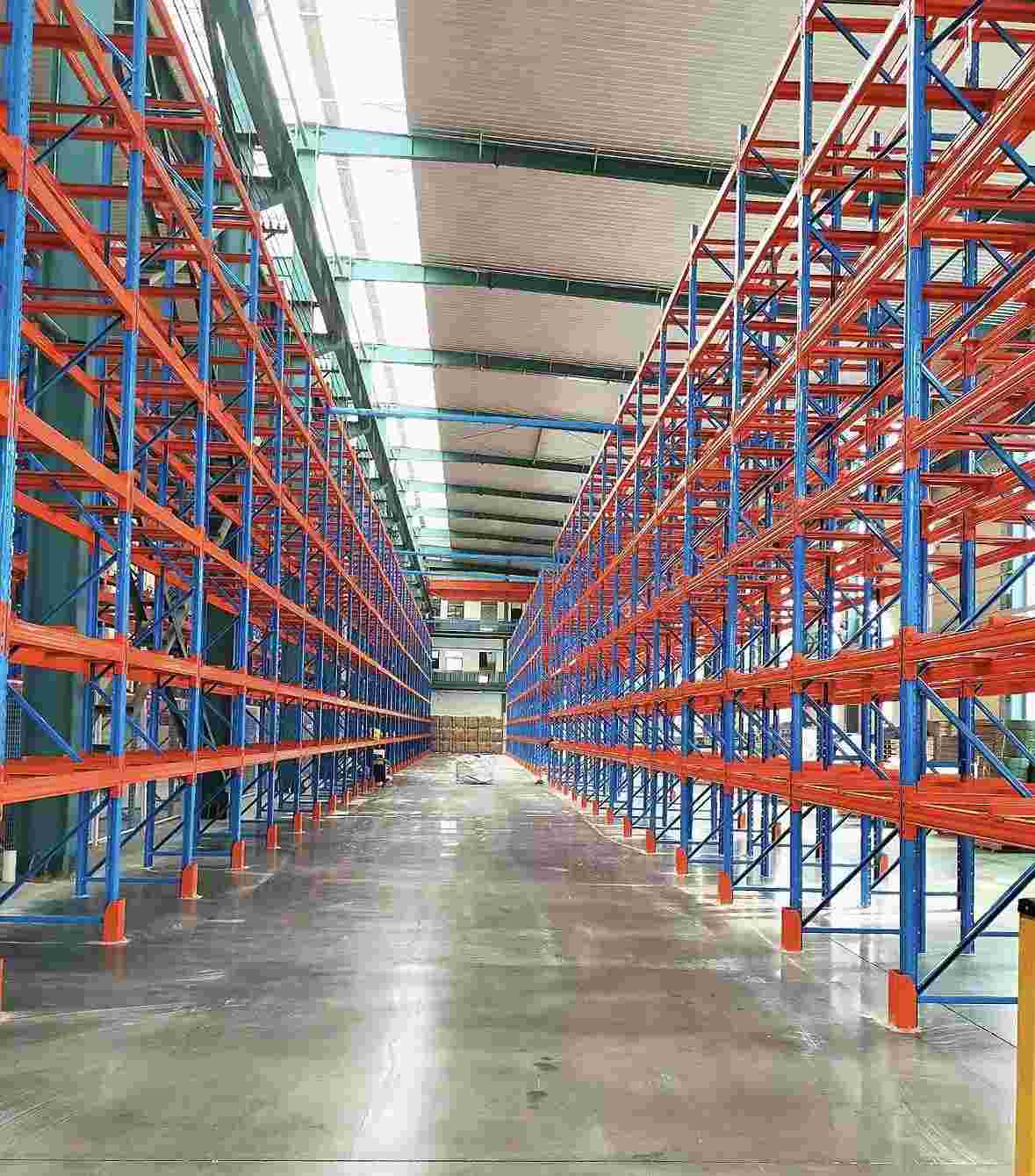
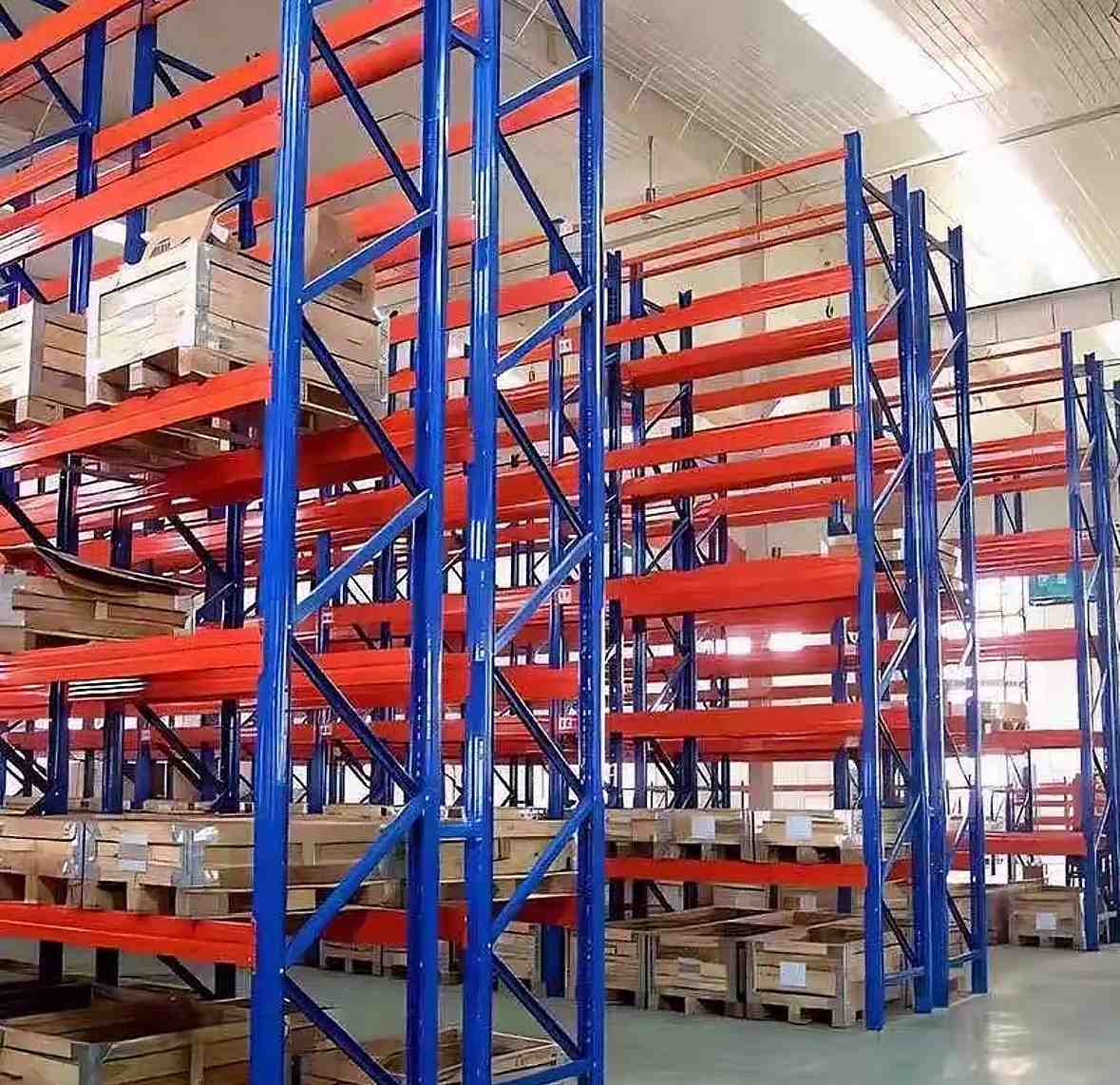
Pallet racking is an engineered steel storage system that stores palletized goods on multiple horizontal levels. By using warehouse height, it can increase storage capacity, improve inventory organization and create safer material-handling routes.
Important: Pallet racking is a load-bearing structure, not ordinary shelving. Its safety depends on the complete system—including uprights, beams, connectors, bracing, anchors, pallet condition, load distribution and concrete floor conditions.
How a Pallet Racking System Works
Pallets are placed on horizontal beams or approved support components by forklifts, reach trucks, stackers or automated equipment. The load is transferred through the complete structure:
Pallet load → beams → beam connectors → upright frames → base plates and anchors → concrete floor
Correct pallet clearance, forklift aisle width, pallet overhang and clearance from sprinklers, lighting and building structures must be considered during layout design.
Main Pallet Rack Components
Upright Frames
Vertical columns connected by horizontal and diagonal bracing. Profile, steel grade, hole pattern and beam spacing influence frame capacity.
Horizontal Beams
Beams connect the frames and support pallet loads. Capacity is normally rated for one beam pair under approved loading conditions.
Connectors and Locks
Beam connectors attach beams to uprights, while safety locks help prevent accidental disengagement during forklift operation.
Base Plates and Anchors
Base plates transfer column forces into the slab, and anchors secure the rack according to the designed position and loads.
Supports and Decking
Pallet supports, wire decking or steel panels may be added when pallet size, quality or stored products require extra support.
Safety Protection
Column guards, end barriers, back mesh, row spacers and pallet backstops help reduce operational and forklift-impact risks.
Common Types of Pallet Racking
The correct system depends on SKU quantity, pallet turnover, inventory rotation, available height, forklift type and required storage density.
Selective Pallet Racking
Provides direct access to each pallet. It is suitable for many SKUs, mixed products and frequent stock movement.
Double-Deep Racking
Stores pallets two positions deep to reduce aisle quantity. A suitable deep-reach forklift is normally required.
Drive-In / Drive-Through
Offers high-density storage for fewer SKUs with larger pallet quantities. Drive-in commonly supports LIFO, while drive-through can support other rotation methods.
Push-Back Racking
Stores several pallets deep on carts or inclined rails, increasing density without requiring forklifts to enter the rack.
Pallet Flow Racking
Uses gravity rollers to move pallets from loading to unloading side, making it suitable for FIFO and high-throughput operations.
VNA and Mobile Racking
VNA reduces aisle width with specialized equipment. Mobile racking opens only the required aisle and is often used where space is expensive.
Pallet Rack Capacity Is Not One Number
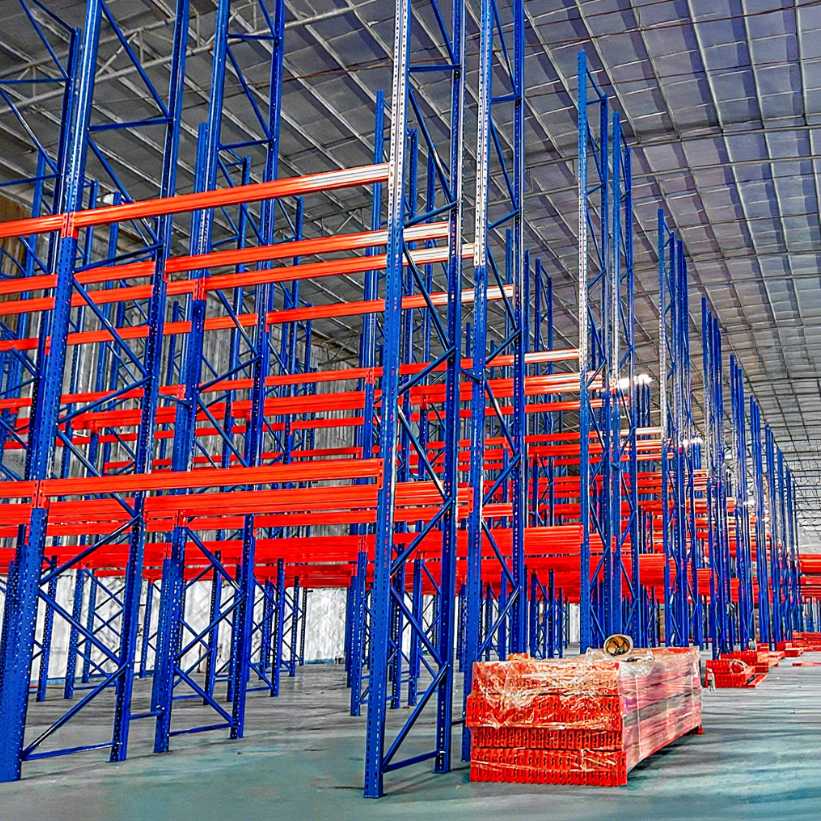
A professional design should confirm several connected ratings rather than only asking how many kilograms the rack can carry.
Unit Load
The maximum weight of one pallet or individual stored load.
Beam-Level Capacity
The total permitted load on one pair of beams, including all pallets stored on that level.
Bay Capacity
The maximum total load permitted within one rack bay.
Frame Capacity
Influenced by upright profile, first beam height, beam spacing, bracing and the unsupported column length.
Floor and Anchor Capacity
The slab thickness, concrete strength, joints, base plates and anchors must support the calculated reactions.
System Capacity
The safe rating is controlled by the complete assembled structure—not by one stronger component alone.
Does Thicker Steel Always Mean a Stronger Rack?
Not necessarily. Steel thickness matters, but two components with the same thickness can have different capacities because of profile geometry, bends, steel grade, hole pattern, bracing, beam spacing, connector stiffness and manufacturing tolerances.
Pallet racking should be evaluated as a complete engineered system rather than compared only by steel thickness, total weight or external dimensions. Relevant structural design standards include ANSI MH16.1-2023 and EN 15512:2020+A1:2022.
Storage Density vs. Warehouse Efficiency
The layout with the most pallet positions is not always the most efficient. Buyers should also consider pallets handled per hour, active SKUs, forklift travel, replenishment frequency, congestion, inventory rotation and future product changes.
The better objective is to maximize usable storage capacity without reducing safe access, inventory accuracy or material-handling throughput.
How to Choose the Right System
1
Pallet Data
Confirm pallet width, depth, loaded height, entry direction, overhang and maximum weight.
2
Inventory Profile
Review SKU quantity, pallets per SKU, turnover rate and FIFO or LIFO requirements.
3
Forklift Information
Provide model, lift height, turning radius, capacity at height and minimum operating aisle.
4
Warehouse Conditions
Confirm clear height, columns, doors, sprinklers, lights, ducts and other obstacles.
5
Floor and Local Rules
Review slab thickness, concrete strength, expansion joints, seismic forces and fire requirements.
6
Future Expansion
Consider future rack extensions, reach trucks, shuttles, AGVs or automated storage systems.
Information Needed for a Quotation
| Required Information | Why It Matters |
|---|---|
| Warehouse layout or CAD drawing | Determines rack rows, aisles and available space. |
| Clear warehouse height | Determines usable rack levels. |
| Pallet dimensions and loaded height | Determines frame depth, beam length and vertical spacing. |
| Maximum pallet weight | Determines beams, uprights and bracing. |
| Total pallets and SKU quantity | Helps select access level and storage density. |
| FIFO or LIFO requirement | Influences rack type and operating method. |
| Forklift model | Determines aisle width and usable rack height. |
| Floor, seismic and obstacle information | Supports anchor design and prevents layout conflicts. |
| Future expansion plan | Supports later additions or automation. |
Common Buying Mistakes
Comparing only the price per bay.
Judging capacity only by steel thickness.
Ignoring damaged or unsuitable pallets.
Changing beam levels without approval.
Mixing unverified components from different systems.
Ignoring forklift impact and traffic-route risks.
Inspection and Maintenance
Operators should immediately report impact damage, missing safety clips, loose anchors, overloaded beams or damaged pallets. Formal inspection frequency should follow local regulations and site risk. SafeWork NSW recommends competent-person inspections at intervals not exceeding 12 months, although local requirements may vary.
Bent or twisted uprights
Damaged horizontal or diagonal bracing
Beam deformation or cracked welds
Missing locks or loose anchors
Incorrect beam positions or modifications
Pallet damage and forklift impact
Why Work With KAYOU?
A reliable pallet racking supplier should translate warehouse data into a practical storage solution. Based on confirmed project information, KAYOU can provide layout proposals, product configurations, technical drawings, component details, export packaging and quotations for international warehouse projects.
The right system should balance structural capacity, pallet characteristics, forklift access, SKU selectivity, storage density, inventory turnover, floor conditions, safety requirements and future expansion.
Frequently Asked Questions
What is the difference between pallet racking and shelving?
Pallet racking stores palletized loads handled by forklifts or stackers. Shelving is generally used for cartons, parts and products loaded or picked manually.
How much weight can pallet racking hold?
There is no universal capacity. Buyers should confirm the maximum unit load, beam-level capacity, bay capacity, frame configuration, anchoring and floor conditions.
What is the most common pallet racking type?
Selective pallet racking is widely used because it provides direct access to every pallet and suits warehouses with many SKUs.
Are there standard pallet rack dimensions?
There is no single worldwide size. Dimensions should match the actual pallets, load height, forklift clearances and warehouse layout.
Does pallet racking need floor anchors?
Most permanent installations use floor anchors according to the manufacturer’s design, rack loads, base plates, slab condition and local requirements.
Can pallet rack beam levels be adjusted?
Many systems have adjustable beams, but changing beam spacing may alter frame capacity. Major changes should be confirmed by the supplier or a competent engineer.
What should I send for a quotation?
Send the warehouse layout, clear height, pallet dimensions, loaded height, maximum weight, pallet quantity, SKU quantity, forklift model and FIFO/LIFO requirements.
Planning a Pallet Racking Project?
Send KAYOU your warehouse layout, pallet dimensions, maximum pallet weight, forklift model and required pallet quantity. Our team will prepare a customized storage proposal.