
KAYOU Steel Shelving Guide
Boltless Shelving vs. Bolted Shelving: Which Is Better?
When buyers compare steel shelving quotations, the connection method is often treated as a minor detail. Dimensions, shelf quantity, color and price usually receive more attention.
However, the difference between boltless shelving and bolted shelving affects much more than installation. It can influence assembly time, shelf adjustment, long-term maintenance, packaging volume and how easily the shelving can be reconfigured after delivery.
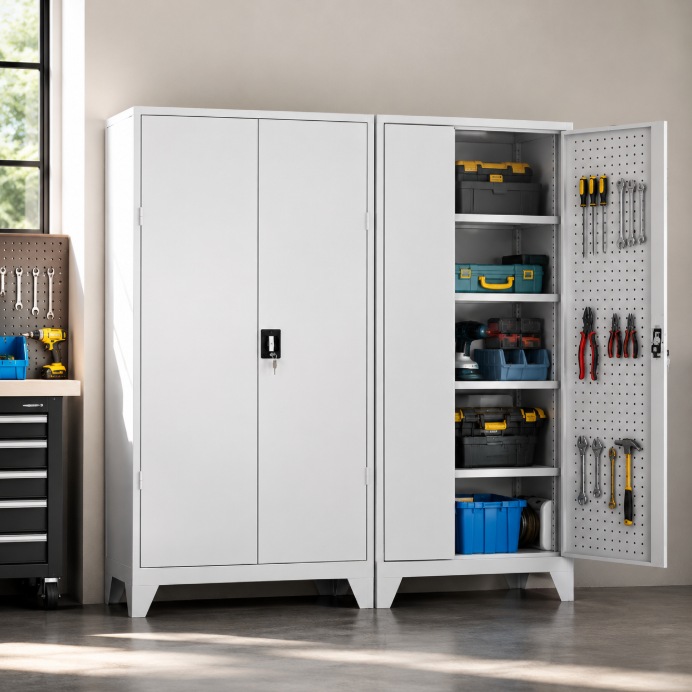
The medium-duty steel shelving shown in the product image may look similar from a distance, but appearance alone does not tell a buyer whether the structure is suitable for a particular warehouse, workshop or stockroom. The connection system must be considered together with the upright design, beam profile, shelf reinforcement, steel thickness and required load capacity.
So, which type is better?
There is no single answer for every project. Boltless shelving is generally more convenient to assemble and adjust, while bolted shelving can be useful when buyers require a fixed structure or a more traditional connection method. The right choice depends on how the shelving will be used.
What Is Boltless Shelving?
Boltless shelving uses interlocking components instead of conventional nuts and bolts at every beam connection.
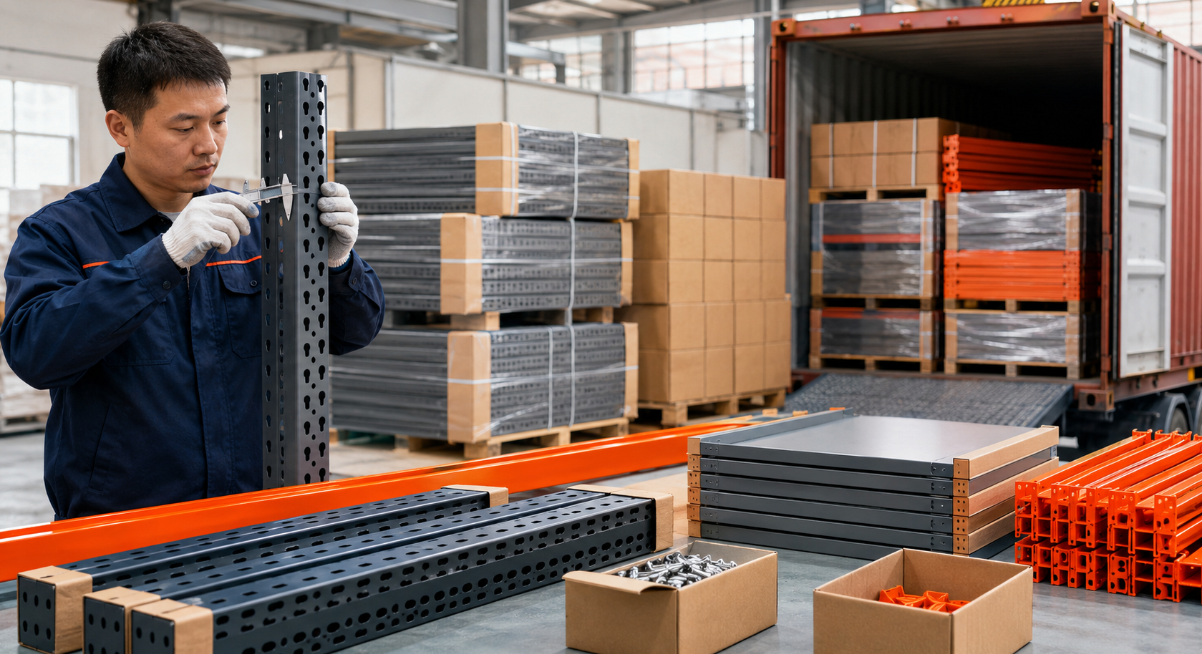
The uprights normally contain slots or punched holes. Beams, braces or shelf supports are fitted into these openings using hooks, rivets or formed connectors. During installation, workers position the components and secure them by hand or with a rubber mallet, depending on the structure.
The shelves may be made from steel panels, wood-based boards or other materials selected according to the storage application.
A typical boltless shelving unit includes:
Upright frames or separate upright posts
Horizontal beams
Side braces or cross braces
Shelf panels
Reinforcement bars where required
Plastic or metal feet
Safety pins or locking parts, depending on the design
Because fewer loose fasteners are needed, boltless shelving is commonly selected for warehouses, garages, retail stockrooms, workshops, offices and light industrial storage areas.
Its actual load capacity cannot be determined from the term “boltless” alone. Performance depends on the shelving dimensions, upright section, beam structure, shelf panel design, steel thickness and uniformly distributed load conditions.
What Is Bolted Shelving?
Bolted shelving uses bolts, nuts, screws or similar fasteners to connect the main structural components.
In many traditional designs, steel angle uprights contain regularly spaced holes. Shelf panels or horizontal supports are aligned with these holes and secured using bolts. Side and back bracing may also be bolted to the uprights.
This connection method has been used for many years because it is simple to understand and does not require complex formed connectors.
Bolted shelving may be suitable for:
Fixed storage areas
Archive rooms
Maintenance rooms
Workshops
Utility storage
Installations that are rarely adjusted
Projects using traditional slotted-angle structures
The main disadvantage is not necessarily product quality. It is the amount of work involved during installation and future adjustment. Every connection must be aligned, tightened and checked individually.
Boltless Shelving vs. Bolted Shelving: Key Differences
Assembly Time
Installation speed is one of the clearest differences.
Boltless shelving usually requires fewer individual fasteners. Beams and supports are inserted into the upright slots, which can reduce the number of repeated assembly steps. This is valuable when a distributor, warehouse contractor or end user needs to install many shelving units.
Bolted shelving requires workers to position the components, insert the bolts, attach the nuts and tighten each connection. One unit may not take much longer, but the additional labor becomes more noticeable across a large order.
Buyers should still check the complete installation method. Some products described as boltless may still use bolts for braces, feet or secondary components.
Shelf Height Adjustment
Boltless shelving is normally easier to reconfigure.
When the storage cartons, spare parts or packaged goods change, the beams can often be moved to different upright slots without dismantling the entire unit. This makes boltless shelving practical for businesses with changing inventory.
Bolted shelving can also have adjustable shelf levels, but the process usually takes more time. The shelf must be unloaded, fasteners removed, components repositioned and bolts tightened again.
For a fixed archive room, this may not be a serious concern. For a retail stockroom where package sizes change regularly, adjustment time can matter.
Stability and Structural Performance
A common misunderstanding is that bolted shelving must always be stronger because it uses bolts. That conclusion is too simple.
A well-designed boltless shelving system can provide reliable stability because its connectors, beams, uprights and braces are designed to work together. Likewise, a bolted shelving unit can perform poorly if it uses underspecified steel, weak shelf panels or inadequate bracing.
The buyer should evaluate:
Upright profile and section size
Beam shape and connection design
Number and position of braces
Shelf panel thickness
Reinforcement under the shelf
Unit width, depth and height
Required load per level
Load distribution
Floor condition
Whether wall or floor anchoring is needed
The connection method is only one part of the structure.
Maintenance and Missing Parts
Boltless systems contain fewer loose nuts and bolts, reducing the number of small parts that can be lost during assembly, relocation or long-term use.
This is useful for importers and distributors because missing hardware can delay installation. It can also create after-sales work if replacement fasteners are not readily available in the destination market.
Bolted shelving uses standard hardware in many cases, which can be an advantage when local replacement bolts are easy to source. However, fasteners should be checked periodically, particularly if the shelving is moved or exposed to repeated vibration.
Packaging and Transportation
Both types can be supplied in knock-down packaging for export.
Boltless shelving often has fewer separate hardware packages, helping simplify packing and installation checking. Bolted shelving requires accurate counting and packing of bolts, nuts, washers and other fasteners.
For international orders, the packaging plan should protect more than the painted surface. Uprights, beams, shelf panels and accessories should be separated or reinforced to reduce movement during handling and sea transportation.
Before confirming an order, buyers should ask whether the quotation includes:
All structural components
Required braces
Feet or base plates
Safety locks
Assembly hardware
Installation instructions
Spare fasteners where applicable
Export packaging
A low quotation can become more expensive if important parts are excluded.
Cost Comparison
Boltless shelving is not automatically cheaper, and bolted shelving is not automatically more economical.
The final cost depends on the amount of steel, component design, shelf material, tooling, surface treatment, packaging and order quantity. A more developed boltless connector may require additional forming or production steps, while a simple bolted structure may require more installation labor after delivery.
B2B buyers should compare the total project cost rather than the unit price alone.
This includes:
Product price
Installation labor
Installation tools
Replacement parts
Reconfiguration time
Packaging volume
Maintenance
Expected service conditions
For a large warehouse installation, a reduction in assembly time may be more valuable than a small difference in purchase price.
When Should You Choose Boltless Shelving?
Boltless shelving is usually worth considering when installation speed and flexibility are priorities.
It is commonly selected for:
Warehouses with changing inventory
Retail stockrooms
Distribution centers
Workshops
Garages
Spare-parts storage
Commercial storage areas
Dealers selling flat-packed shelving
It is also practical when the buyer expects to relocate the shelving or change the shelf spacing later.
However, buyers should not choose a product only because it is labeled “boltless.” The supplier should still confirm the complete dimensions, shelf quantity, intended load and structural configuration.
When Is Bolted Shelving a Practical Choice?
Bolted shelving may be suitable when the installation is relatively small, fixed and unlikely to be adjusted.
Examples include:
Archive storage
Utility rooms
Maintenance areas
Low-frequency storage
Fixed shelving along walls
Projects based on an existing slotted-angle design
Markets where traditional bolted products are commonly used
It can also be selected when the buyer wants a familiar assembly method or needs to replace parts in an existing bolted system.
The trade-off is usually additional installation time and a larger quantity of loose hardware.
What Buyers Should Confirm Before Requesting a Quote
A shelving quotation cannot be properly evaluated without enough application information.
Before requesting prices, prepare the following details:
Required Dimensions
Confirm the overall width, depth and height of each unit. Do not assume that a standard catalog size will fit the available floor area.
For projects with multiple bays, clarify whether the system should use independent units or shared uprights.
Number of Shelf Levels
State the total number of usable storage levels. Buyers and suppliers sometimes count the top level differently, which can create confusion.
Load Per Shelf
Provide the expected load on each level and explain how the goods will be distributed.
A uniformly distributed load is different from placing one heavy object in the center of a shelf. Concentrated loads may require additional reinforcement or a different shelf structure.
Stored Product Type
Cartons, tools, mechanical parts, document boxes and loose products create different requirements.
The supplier may need to recommend steel panels, reinforced panels or another shelf material depending on the goods.
Installation Environment
Explain whether the shelving will be used in a dry warehouse, retail store, garage, humid area or other environment.
The surface treatment and packaging can then be discussed according to the expected conditions.
Order Quantity and Packaging
Importers and wholesalers should provide the approximate quantity and destination market.
Packaging for a full-container order may differ from packaging for samples, mixed products or small shipments.
How KAYOU Reviews a Steel Shelving Requirement
For KAYOU, the discussion starts with the storage application rather than selecting a connection type from a catalog.
The required dimensions, shelf quantity, stored products and load per level are reviewed first. The upright, beam, brace and shelf-panel configuration can then be selected according to the confirmed requirement.
Before production, specifications should be recorded clearly. For customized projects, technical drawings or product details may be provided for confirmation, subject to the complexity of the shelving system.
During production and inspection, relevant checks may include:
Main product dimensions
Component quantities
Upright and beam structure
Shelf-panel fit
Assembly condition
Surface appearance
Accessory completeness
Packaging arrangement
Photos or continuous inspection videos can be used to show product details before shipment. Customer-appointed or third-party inspections can also be discussed when required.
The purpose of this process is not to claim that one shelving type is suitable for every customer. It is to reduce the risk of supplying a convenient connection system with the wrong dimensions, insufficient reinforcement or unsuitable shelf spacing.
Which Shelving Type Is Better?
For most applications requiring quick installation and future adjustment, boltless shelving offers greater convenience. It is particularly useful for warehouses, workshops, stockrooms and distributors handling flat-packed products.
Bolted shelving remains a reasonable option for fixed storage areas, traditional slotted-angle systems and installations where shelf positions rarely change.
The better product is the one designed around the actual storage requirement.
Before comparing quotations, check the structural specifications, included components, load conditions, packaging and installation work. A connection method can improve convenience, but it cannot compensate for an unsuitable shelving design.
6. Frequently Asked Questions
Is boltless shelving strong enough for warehouse use?
Boltless shelving can be suitable for warehouse use when the structure is designed according to the required dimensions and load capacity. Strength depends on the upright section, beam profile, connector design, shelf reinforcement and bracing—not simply on the absence of bolts. Buyers should provide the required load per shelf and describe the stored goods. The stated capacity should be based on the confirmed configuration and uniformly distributed load conditions. Taller units or special applications may also require anchoring.
Can boltless shelving be customized?
Yes. Boltless steel shelving can generally be customized in overall width, depth, height, shelf quantity, surface color and structural configuration. The available options depend on the selected upright and beam system, manufacturing requirements and order quantity. For a customized quotation, buyers should provide dimensions, load per shelf, quantity, intended use and destination market. Final specifications should be confirmed through drawings, product details or an approved sample before mass production.
Does bolted shelving require professional installation?
Small bolted shelving units can often be assembled without professional installers, but the process requires more time and careful alignment. Workers need to identify the correct fasteners, position every component and tighten each connection securely. For larger shelving arrangements, uneven floors, tall units or higher load requirements, installation should be reviewed more carefully. The completed shelving must be level and stable, and anchoring may be required depending on the product design and site conditions.
How can I compare load capacities from different suppliers?
Do not compare the load figure alone. Ask each supplier to confirm the shelving dimensions, steel thickness, upright profile, beam section, shelf-panel structure and whether the stated capacity is based on a uniformly distributed load. Two shelving units may be advertised with the same load rating while using different dimensions and reinforcement. Request drawings or detailed specifications where possible. A load statement without a confirmed product configuration does not provide enough information for a reliable comparison.
Is boltless shelving easier to ship?
Both boltless and bolted shelving can be packed in knock-down form. Boltless systems normally require fewer loose fasteners, which can simplify component counting and installation after delivery. Shipping efficiency still depends on the dimensions, nesting method, shelf-panel design and packaging arrangement. For export orders, buyers should confirm how uprights, beams, panels and accessories will be protected, as well as whether all hardware and installation instructions are included in the package.
Can the shelf spacing be changed after installation?
In most boltless systems, shelf spacing can be changed by removing the shelf panels, unlocking the beams and repositioning them in different upright slots. The specific adjustment increment depends on the upright-hole pattern. Bolted shelving may also be adjustable, but each affected fastener must be removed and tightened again. Before changing the levels, the unit should be fully unloaded. After adjustment, all beams, connectors, braces and locking parts should be checked before the shelving is used again.
What information is needed to obtain an accurate quotation?
Need Help Selecting the Right Steel Shelving?
Send KAYOU your required shelving dimensions, number of levels, load per shelf, order quantity and storage application.
We can review whether a boltless or bolted configuration is more suitable and prepare the corresponding product specifications for your project.