
KAYOU Mobile Shelving System Case: From Floor Rails to Compact Storage
KAYOU PROJECT INSIGHT / MOBILE SHELVING
From floor rails to compact storage: a closer look at mobile shelving installation.
Creating more storage space starts with understanding how a room will be used. For archive rooms, document centers and institutional storage areas, the layout needs to balance capacity, access and everyday operation.
In this News update, KAYOU shares installation photographs showing the components behind a rail-mounted mobile shelving system. The images document floor rails, mobile bases, steel framework and rows fitted with end panels and operating handles.
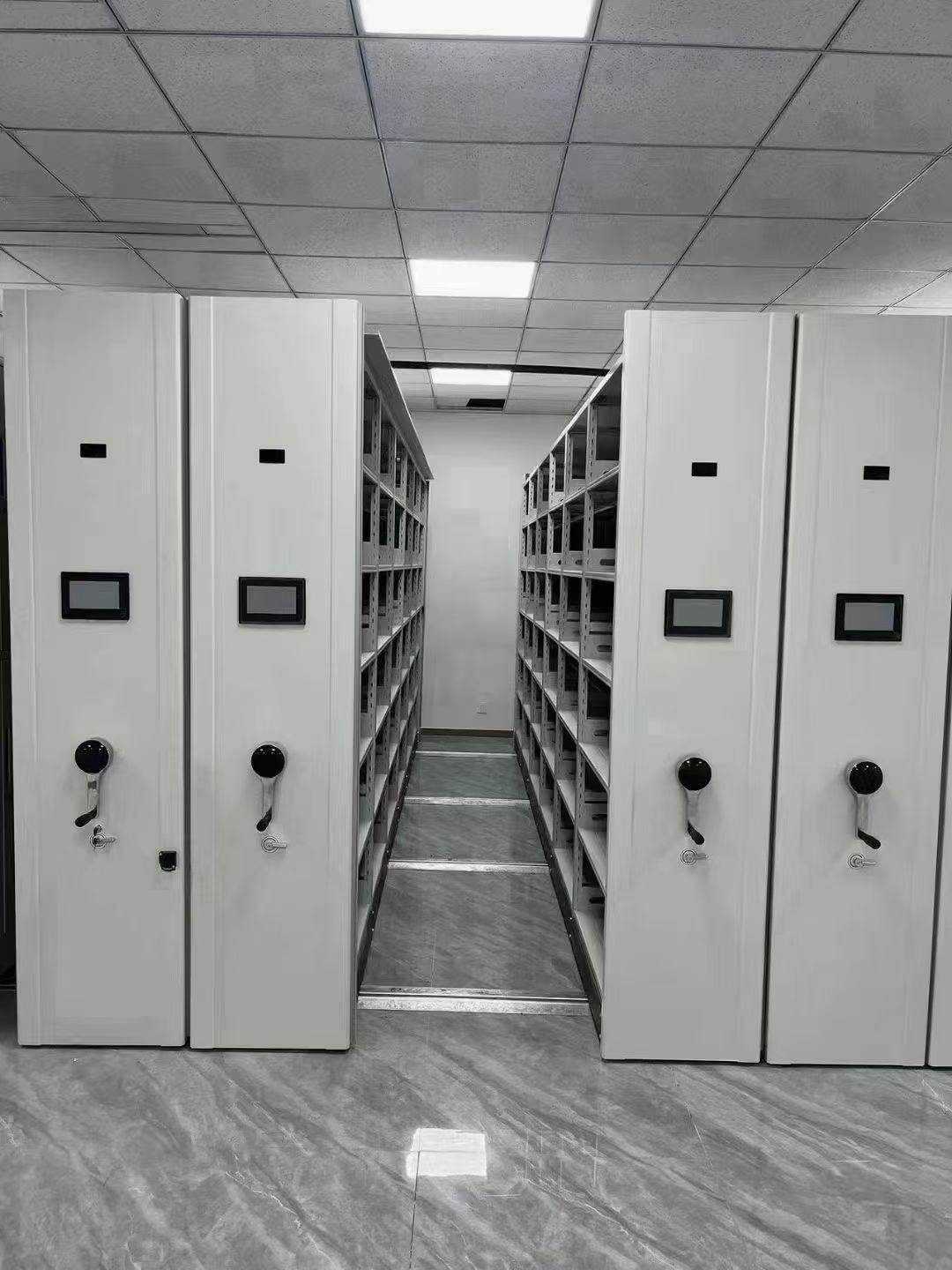
Installation view: shelving rows fitted with end panels and an open access aisle.
What the Case Photographs Show
The photographs show several stages of assembly inside a large indoor space with structural columns. Rails extend across the floor, mobile base frames are positioned over them, and multiple shelving rows are assembled above the bases.
Later-stage views show light-colored end panels, hand-operated mechanisms and an open access aisle between shelving rows. One view also shows display panels on the ends of several units. Their control functions and the system's operating specification require separate confirmation.
The installation images give buyers a closer look at components that become less visible once the end panels and shelves are fitted.
Case at a glance
System: Rail-mounted mobile shelving with steel framework.
Visible components: Floor rails, mobile bases, uprights, shelf panels, end panels and operating handles.
Documented stage: On-site installation and assembly.
How Mobile Shelving Uses Space
Conventional fixed shelving normally keeps an aisle between each row. A mobile shelving system mounts rows on movable bases so an access aisle can be opened where it is needed. Reducing the number of permanently open aisles can make more of a room available for storage.
The potential benefit depends on the layout. Columns, doors, escape routes, aisle widths and the number of people retrieving items at the same time all affect the design.
For a busy room where several users need simultaneous access, multiple access zones or a combination of fixed and mobile shelving may be more suitable than a single compact block.
Planning tip: Compare fixed and mobile shelving using the same room dimensions, stored items and access requirements. Storage gains should come from a project-specific layout calculation.
Installation Details Behind the End Panels
01. Floor Rails and Mobile Bases
The early-stage images show the relationship between the floor rails and the rectangular mobile bases. These components support and guide the shelving rows, making their installation a key part of the overall system.
Before specifying a similar installation, the project team should establish floor conditions, rail positions and the fully loaded system weight. Loads pass through the shelving, bases, wheels and rails into the building structure. Floor suitability needs assessment for the proposed arrangement; the appearance of the floor finish cannot establish its load capacity.
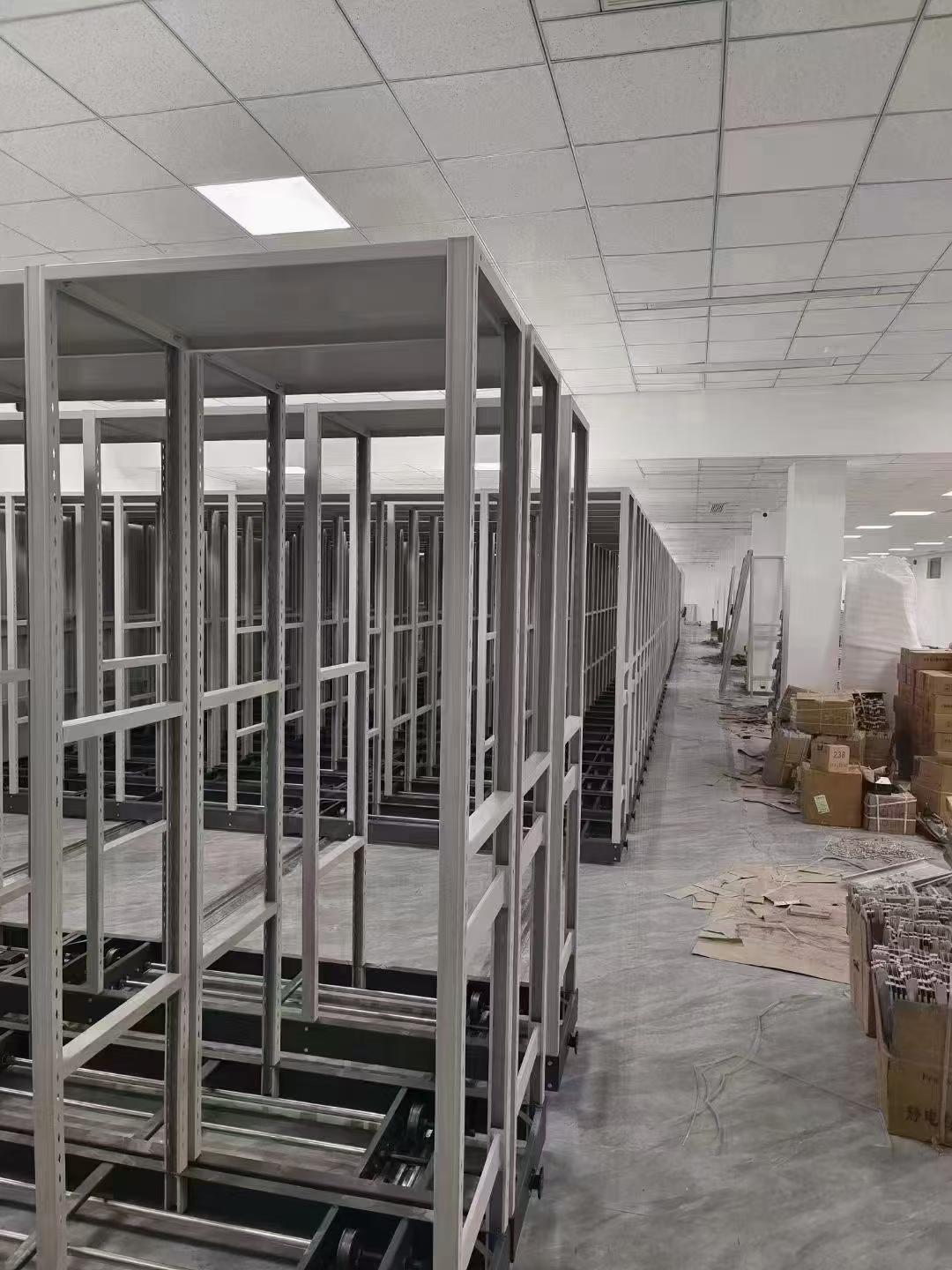
Assembly detail: steel uprights, shelf panels and the mobile base mechanisms below.
02. Steel Framework and Shelf Arrangement
The framework photographs show upright posts, horizontal members and the base mechanisms before all panels and shelves are in place. This view helps buyers understand that mobile shelving is an integrated assembly rather than a set of cabinets placed on tracks.
Shelf spacing should follow the dimensions of the intended files, books or archive boxes. Buyers should confirm usable shelf dimensions, the number of storage levels and load limits in the approved specification.
Material specifications and relevant test records provide a stronger basis for comparing proposals than appearance alone.
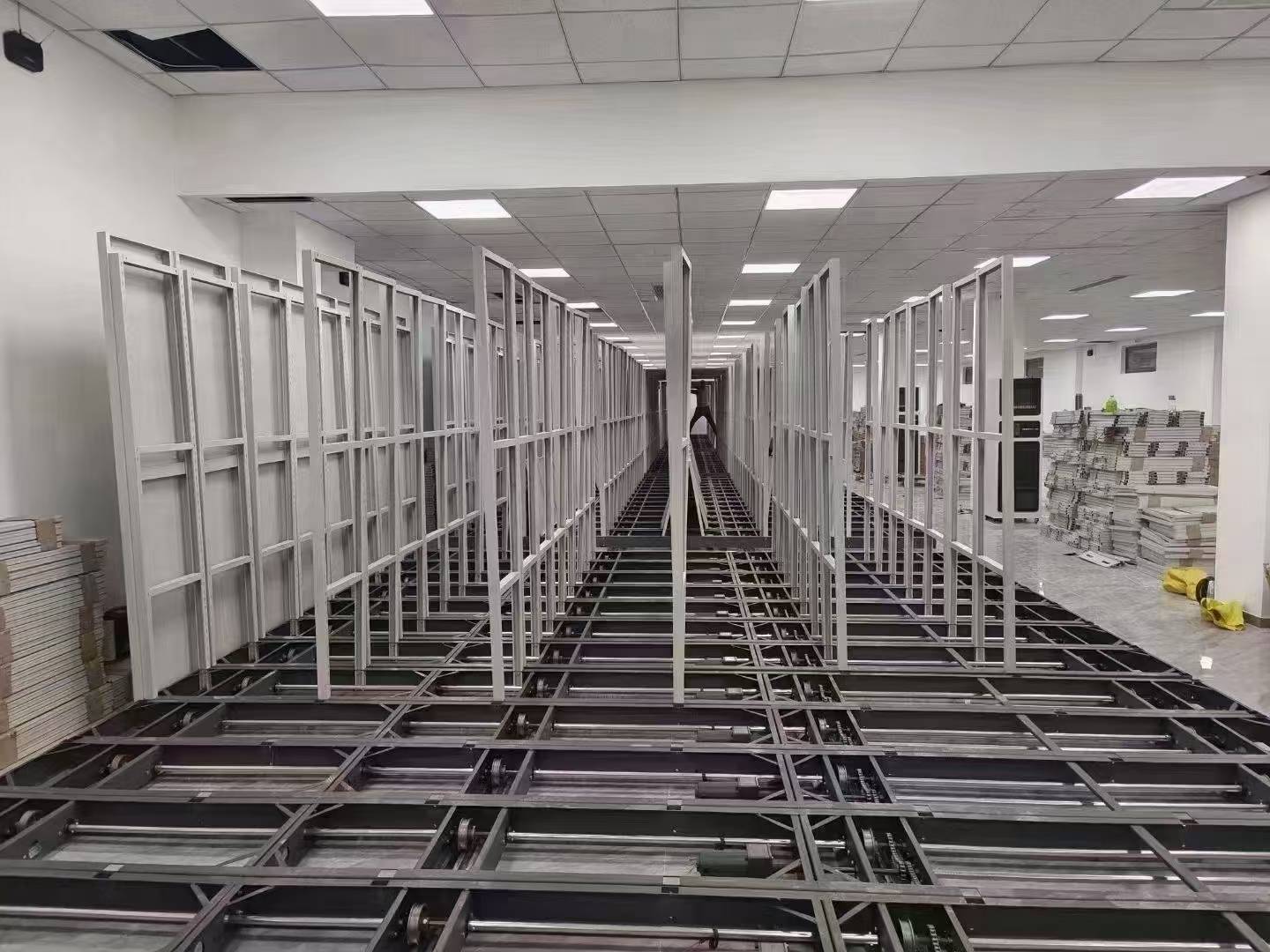
Framework installation: multiple shelving rows assembled on mobile bases before final fitting.
03. Operating Mechanisms and User Access
The end-panel photographs show operating handles and key-operated hardware. The purchase specification should explain how the selected system moves, how movement is prevented during access and which locking functions are included.
If powered operation is requested, buyers should also confirm the applicable controls, obstruction detection, emergency stopping and power-failure procedures. The agreed features should be checked during commissioning, with operating instructions provided to users.
What Buyers Should Confirm Before Ordering
A useful mobile shelving quotation should be based on more than the number of rows. To prepare a proposal for a similar project, send KAYOU the following information.
Your mobile shelving quotation checklist
1. Room layout
Dimensions, columns, doors and fixed obstructions.
2. Stored materials
Item dimensions, estimated quantities and expected weights.
3. Capacity requirements
Current storage needs and allowance for future growth.
4. Access requirements
Retrieval frequency and the number of simultaneous users.
5. Site conditions
Available floor information and installation constraints.
6. Configuration preferences
Operation, finish, locking arrangements and delivery destination.
Ask for a proposed layout and written specifications covering usable storage dimensions, load limits, rail arrangement, operating features and installation responsibilities.
This makes quotations easier to compare and helps identify missing requirements before production.
From Assembly to Operational Handover
The photographs show the progression from exposed rails and bases to assembled shelving rows with end panels. They also show installation materials still present on site, so this case is presented as an installation record.
Before operational handover, the agreed checks should cover assembly, movement, aisle access, locking and applicable safety functions. Loading instructions, user training and maintenance requirements should accompany the system.
Completed inspection records and commissioning results would provide additional evidence beyond the photographs.
Plan Your Mobile Shelving Project with KAYOU
KAYOU supplies storage solutions for B2B buyers, including mobile shelving, warehouse racking and steel furniture, with OEM, ODM and customization options.
Planning an archive room, document center or institutional storage project? Share your room layout, storage requirements and delivery destination with KAYOU to discuss a suitable mobile shelving configuration and quotation.
Let's Plan Your Storage Layout
Send your room dimensions, storage needs and delivery destination.
Discuss your mobile shelving project with KAYOU.
General technical reading: Mobile shelving principles | Floor loading considerations.
These references provide general background and do not verify the specifications or performance of the photographed installation.