


Why Steel Thickness Transparency Matters to B2B Buyers
When comparing quotations for metal shelving, two products may look almost identical in a catalog photo.
Both may have the same:
Overall dimensions
Number of shelves
Surface color
Claimed load capacity
General product description
However, the actual steel specifications may be very different.
One supplier may quote the raw steel thickness. Another may describe a nominal thickness. Another may measure a folded or coated section and present the result without explaining the measurement method.
For a professional buyer, a statement such as “thick steel” is not enough.
The quotation should clearly identify:
Which component the thickness refers to
Whether it is raw material or finished-product thickness
The agreed manufacturing tolerance
The profile dimensions of the upright and beam
The shelf reinforcement structure
The loading conditions used for the capacity rating
Current heavy-duty shelving product pages and buyer questions frequently focus on steel gauge, actual frame thickness, distributed load capacity and reinforcement design, showing that buyers increasingly want verifiable specifications rather than unsupported “heavy-duty” claims.
Real Measurements, Not Only Marketing Descriptions
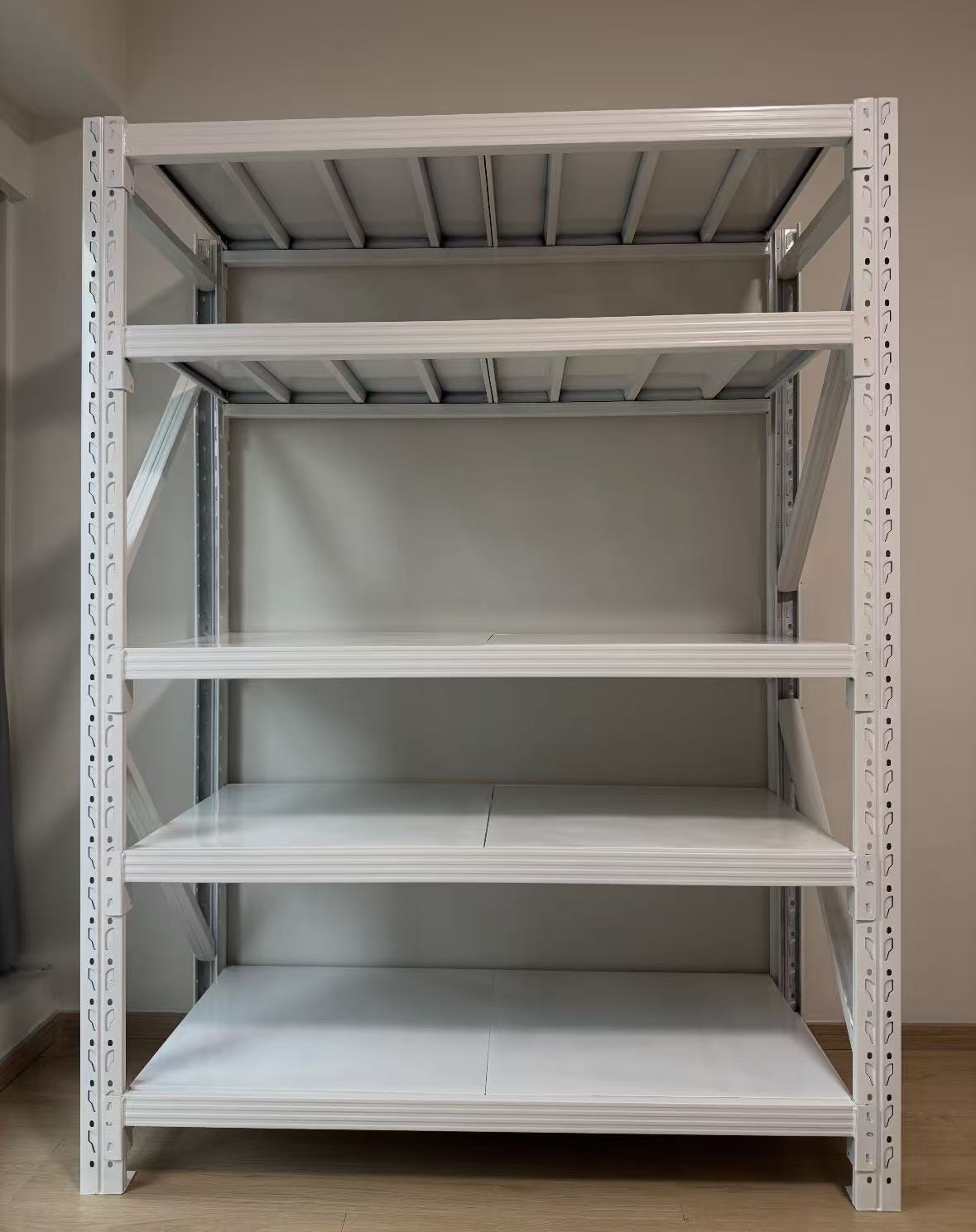
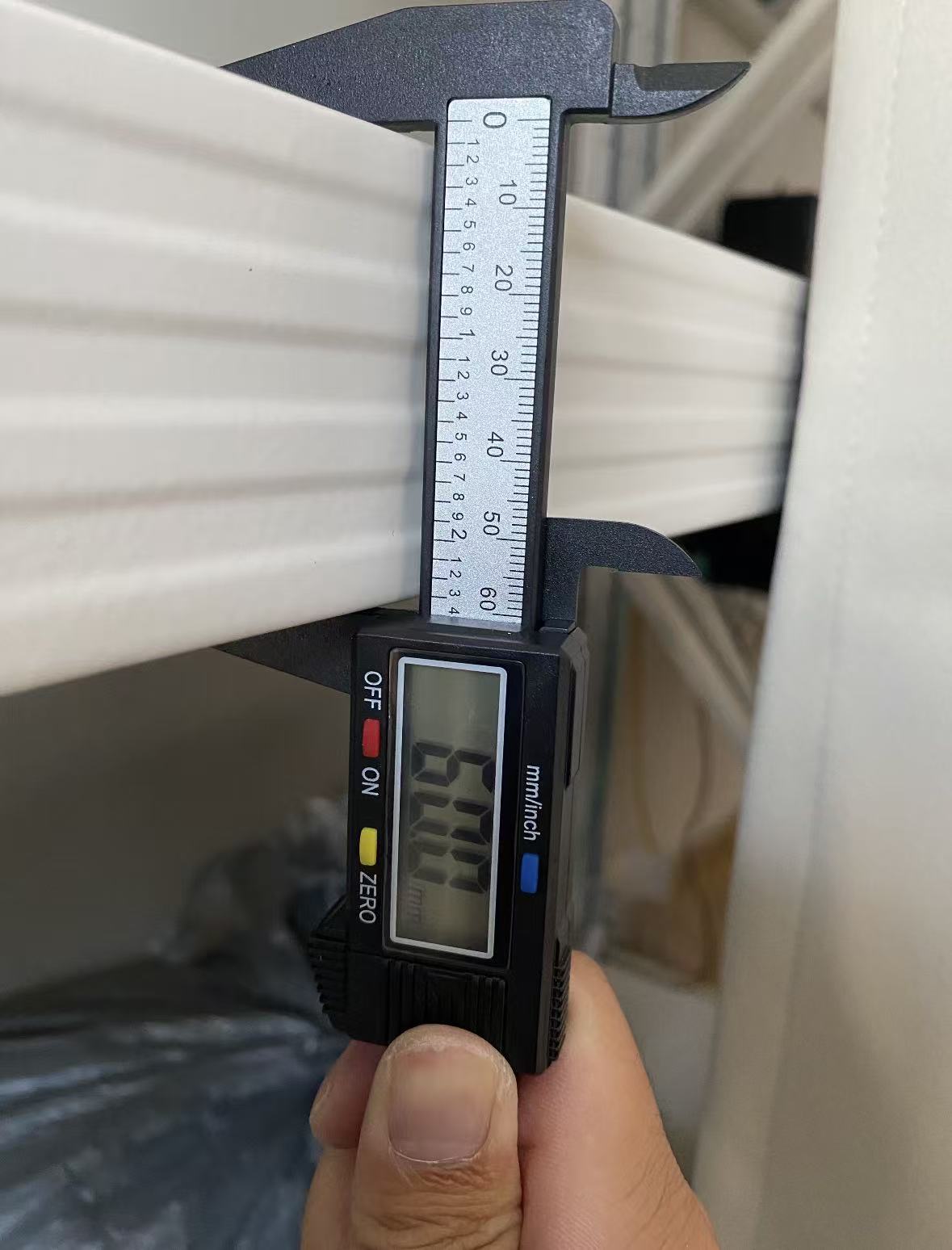
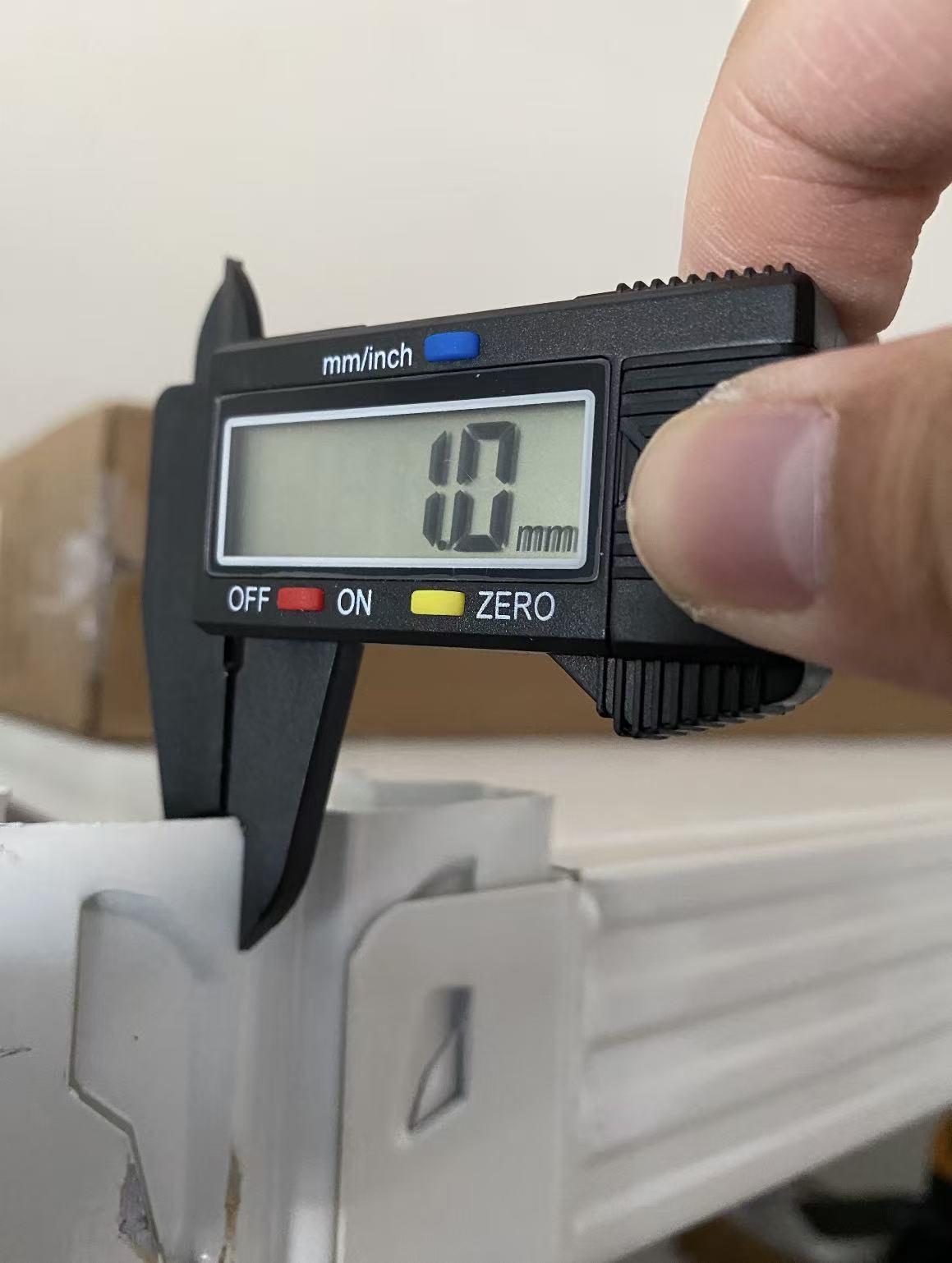
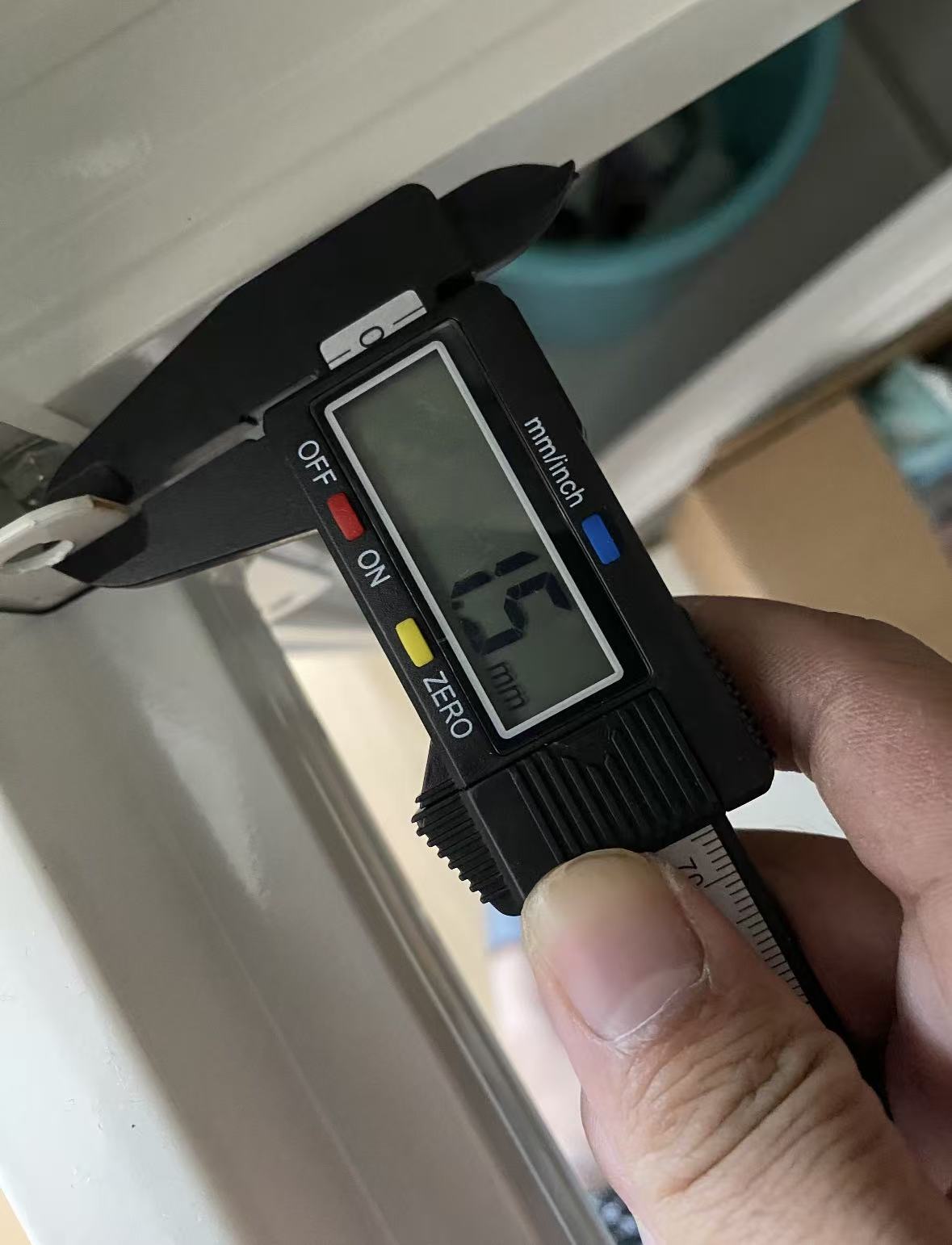
The images in this article show an actual KAYOU steel shelving sample being inspected with a digital caliper.
The visible measurements include approximately:
39.0 mm upright profile width
60.0 mm front beam profile height
10.0 mm formed structural section
1.5 mm measured steel component thickness
These images are not decorative catalog renderings. They show real product components and real inspection steps.
Professional measuring tools such as digital calipers and micrometers are widely used to check dimensional specifications in manufacturing. The reliability of the result also depends on the instrument, measuring faces, measuring position, operator method and calibration condition.
For this reason, KAYOU does not rely on one carefully selected photograph alone. Measurements should be taken at the agreed components and inspection points.
Our Promise: No Unauthorized Thickness Reduction
After a customer confirms the quotation, specification sheet or approved sample, KAYOU treats the material thickness as part of the order requirement.
We will not intentionally change, reduce or substitute the confirmed steel specification simply to lower production costs.
When a design adjustment is necessary, we communicate with the customer before production.
For example, a proposed change may be needed because of:
A revised shelf size
A higher required load
A different reinforcement arrangement
A new target price
Container-loading optimization
A change in the intended application
Local market requirements
In these situations, the customer should receive a clear explanation of what is changing and why.
Production should continue only after the revised specification has been confirmed.
Thickness Is Specified by Component
A complete shelving unit does not necessarily use one identical thickness throughout the entire structure.
Different components perform different functions.
A professional specification may separately identify:
| Component | Function | Specification to Confirm |
|---|---|---|
| Upright | Transfers the vertical load | Profile size, steel thickness and slot design |
| Front and rear beam | Supports the shelf span | Beam height, folded profile and thickness |
| Shelf panel | Carries stored goods | Panel thickness, folded edges and reinforcement |
| Center reinforcement | Controls shelf deformation | Quantity, position and material thickness |
| Side brace | Improves frame stability | Profile size and connection method |
| Connector | Locks beams to uprights | Shape, thickness and engagement depth |
This component-based approach is more transparent than advertising one large thickness figure without identifying where that material is used.
A shelving unit with a 1.5 mm upright does not automatically mean every shelf panel is also 1.5 mm. Likewise, a thick beam alone does not prove the capacity of the complete shelf.
That is why KAYOU confirms the full structure rather than using one thickness number as a marketing shortcut.
Raw Steel Thickness and Finished Thickness Must Not Be Confused
Powder coating adds a surface layer to the steel component.
Therefore, measurements taken after coating may not be identical to the original raw steel measurement.
To avoid misunderstandings, KAYOU can clarify whether the stated thickness refers to:
Raw steel before surface treatment
Finished component after powder coating
Nominal material specification
Actual measured result at a selected inspection point
The measurement position is also important.
Measuring across a folded edge, embossed rib, overlapping joint or coated corner may produce a result that does not represent the thickness of one flat steel sheet.
For more accurate verification, the measuring faces should contact a suitable flat section of a single component whenever possible.
Our Steel Thickness Quality-Control Process
1. Specification Confirmation Before Quotation
Before preparing a final quotation, we confirm the main requirements, including:
Overall rack dimensions
Number of shelf levels
Required capacity per shelf
Stored-product type and weight
Upright specification
Beam specification
Shelf-panel specification
Reinforcement arrangement
Surface treatment
Order quantity and packaging requirements
This prevents the supplier and buyer from using different definitions of the same product.
2. Written Confirmation Before Production
The confirmed technical information can be recorded in:
The quotation
Proforma invoice
Product specification sheet
Technical drawing
Approved sample
Component list
Purchase contract
The purpose is to make the agreed thickness traceable instead of depending on an informal conversation.
3. Raw-Material Inspection
Before mass production, the steel material can be checked against the confirmed order specification.
Depending on the order and inspection plan, the review may include:
Material thickness
Coil or sheet condition
Surface quality
Material certificate information
Material type
Production-batch identification
If the material does not meet the confirmed requirements, it should not be treated as compliant material for that order.
4. In-Process Component Measurement
Steel thickness is checked more effectively before all components are completely assembled.
The quality-control team can measure selected:
Uprights
Beams
Shelf panels
Reinforcing ribs
Side braces
Connectors
This helps detect a material error before the entire order reaches the final-packing stage.
5. Finished-Product Inspection
After production, KAYOU can check both the dimensions and the overall structure of the finished shelving.
The inspection may cover:
Overall width, depth and height
Upright profile dimensions
Beam profile height
Shelf spacing
Component thickness
Connection engagement
Surface finish
Shelf-panel alignment
Bracing arrangement
Assembly stability
This is important because correct material thickness does not replace the need for proper forming, assembly and structural design.
6. Photo and Video Evidence
For overseas buyers who cannot visit the factory, KAYOU can provide inspection evidence according to the agreed order requirements.
This may include:
Caliper-measurement photos
Micrometer-measurement videos
Product assembly videos
Finished-product inspection photos
Packaging photos
Container-loading records
Each image should clearly show the measured component instead of displaying only the instrument screen.
7. Third-Party Inspection Support
Customers may also arrange an independent inspection before shipment.
KAYOU can cooperate with the customer or an authorized third-party inspection company to verify:
Product dimensions
Steel thickness
Quantity
Appearance
Packaging
Assembly
Confirmed technical specifications
Third-party inspection gives buyers an additional verification option, especially for customized projects or large orders.
We Do Not Use a Misleading Measurement Method
A thickness photograph is only trustworthy when the measurement method is clear.
KAYOU avoids presenting misleading evidence such as:
Measuring two overlapping steel layers as one thickness
Measuring a folded edge and describing it as sheet thickness
Measuring paint buildup at a corner
Showing only the display without showing the component
Measuring one specially prepared sample that differs from mass production
Using the thickest component to represent every part of the shelving
Describing nominal thickness as an exact result without clarification
Our objective is not simply to produce a large number on a caliper screen.
The objective is to prove that the actual component matches the specification agreed with the customer.
Steel Thickness Is Important—but It Is Not the Only Quality Factor
KAYOU does not tell buyers that thickness alone determines whether shelving is strong.
The actual performance of steel shelving also depends on:
Steel grade
Upright-profile geometry
Beam height and shape
Number of folded edges
Shelf width and depth
Reinforcement quantity
Connection structure
Manufacturing accuracy
Load distribution
Assembly condition
Floor condition
Anchoring or anti-tip requirements
For example, a uniformly distributed load is different from placing the same total weight at one concentrated point.
A heavy machine positioned in the center of a shelf can create greater local stress than cartons distributed across the full shelf surface.
Storage equipment should be designed for its expected loads, correctly installed and inspected before loading. Damaged storage racks should not continue to be used without assessment.
This is why KAYOU discusses both material thickness and structural design when recommending a shelving solution.
What Buyers Should Ask Every Steel Shelving Supplier
Before confirming an order, ask the supplier these questions:
Which component does the quoted thickness refer to?
Is the thickness measured before or after powder coating?
Are the upright, beam and shelf-panel thicknesses listed separately?
What is the upright-profile size?
What is the beam height?
How many reinforcement ribs are used under each shelf?
Is the capacity based on uniformly distributed loading?
Can the supplier provide measurement photos or videos?
Can the specification be written into the quotation or contract?
Does the supplier accept third-party pre-shipment inspection?
A reliable supplier should be able to answer these questions clearly.
Why Honest Thickness Is Better for Long-Term Cooperation
Reducing material thickness may create a small short-term cost advantage, but it creates serious long-term risks.
For buyers, these risks include:
Product performance below expectation
Shelf deformation
Customer complaints
Marketplace disputes
Replacement costs
Damage to the importer’s reputation
Loss of repeat business
Safety concerns
For the manufacturer, false thickness claims destroy trust.
KAYOU focuses on long-term B2B cooperation. That means the product delivered should correspond to the product confirmed.
We would rather discuss the real cost of the required specification than offer an artificially low price based on hidden material reduction.
KAYOU’s Thickness Quality Commitment
For every confirmed steel shelving order, our commitment is:
Clear specifications
We identify the thickness and profile requirements of the main components.
No intentional false claims
We do not advertise one thickness and deliberately manufacture another.
No unauthorized substitution
A confirmed material specification will not be changed without customer communication and approval.
Visible inspection
Measurement photos, videos and inspection records can be provided according to the order requirements.
Third-party verification
Customers may arrange independent inspection before shipment.
Traceable communication
Important specifications are recorded in written order documents.
This is what KAYOU means by a steel thickness quality guarantee.
It is not only a slogan.
It is a process that begins before quotation and continues through material selection, production, inspection, packaging and shipment.
Frequently Asked Questions
Does KAYOU guarantee the confirmed steel thickness?
Yes. KAYOU manufactures according to the thickness recorded in the confirmed quotation, drawing, specification sheet, approved sample or contract, subject to the agreed tolerance and measurement method.
Will KAYOU reduce the steel thickness after receiving the order?
No. We do not intentionally reduce an agreed material thickness without customer authorization. Any necessary technical change must first be explained and confirmed.
Can I request separate thicknesses for the upright, beam and shelf?
Yes. We recommend listing the main components separately because different parts may use different steel specifications.
Can KAYOU provide measurement videos?
Yes. Measurement photos or videos can be arranged according to the order and inspection requirements. The video can show the component, measuring position and instrument reading together.
Is a digital caliper suitable for measuring steel thickness?
A digital caliper can be used for many dimensional checks. For more precise thickness verification, an appropriate micrometer may also be used, depending on the component, tolerance and inspection requirement. Precision-tool manufacturers emphasize that instrument accuracy and correct measuring conditions affect the result.
Does thicker steel always mean higher load capacity?
Not by itself. Load capacity also depends on the steel grade, component profile, beam span, reinforcement, connections, shelf dimensions and load distribution.
Can a third-party inspector verify the thickness?
Yes. KAYOU supports customer-appointed pre-shipment inspection and can assist the inspector in identifying the agreed components and measurement points.