
KAYOU Buying Guide
Steel Locker Buying Guide for Schools, Factories and Gyms
Steel lockers may look like simple metal cabinets, but a successful project depends on much more than choosing a door count and color. The right specification must connect the number of users, stored items, security level, cleaning routine, room conditions, accessibility and installation method.
This guide shows project buyers how to compare steel lockers and what evidence to request before approving a bulk order.
Start With the Application, Not the Catalogue
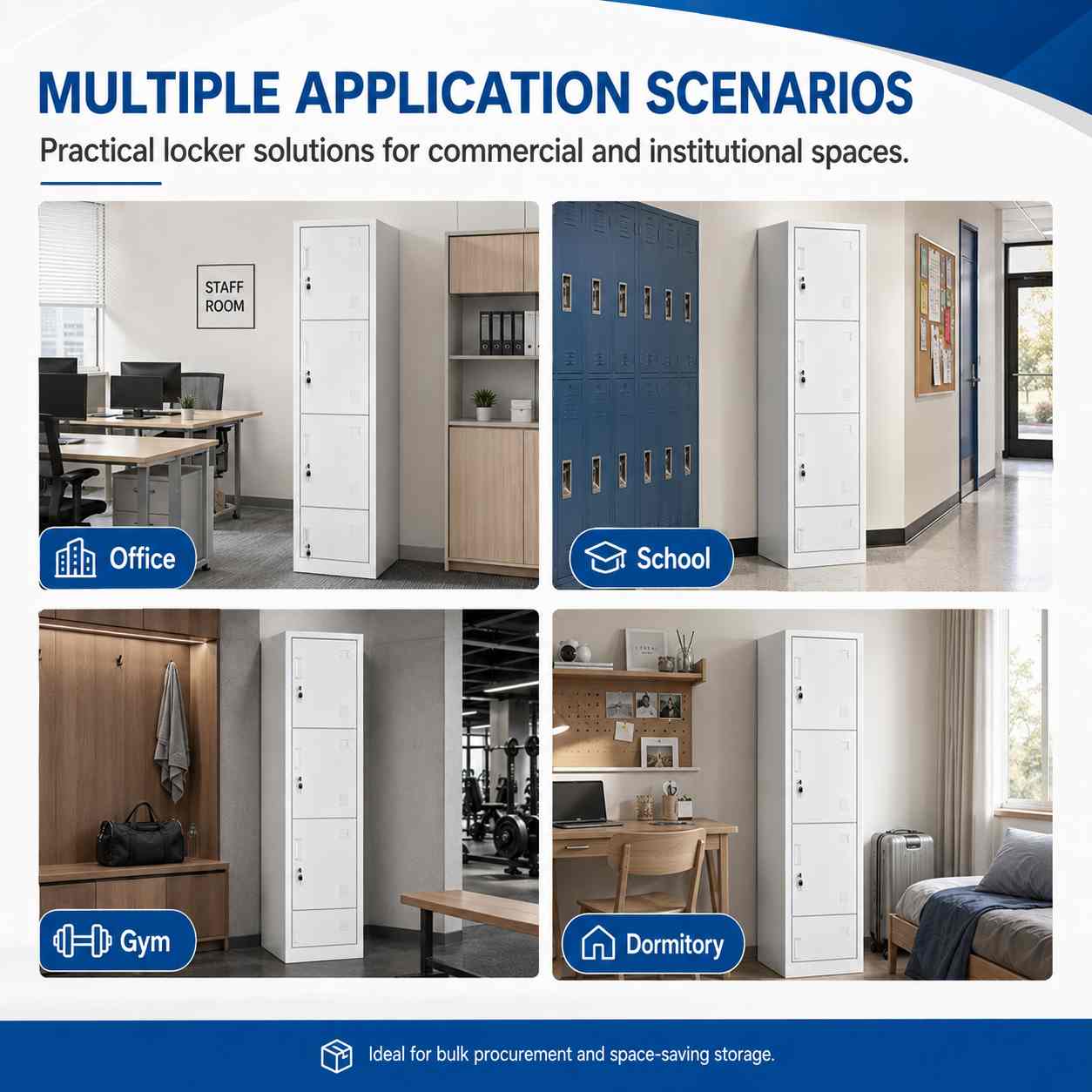
The same locker cannot serve every environment equally well. Begin by documenting how people will use the storage area.
| Application | Typical use | Main buying priorities |
|---|---|---|
| School | Assigned storage for books, bags, coats or sports equipment | Safe edges, robust doors and hinges, numbering, easy cleaning, anti-tip installation and simple key control |
| Factory | Uniforms, PPE, safety shoes, personal items or small work tools | Shift-change capacity, clean/dirty separation where required, ventilation, durable locks, plinth or legs and replaceable components |
| Gym | Short-term storage for bags, clothing, footwear and valuables | Moisture exposure, airflow, fast lock turnover, cleaning access, mixed compartment sizes and user-friendly operation |
Avoid specifying a locker as “heavy duty” without measurable details. Define the exact model, external and internal dimensions, material, finished steel thickness, door construction, lock, accessories, surface treatment, installation and required test evidence.
1. Calculate How Many Locker Openings You Need
Count users according to the operating model, not simply the building population.
Schools: assigned lockers normally follow enrollment plus staff, visitor or sports-team requirements. Shared lockers should be based on the maximum number of simultaneous users.
Factories: use the highest number of workers present during shift overlap, including temporary staff and contractors. If street clothing and workwear need separate storage, count both functions.
Gyms: estimate peak concurrent users rather than total memberships. Decide whether lockers are day-use, assigned, rental or a combination.
A simple planning formula is:
Required openings = peak simultaneous users + an approved operational reserve
The reserve should reflect expected growth, unavailable compartments during maintenance and project policy. There is no universal percentage that suits every facility.
2. Choose the Correct Locker Configuration
| Locker type | Best suited to | Main trade-off |
|---|---|---|
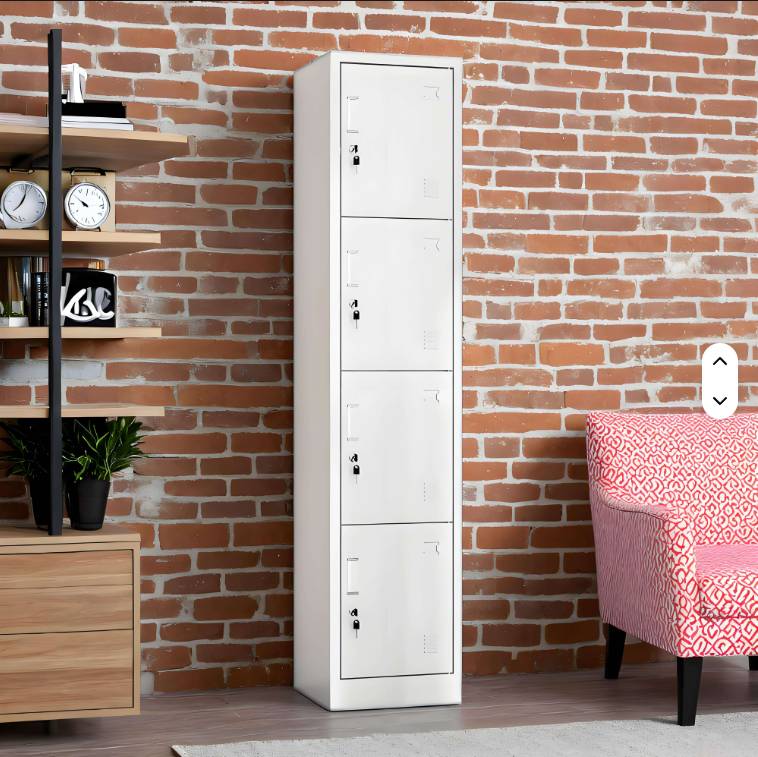
| Full-height, single-tier | Coats, uniforms, long garments and large bags | More storage per user but fewer users per cabinet width |
| Two-tier | Medium bags, folded clothing, shoes and personal items | Good balance between capacity and space efficiency |
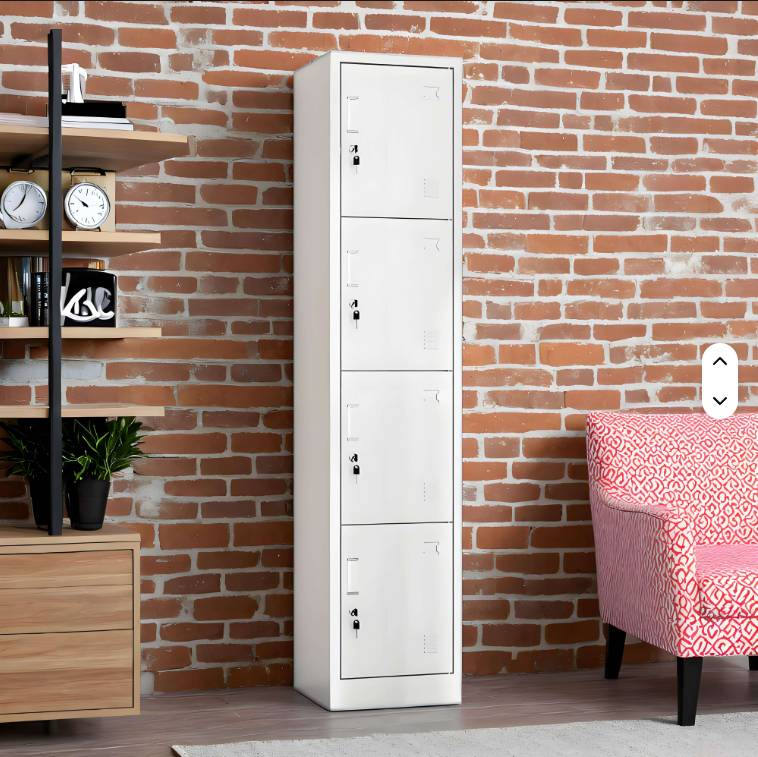
| Multi-tier box locker | Phones, helmets, small bags or short-term storage | More openings, but limited internal height |
| Z-door locker | Hanging garments plus compact floor-space use | More complex door and internal geometry; confirm clear space with a sample |
Door count alone is not enough. Ask for the clear compartment opening and usable internal size. A helmet or backpack may fit the outside dimensions but fail to pass through the door. Specify shelves, rails, hooks and dividers on the approved drawing; mixed compartment sizes may serve gyms and schools better than one format.
3. Specify Steel and Construction in Verifiable Terms
Thicker steel can improve stiffness, but performance also depends on folds, reinforcements, joints, hinges and cabinet geometry. Do not select a locker using thickness alone.
Your purchase specification should identify:
Steel grade or agreed material specification
Finished thickness for doors, side panels, shelves and structural parts
Welded or knock-down construction
Door reinforcement and hinge design
Smooth, protected edges and corners
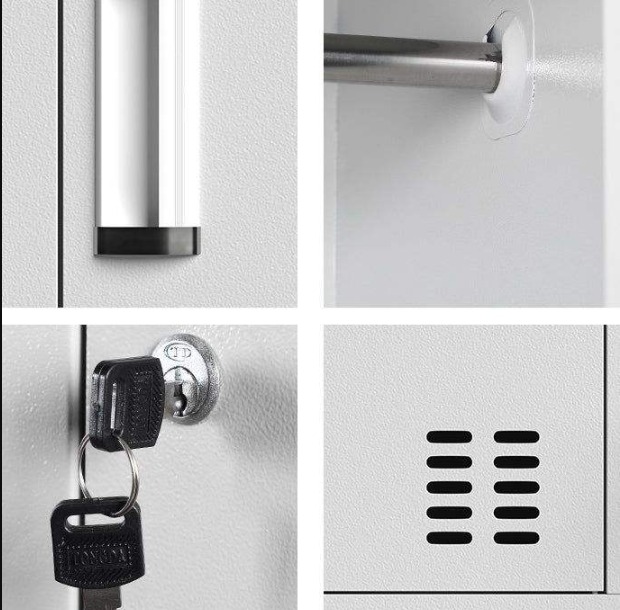
Ventilation pattern and label-holder details
Base, legs, plinth, sloping top or bench connection
Method for joining locker banks and anchoring them to the building
Knock-down lockers reduce shipping volume and can lower freight cost, but assembly quality becomes part of structural performance. Require a trial assembly and clear instructions. Welded lockers arrive more complete but use more container space and may be harder to move through narrow doors.
For relevant projects, buyers may request a test basis such as ISO 7170:2021, which provides methods for determining the strength, durability and stability of fully assembled storage units. The standard does not itself set universal acceptance criteria, so the test configuration, loads, cycles and pass/fail criteria must be agreed for the exact locker model.
4. Match the Finish to the Environment
Powder-coated steel is a practical choice for many dry indoor schools, staff rooms and fitness centers. However, “powder coated” does not describe the complete corrosion system. Ask about steel preparation, pretreatment, coating specification, film-thickness control, curing and repair procedures.
For poolside, coastal or chemically cleaned areas, disclose the actual exposure. A different pretreatment, galvanized substrate, stainless steel, aluminum or non-steel locker may be more suitable. Do not describe ordinary painted steel as waterproof or rustproof without application-specific evidence.
Provide the cleaning-agent name and concentration. Locker-room ventilation and moisture control remain necessary; door perforations cannot replace the building's ventilation system.
5. Select a Locking System You Can Manage
| Lock option | Advantages | Questions to resolve |
|---|---|---|
| Key or cam lock | Familiar, economical and simple | Master-key plan, duplicate-key control and replacement cylinders |
| Padlock hasp | Users can supply their own locks | Accepted shackle size, abandoned padlocks and emergency removal policy |
| Mechanical combination | No batteries or user keys | Code-reset method, override access and staff training |
| RFID or electronic lock | Centralized access and day-use functions | Power, software, credentials, privacy, offline operation and spare parts |
Confirm emergency access, authorization, lost-credential handling and whether activity logs comply with privacy rules. Test the selected lock on a physical sample before production.
6. Design for Ventilation, Hygiene and Maintenance
Wet clothes, shoes and workwear can create odor and corrosion risk. Vent slots or perforations help air movement, but their location should not expose stored items unnecessarily or weaken the door. Do not block them with room finishes or signs.
Useful hygiene options include raised legs, a recessed plinth, a sloping top and removable or accessible internal surfaces. Choose the base according to the cleaning method: legs can allow cleaning underneath, while a closed plinth can reduce dirt accumulation below the cabinet. Sloping tops discourage storage of loose items and make high surfaces easier to manage.
In factories, a locker layout may need to keep street clothes away from contaminated protective clothing. In the United States, OSHA 1910.141(e) requires separate storage facilities when a specific standard requires protective clothing because of possible toxic-material contamination. Other countries and industries may impose different rules, so the employer's risk assessment and local authority remain decisive.
7. Plan Accessibility and Safe Installation
Accessibility affects locker height, reachable shelves, locks, clear floor space and the route around open doors and benches. Under the US 2010 ADA Standards, at least 5 percent—but no fewer than one of each locker type—must comply with Section 811 where the rule applies. Section 811 addresses clear floor space, reach range and operable parts. Verify the applicable local code and project interpretation before production.
Tall, narrow cabinets can overturn if they are freestanding, unevenly loaded or climbed on. The project designer should define whether lockers are joined in banks and anchored to a suitable wall, floor or support frame. Check the substrate, fasteners, services behind the fixing area and any seismic requirements. A locker manufacturer's stability test does not prove that an unknown wall or anchor is adequate.
Allow for door swing, benches, wheelchair circulation, cleaning and escape routes before releasing the layout.
8. Ask for Evidence Before Approving the Order
A reliable supplier should connect the approved sample, drawing and test information to the product actually shipped. Request:
Model-specific drawing with external, internal and clear-opening dimensions
Bill of materials, steel specification and finished component thicknesses
Lock datasheet, master-key schedule and spare-parts list
Surface-preparation and powder-coating specification
Applicable strength, durability and stability test report or engineering basis
Installation, joining and anchoring instructions
Approved color, labels, numbering and logo artwork
Packaging drawing and assembly trial records
Pre-shipment inspection plan with measurable tolerances
Warranty scope and availability of replacement doors, locks and keys
KAYOU's quality-control process covers material, dimensions, structure, coating, accessories, packaging and order accuracy. Buyers can also request defined checkpoints for their order instead of relying on a generic inspection statement.
9. Compare Total Cost, Not Only Unit Price
The lowest cabinet price may not produce the lowest project cost. Include locks, master keys, numbering, end panels, sloping tops, benches, spare parts, assembly labor, anchors, freight, packaging disposal and future maintenance in the comparison.
For imported projects, include standardized spare doors, locks and keys in the original order. Packaging should protect corners, coating and hardware during site handling.
Important Safety and Compliance Distinctions
An ordinary personnel locker is not a chemical or flammable-liquid storage cabinet. For example, OSHA 1910.106 specifies construction and fire-performance requirements for flammable-liquid storage cabinets. Do not store regulated substances in a standard locker unless the responsible safety professional and applicable authority approve a purpose-designed solution.
A quality-management certificate does not prove that every model meets every destination market's structural, accessibility, fire or corrosion requirements. Check the written scope, test specimen and installation.
Frequently Asked Questions
What steel thickness is best for a locker?
There is no universal answer. Door size, folds, reinforcement, hinge design, compartment width, use frequency and acceptance criteria all affect performance. Specify finished component thicknesses and verify the assembled model with agreed tests.
Are steel lockers suitable for humid gym changing rooms?
They can be, if the finish and maintenance plan match the exposure. Provide humidity, splash, cleaning-chemical and ventilation information to the supplier. For aggressive conditions, evaluate alternative metals or non-steel materials.
Are knock-down lockers weaker than welded lockers?
Not automatically. A well-designed and correctly assembled knock-down locker can perform reliably. The risk is uncontrolled assembly, missing fasteners or poor alignment, so require instructions and a trial build.
Which locker lock is best?
Key locks suit straightforward assigned storage; padlock hasps shift lock ownership to users; mechanical combinations reduce key handling; electronic systems offer more management functions but require infrastructure and support. Choose according to the operating process and lifecycle cost.
Conclusion
The best steel locker is not simply the thickest or the cheapest. It is the model whose capacity, compartment size, construction, finish, lock, accessibility and installation match the real users and environment—and whose specification can be verified before shipment.
KAYOU supplies customizable metal storage lockers and other steel furniture for schools, factories, gyms, offices and commercial projects. Send the room dimensions, user count, stored-item sizes, locker layout, lock preference, environment, quantity and destination to receive a project-based proposal.
Contact KAYOU for a locker quotation
Share your locker size, layout, lock type, quantity and destination with our team.
Engineering and compliance notice: This article is a procurement guide, not a project-specific structural, accessibility, fire-safety or occupational-hygiene approval. Requirements vary by product, installation and jurisdiction. Confirm the final design with the responsible designer, safety professional and local authority.