

Common Causes of Shelf Deflection and How to Prevent Them
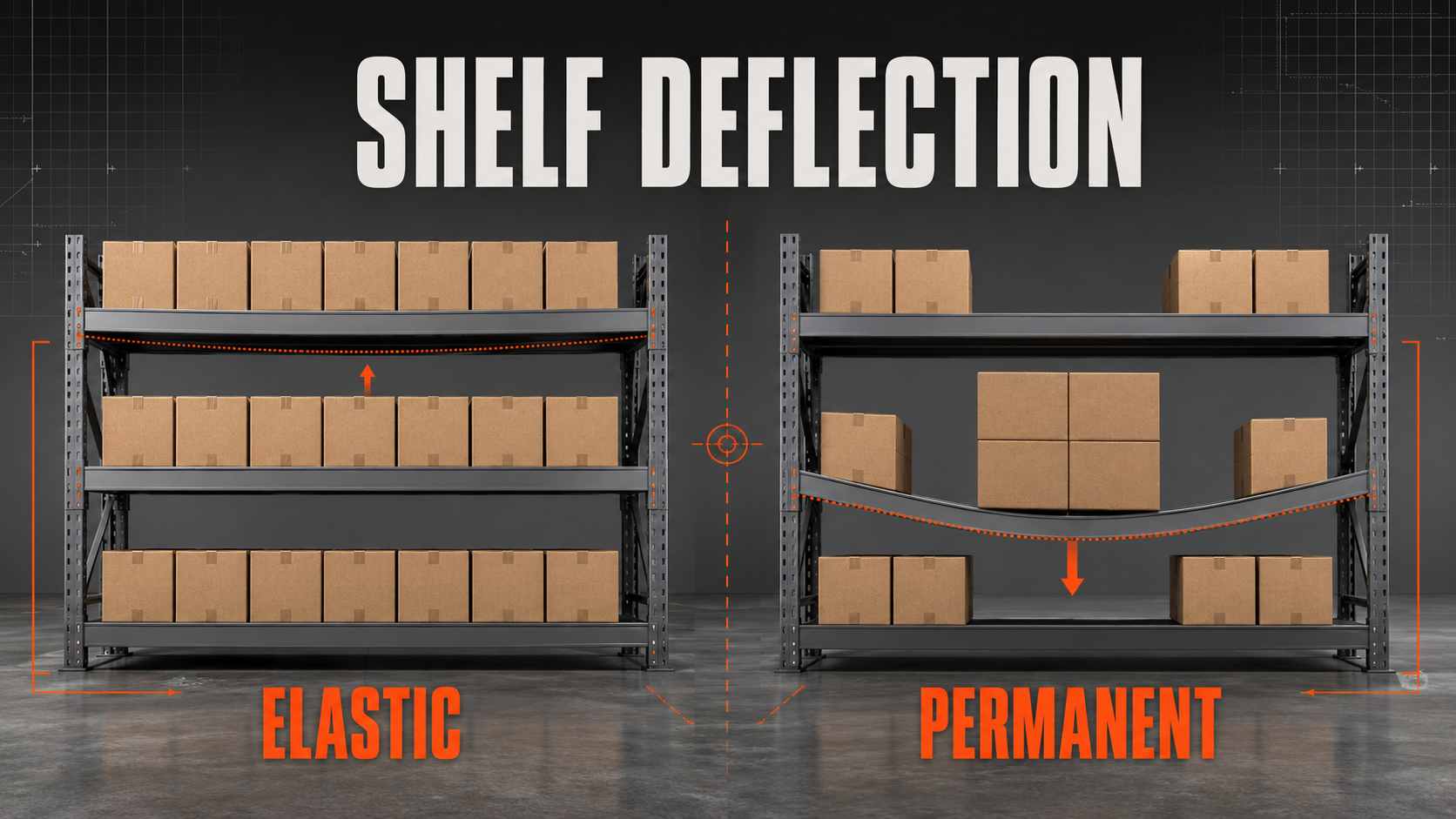
Shelf deflection is the downward movement of a shelf deck or load beam under weight. A small amount of elastic movement may occur in a correctly designed system and disappear after unloading. Deflection becomes a warning sign when it is excessive, continues to increase, affects connectors or shelf panels, or remains after the load is removed.
The correct response is not to judge the shelf by appearance alone. Buyers and warehouse operators should connect deflection to the approved shelf span, component specification, load distribution and rated capacity.
Elastic Deflection vs Permanent Deformation
Elastic deflection occurs while the shelf is loaded and substantially recovers after unloading. Permanent deformation remains after the goods are removed and may indicate overload, impact, damaged components or a structure that does not match the intended application.
There is no single deflection number that should be applied to every storage product. Industrial boltless shelving, retail shelving and pallet racking have different structures and standard scopes. For example, ANSI MH28.2-2022 addresses industrial boltless steel shelving, while pallet racks are covered separately. Always use the acceptance criteria for the exact shelving type, model and destination market.
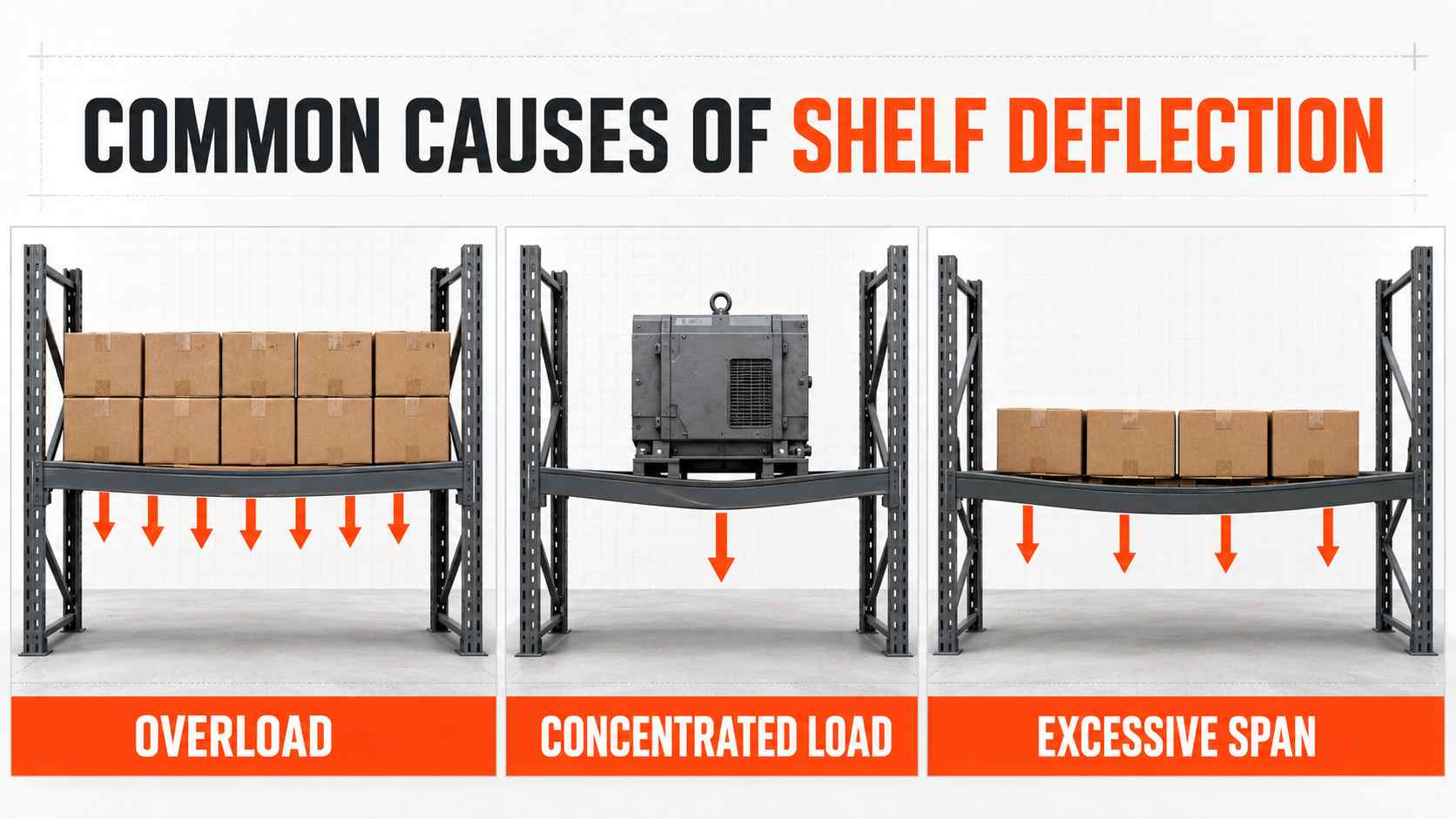
Six Common Causes of Shelf Deflection
| Cause | Why It Creates Deflection | How to Prevent It |
|---|---|---|
| Overloading | The weight exceeds the rated load per level or total bay capacity. | Display load labels, control stored weights and never exceed the approved rating. |
| Concentrated loading | A motor, mould or dense carton places most of the weight in one small area instead of across the shelf. | Confirm point loads with the supplier or spread the load using an approved support solution. |
| Excessive beam span | A longer clear span generally requires a stronger beam or additional reinforcement. | Match the beam profile, thickness and deck support to the approved shelf width. |
| Weak or incorrect components | Thin beams, insufficient reinforcement, unsuitable shelf panels or mixed components can reduce stiffness. | Approve drawings, profiles, thicknesses and component weights before production. |
| Incorrect assembly | Partly engaged connectors, missing safety locks, poor bracing or uneven frames change how the load is transferred. | Follow the assembly instructions and complete a level, square trial installation. |
| Damage or modification | Forklift impact, bent uprights, drilled holes, corrosion or unapproved repairs can weaken the system. | Inspect regularly and replace or professionally evaluate damaged parts. |
Load Distribution Matters
A shelf rated for a uniformly distributed load (UDL) is tested or designed for weight spread across the usable surface. The same total weight concentrated at the center can cause greater local bending. Buyers should therefore provide both the total load and the dimensions, weight and position of individual items.
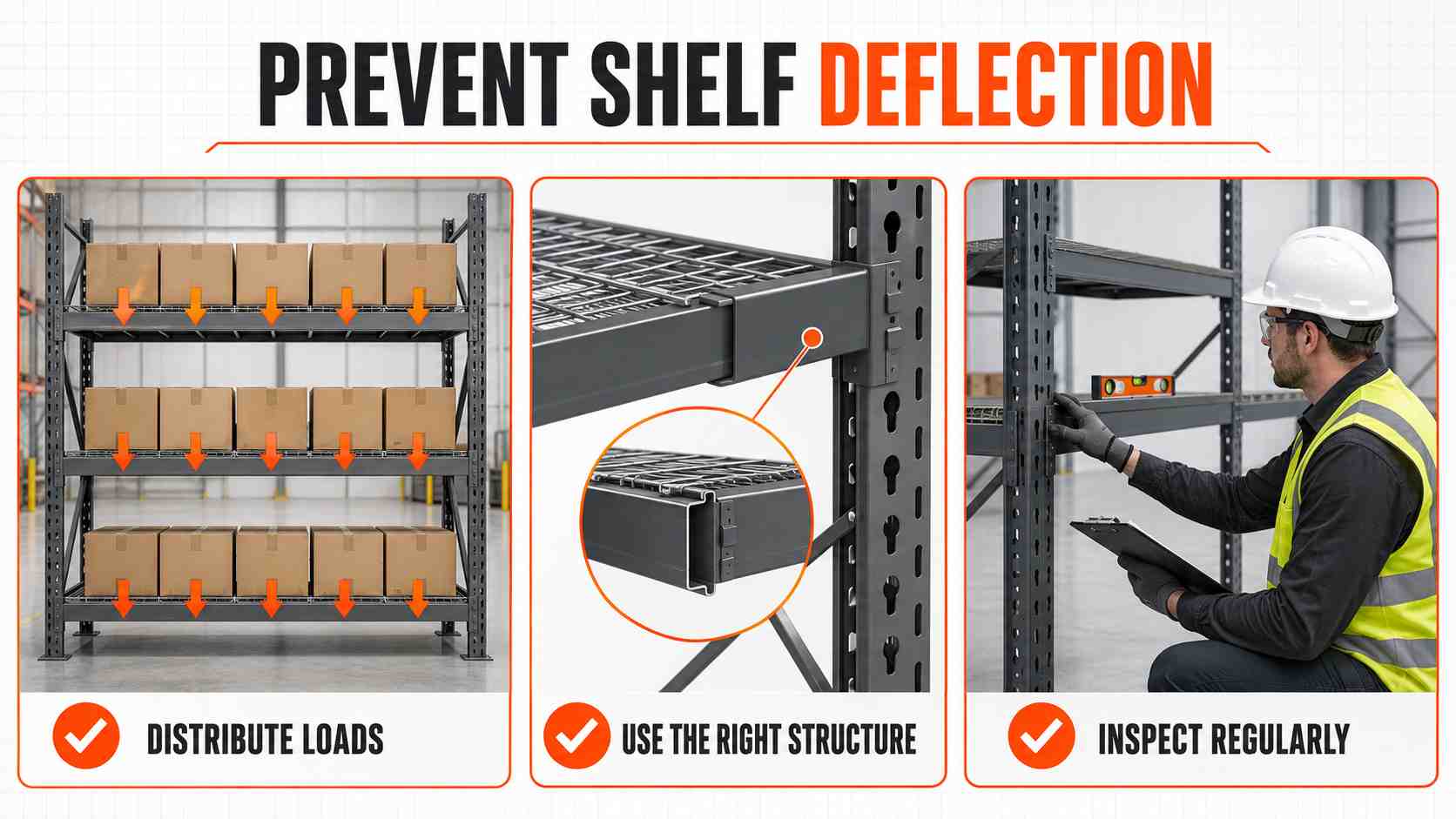
How to Prevent Shelf Sagging
1. Confirm the Complete Load Specification
Do not purchase shelving based only on “kg per shelf.” Confirm:
Rated load per level and total bay load
UDL or concentrated loading condition
Clear beam span and shelf depth
Number and spacing of levels
Upright, beam and panel profiles and thicknesses
Deck type and reinforcement
The load rating should refer to one controlled drawing or product model.
2. Choose the Correct Beam and Deck
Wider shelves or heavier goods may require taller beams, thicker material, additional shelf supports or reinforced panels. Steel panels, wire decking and engineered board behave differently under load. The deck must be compatible with the beam structure and stored product.
3. Distribute Goods Evenly
Avoid placing all dense items at the center of a shelf. Spread cartons across the width and depth where the approved loading condition requires it. Place heavier goods on lower or middle levels to improve handling and stability.
4. Install the System Correctly
Check that frames are level and plumb, connectors are fully engaged, safety locks are installed, bracing is complete and anchors are used where required by the design and site conditions. Never mix components from different shelving systems unless compatibility has been formally confirmed.
5. Inspect Loaded and Unloaded Shelves
Record the original condition after installation. During inspections, look for increasing sag, permanent bends, loose connectors, cracked coatings near deformed areas, damaged bracing and uneven frames. After an impact or visible change, unload and isolate the affected area.
OSHA's warehousing guidance recommends inspecting and maintaining shelving and racking, isolating damaged areas, keeping loads within rated capacities and placing heavier loads on lower or middle shelves.
When Should a Shelf Be Taken Out of Service?
Unload and isolate the shelf when deflection increases suddenly, remains after unloading, causes panels or connectors to disengage, follows an impact, or appears together with bent uprights, damaged bracing or loose anchors. Do not straighten, weld or drill structural components without manufacturer or qualified engineering approval.
Shelf Deflection Checklist for B2B Buyers
Before approving an order, request:
Technical drawing and bill of materials
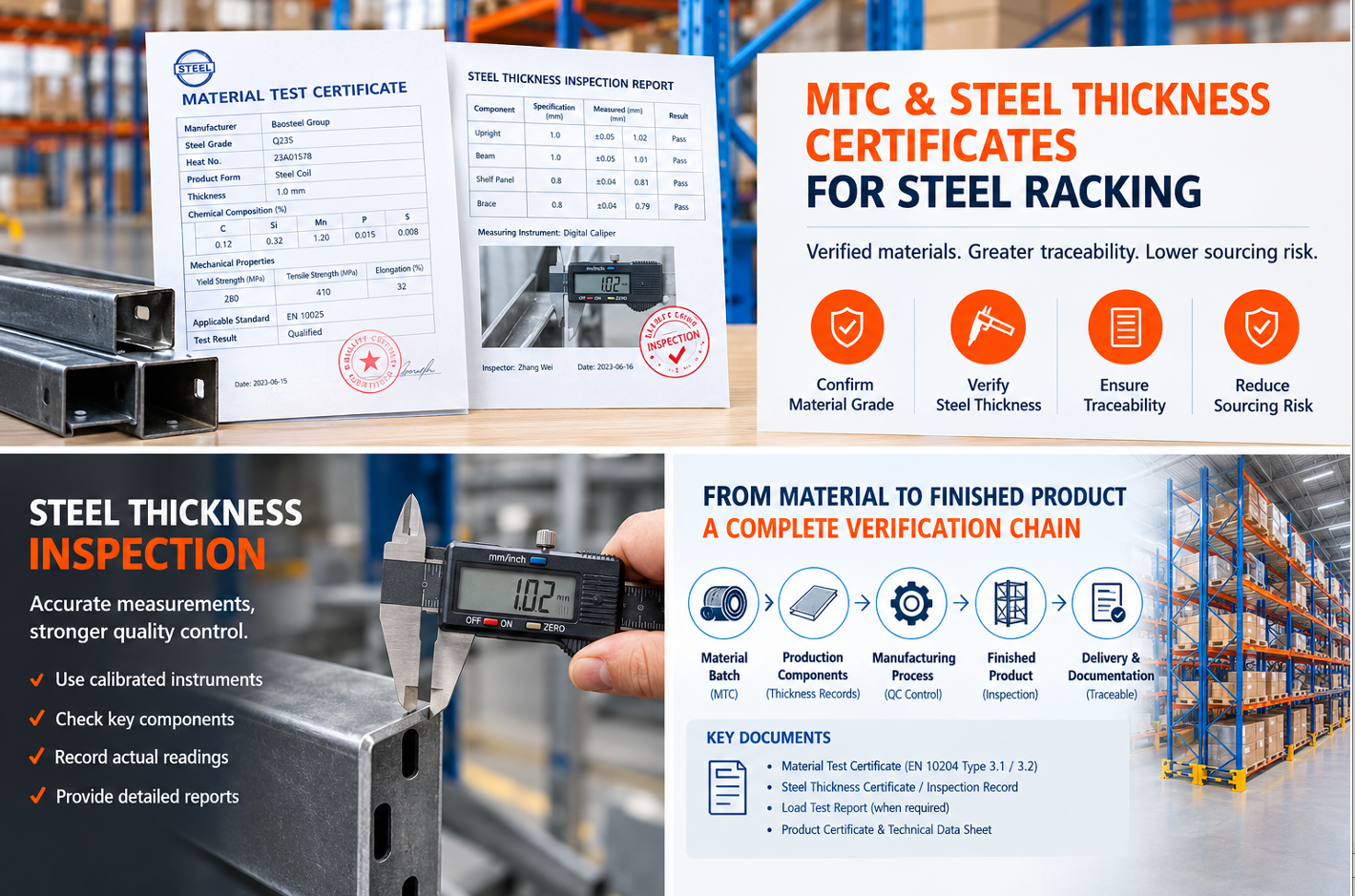
Steel grade, profile and thickness confirmation
Load definition and loading diagram
Model-specific test report or engineering basis
Deflection and post-unloading observations
Assembly instructions and load-label sample
Pre-shipment measurement and trial-assembly records
Conclusion
Shelf deflection is controlled by more than one kilogram figure. Load distribution, clear span, beam stiffness, deck support, installation and component condition all matter. A reliable manufacturer should explain how the rating was established and connect it to the exact structure being supplied.
KAYOU provides customizable medium duty steel shelving for warehouses, workshops and distribution projects. Send us your required dimensions, load per level, stored-product details and quantity for a technical configuration and quotation.
Need a Shelving Solution for Your Project?
Contact KAYOU for a technical configuration and quotation based on your dimensions, load requirements and order quantity.