
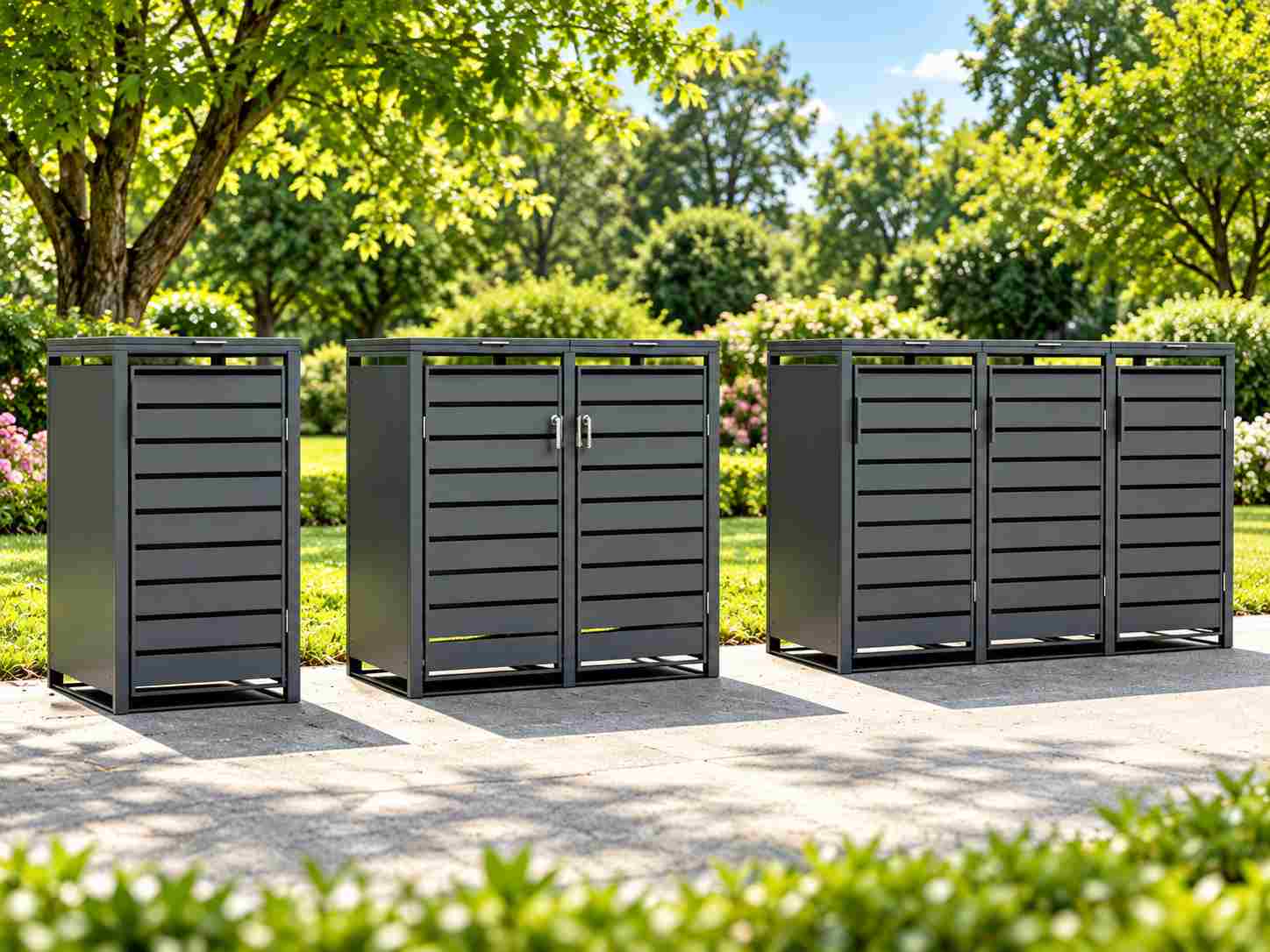
Metal Bin Stores: How to Choose Outdoor Wheelie Bin Storage
A metal bin store can make an outdoor waste area look more organised, but appearance is only part of the purchasing decision.
The enclosure must fit the actual bins, allow convenient daily access and withstand the conditions at its installation site. A cabinet that looks suitable in a photograph may still have insufficient door clearance, incompatible lid hardware or an unsuitable coating specification.
For distributors, property managers and project contractors, the best starting point is a clear specification—not simply “a cabinet for three bins.”
This guide explains what to check before buying outdoor wheelie bin storage and how to prepare a useful enquiry for KAYOU.
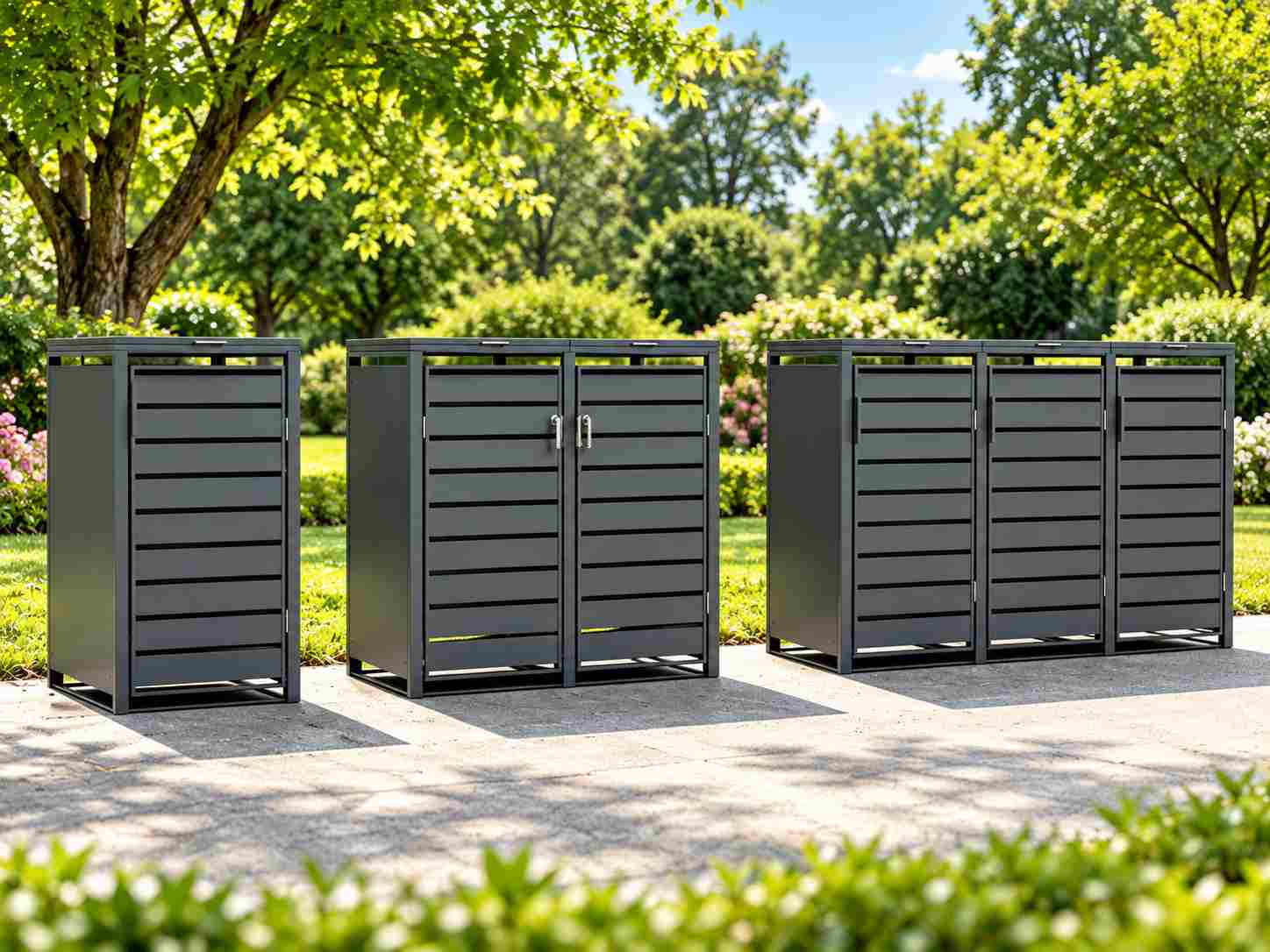
What Is a Metal Bin Store?
A metal bin store is an enclosure that houses wheeled waste or recycling bins. It may also be called a:
Wheelie bin storage cabinet.
Metal bin shed.
Garbage can enclosure.
Outdoor trash can storage cabinet.
Bin housing.
These terms can describe different layouts. Some products provide a shared enclosure, while others have individual compartments, top lids and front doors.
A bin store organises and screens the containers. It does not replace the waste bins themselves or the site’s collection and cleaning procedures.
Explore the KAYOU outdoor trash can storage cabinet for a compartment-based design with top and front access.
1. Confirm Actual Bin Dimensions Before Cabinet Size
Nominal bin capacity is not enough to confirm compatibility.
A description such as “240-litre bin” identifies volume, but the enclosure must accommodate the bin’s external dimensions and operating movement. Confirm the exact bin model using its manufacturer’s drawing or measurements.
| Measurement | What to include |
|---|---|
| Overall width | Widest point, including any projecting features |
| Overall depth | Lid, handles and wheel-related projections |
| Closed height | Highest point with the bin lid closed |
| Lid movement | Space needed as the lid opens |
| Removal path | Door opening and room to tilt or manoeuvre the bin |
| Installation footprint | Cabinet body, open doors and service access |
Ask the enclosure supplier to show usable compartment dimensions and clear door openings, not only overall cabinet dimensions.
Example: Planning a Three-Bin Store
If each bin has a maximum external width of 600 mm, three bins occupy 1,800 mm before allowing for clearance.
That does not establish the required external cabinet width. Partitions, frame members, door hardware and handling space must also be included.
Similarly, the bin’s closed height does not determine the clearance required for an open cabinet lid.
This example illustrates the sizing process; it is not a recommended finished cabinet dimension.
2. Choose the Right Number of Compartments
Single, double and triple bin stores can suit different collection arrangements. Larger sites may need modular or custom configurations.
Start with the waste streams and collection schedule:
General waste.
Mixed recycling.
Paper and cardboard.
Food waste, where separately collected.
Other locally defined streams.
A three-compartment cabinet is useful only if its layout matches the containers and how people use them.
For shared facilities, consider readable labels and independent access so one compartment can be used without opening the others. Confirm local collection arrangements before assigning labels or colours.
3. Check Both Daily Disposal and Collection Access
A bin store needs to work in two different situations: putting waste into the bin and removing the bin for collection.
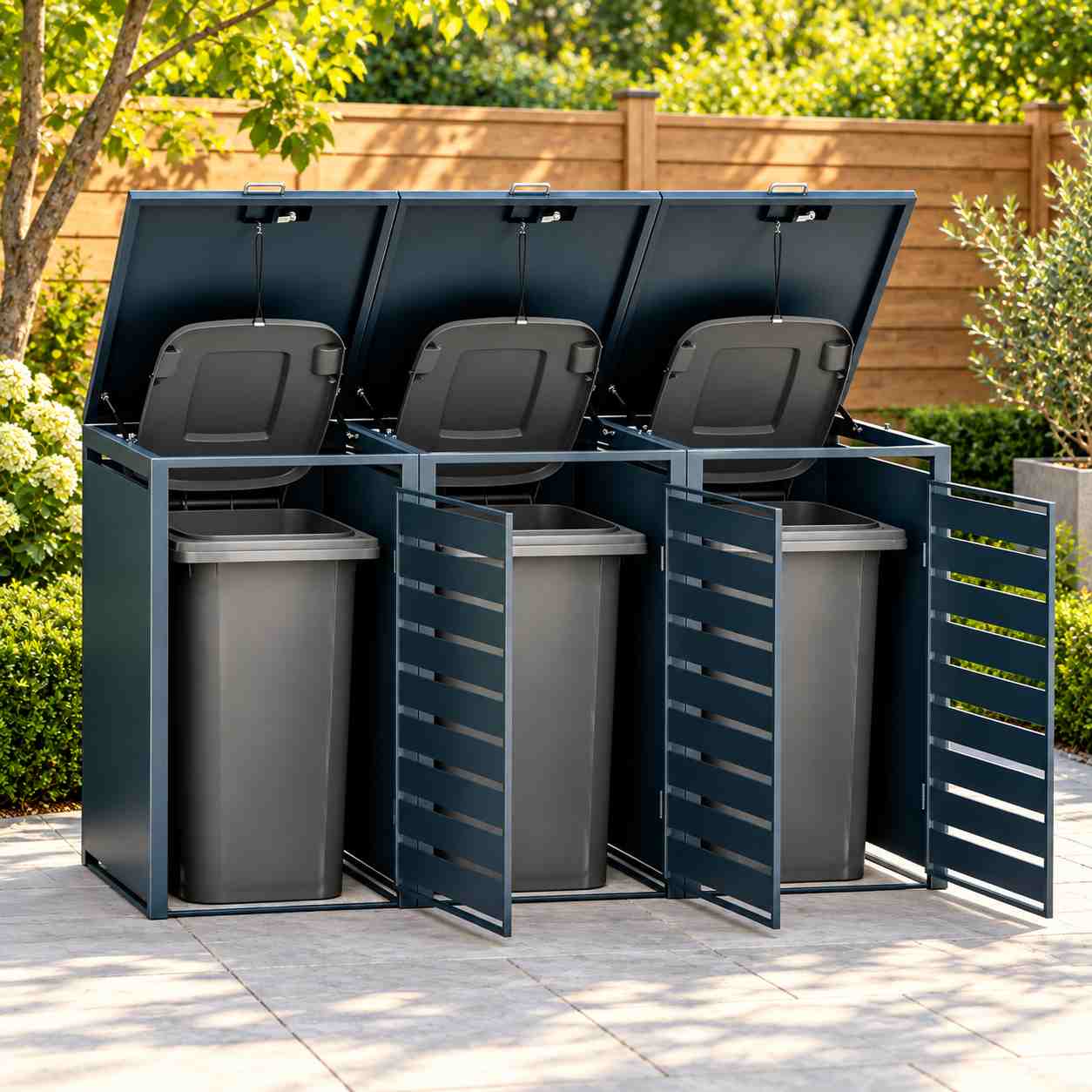
Lift-Up Top Lids
Top access can make daily disposal convenient. Check:
Whether each lid opens independently.
Whether users can reach the handle comfortably.
The space required above and behind the lid.
How the lid is supported while open.
Whether closing movement creates pinch points.
Front-Opening Doors
Front doors should provide enough clearance to roll the bin out without forcing it past the frame.
Review the ground threshold, hinges, latches and door swing. Allow room for an operator to manoeuvre the bin, particularly where the approach is narrow.
Linked Bin Lids
Some designs connect the enclosure lid to a compatible bin lid using a chain or other mechanism.
Verify compatibility with the actual bin. The connection should allow adequate opening without obstructing removal, and users should be able to disconnect it when required.
A practical sample trial should include opening, closing and removing a representative bin—not simply placing an empty container inside the cabinet.
4. Specify Outdoor Corrosion Protection
“Metal” describes a broad material category. It does not establish how long an enclosure will last outdoors.
Performance depends on the steel substrate, pretreatment, protective finish, joints, exposed edges and hardware, together with local exposure and maintenance.
Tell the supplier whether the cabinet will be installed:
Under shelter or fully exposed.
Near the coast.
In a humid or frequently wet location.
Near irrigation or washdown activity.
Where de-icing salts or cleaning chemicals may contact it.
| Specification item | Buyer question |
|---|---|
| Steel substrate | What material is supplied, and is any metallic protective coating used? |
| Surface preparation | How is the surface prepared before finishing? |
| Finish | Is the coating specification suitable for the stated exposure? |
| Edges and joints | How are cut edges, welds and vulnerable areas protected? |
| Hardware | What materials and finishes are used for hinges and fasteners? |
| Maintenance | How should damage, dirt and standing water be managed? |
Powder coating should not be treated as a guarantee of permanent rust resistance. Likewise, galvanised steel and stainless steel each require an appropriate specification for the environment.
If corrosion testing is requested, agree on the method, duration and acceptance criteria. A test result should not be converted into a claimed outdoor service life without a valid basis.
5. Look for Ventilation, Drainage and Cleaning Access
A bin enclosure should balance weather protection with ventilation and practical cleaning.
Check whether the proposed layout:
Limits direct rain entry through its top design.
Avoids unnecessary water traps.
Provides suitable ventilation openings.
Allows access for cleaning around the bins.
Keeps drainage paths clear.
Weather-resistant does not mean completely waterproof. Wind-driven rain, joints and open access points can still allow moisture into an enclosure.
Ventilation does not remove the need for closed bin lids, regular collection and cleaning. Avoid assuming that a cabinet is odour-proof or pest-proof unless the particular design and claim have been substantiated.
6. Review Installation and Site Access
A suitable enclosure needs a suitable location.
Check the proposed surface for level, drainage and installation requirements. Where anchoring is specified, obtain the fixing layout and confirm that the supporting surface is appropriate.
Also consider:
Door movement near paths or parked vehicles.
Collection access.
Wind exposure.
Cleaning access.
Nearby building services.
Escape routes and emergency access.
A metal cabinet should not be described as a fire-rated waste enclosure unless the supplied product has the relevant evidence. Site-specific fire precautions and placement requirements still apply.
HSE’s waste guidance also highlights access-control concerns for large waste and recycling bins, including those at retail and hospitality premises.[1] Large commercial-bin projects therefore need their own access and operating review rather than a scaled-up domestic design.
7. Inspect Hardware and Moving Parts
Daily use places repeated demands on lids, hinges, handles and latches.
For sample approval, check:
Smooth opening and closing.
Door alignment and latch engagement.
Secure hinge and support connections.
Accessible, comfortable handles.
Sharp-edge finishing.
Replaceable moving parts.
Operation after final installation.
Ask how replacement hardware can be identified and ordered. This matters for distributors and property managers maintaining multiple cabinets.
Do not infer durability from panel thickness alone. Frame geometry, connections and hardware selection also affect performance.
8. Compare Total Delivered Cost
For imported metal bin stores, the lowest unit price may not produce the lowest project cost.
Compare quotations against the same specification, including:
Cabinet and compartment dimensions.
Material and finish.
Lid and door hardware.
Assembly format.
Fixings and accessories.
Inspection requirements.
Protective packaging.
Delivery terms.
Knock-down packaging may reduce shipping volume, while pre-assembled supply may reduce work at destination. The appropriate choice depends on the actual design, packed dimensions and installation resources.
Include assembly labour, freight, import costs and replacement-part support when comparing offers.
For packing dimensions and shipment planning, read Export Packaging for Knock-Down Steel Furniture.
KAYOU Outdoor Bin Storage for Project Buyers
The KAYOU product shown on our website uses three independently accessed compartments with lift-up top lids and front-opening doors.
For custom and bulk orders, dimensions, compartment quantity, finish, hardware and packaging should be agreed in the final specification. Bin-lid linking mechanisms require compatibility confirmation.
See the KAYOU metal bin enclosure product page for the illustrated configuration, or explore our wider steel furniture range.
What to Send KAYOU for a Quotation
Provide:
Destination country and installation environment.
Bin brand, model and nominal capacity.
Actual bin dimensions or manufacturer drawings.
Number of bins and required compartments.
Available site dimensions and photographs.
Preferred colour and finish requirements.
Locking and lid-linking requirements.
Order quantity.
Assembly and packaging preferences.
Required inspection or test documentation.
Before production, agree on a drawing showing compartment clearances, door openings and lid movement. Review KAYOU quality control and define the checks needed for sample or shipment approval.
Frequently Asked Questions
Will any 240-litre wheelie bin fit a 240-litre bin store?
Do not assume this. Confirm the exact bin dimensions, lid movement and clear door opening against the enclosure drawing.
Is a metal bin store waterproof?
Most should be assessed as weather-resistant enclosures. Confirm the supplied design and exposure conditions rather than assuming complete waterproofing.
Does powder-coated steel need maintenance outdoors?
Yes. Follow the supplied cleaning guidance, inspect damaged areas and keep drainage paths clear.
Can the cabinet lid open the bin lid automatically?
A linking mechanism can be provided for compatible bins. Confirm its operation and disconnection procedure with the actual bin model.
Can a bin store prevent odours or pests?
It can help organise and restrict access to the bin area, depending on its design. Closed bins, cleaning and collection remain necessary; performance should not be overstated.
Can KAYOU customise the size and compartment layout?
Custom requirements can be discussed for suitable project and bulk orders. Final compatibility and supplied features are defined by the approved specification.
What is the most important check before ordering?
Confirm that the bin can be used and removed comfortably within the proposed enclosure—not merely that it fits with the doors closed.
Request a Custom Metal Bin Store
Planning outdoor wheelie bin storage for residential developments, commercial premises or distribution?
Send KAYOU your bin dimensions, required compartments, quantity, exposure conditions and destination country to discuss a suitable specification and quotation.
Reference
[1] UK Health and Safety Executive — Preventing People Getting into Large Waste and Recycling Bins. Guidance for businesses and managers of bin storage areas; relevant to large commercial containers.
Read the guidance
Request a Custom Metal Bin Store
Send your actual bin dimensions, required compartments, quantity, colour, outdoor exposure conditions and destination country. Discuss a suitable enclosure specification and export packaging.
Contact UsWhatsApp KAYOU+86 158 3799 8881