
Boltless vs. Longspan Shelving: Which Is Right for Your Warehouse?
Choosing warehouse shelving starts with understanding what the product names actually mean.
Boltless describes a connection method. Longspan describes a shelving format designed around longer shelf spans. A longspan shelving system can also be boltless.
For warehouse operators, importers and distributors, the useful comparison is therefore between specific shelving configurations—not simply two catalogue labels.
This guide explains how to compare compact boltless shelving and beam-based longspan shelving by dimensions, loading, installation, access and purchasing cost.
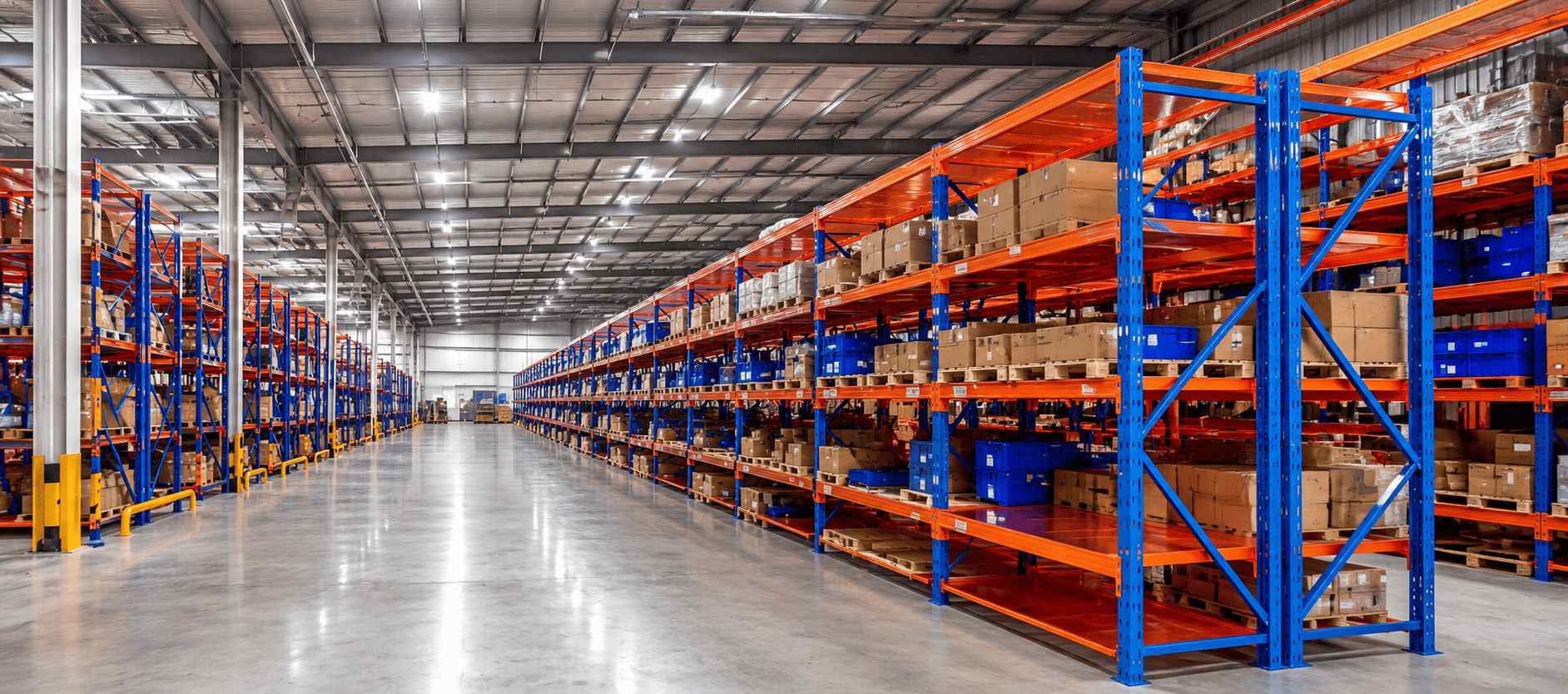
AI-generated illustrative image. Configuration-specific assessment determines allowable loads.
What Is Boltless Shelving?
Boltless shelving generally uses interlocking connections, such as rivets, tabs or hooks, to connect shelf supports or beams to uprights without nuts and bolts at those connections.
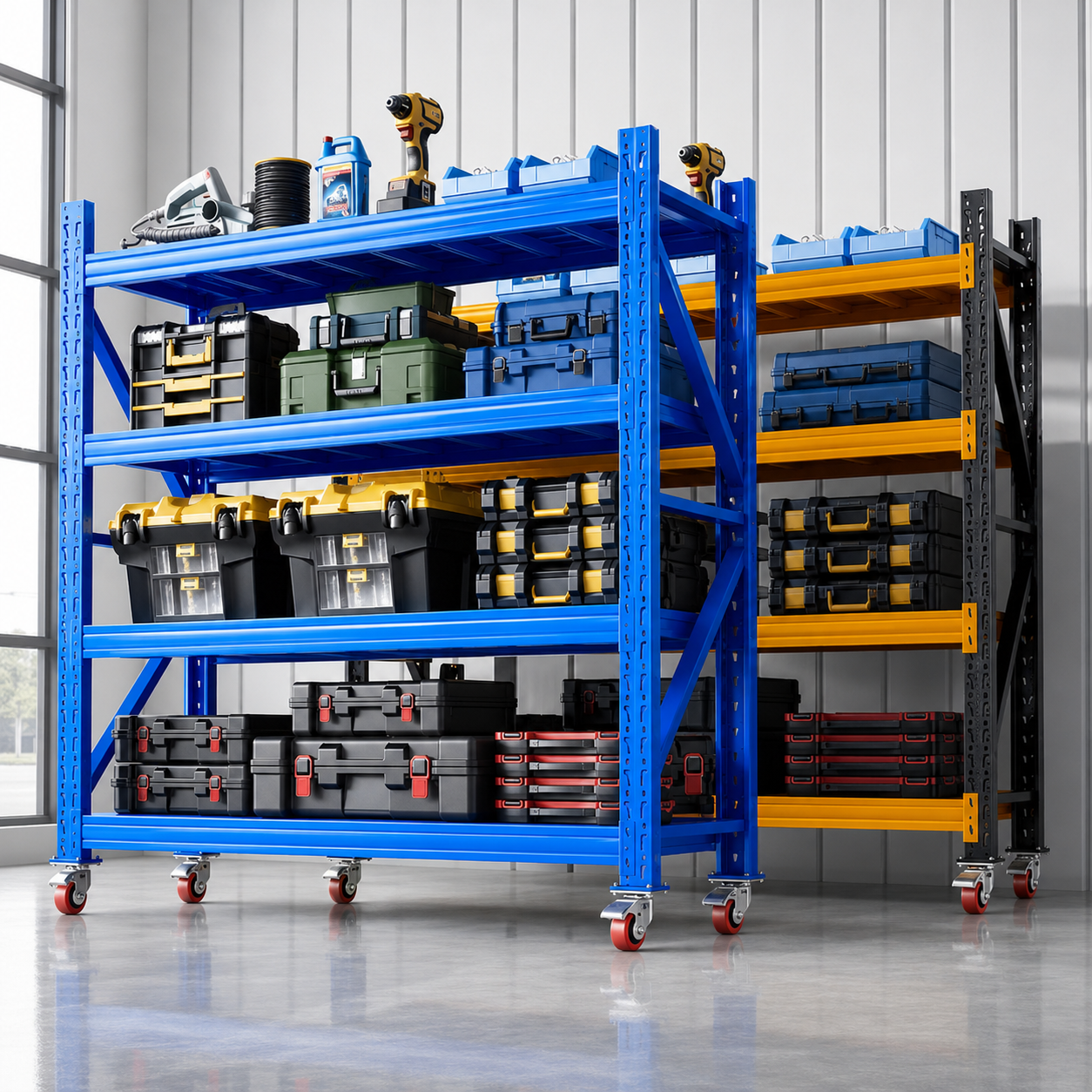
Common configurations include compact freestanding units for cartons, tools, retail stock and general storage.
However, “boltless” does not mean:
Every component is installed without fasteners.
No tools are required anywhere in the assembly.
Anchoring or bracing is unnecessary.
Every model has the same load capacity.
Frames, accessories and floor connections may still require bolts or other fixings. Follow the instructions for the actual system.
Explore KAYOU steel storage shelving to discuss configurations for warehouse, workshop and commercial applications.
What Is Longspan Shelving?
Longspan shelving typically uses upright frames, horizontal beams and supported decking to provide wider openings for manually handled goods.
It is often considered for cartons, plastic containers, spare parts and bulky products that benefit from fewer upright interruptions along a storage row.
Longspan systems may use boltless beam connections. Manufacturer examples from Dexion and LinkMisr explicitly describe bolt-free or boltless connections in their longspan systems.[1][2]
There is no single bay width or capacity that defines every product sold as longspan shelving. Compare the actual drawings and specifications.
Boltless vs. Longspan Shelving: Practical Comparison
The table below compares common compact boltless units with beam-based longspan configurations. Individual products can overlap.
| Purchasing factor | Compact boltless shelving | Beam-based longspan shelving |
|---|---|---|
| Typical configuration | Smaller freestanding storage units | Wider bays arranged as individual units or connected rows |
| Main selection advantage | Convenient organisation in smaller spaces | Wider openings for cartons and bulky inventory |
| Assembly | Interlocking components; other fixings may still apply | Beam connections may be boltless; frames and accessories vary |
| Load capacity | Must be verified for the exact model | Must be verified for the exact span and configuration |
| Decking | Steel panels, boards or mesh, depending on the model | Steel panels, boards or mesh with specified supports |
| Expansion | Depends on the product’s connection system | Starter and extension bays may be available |
| Access | Useful for compact stockroom storage | Useful where wider shelf openings suit picking operations |
| Cost comparison | Compare equal usable capacity and specifications | Include frames, decking, supports and installation |
Neither name proves that a product is stronger, cheaper or better suited to your warehouse.
1. Match the Shelf Opening to Your Goods
Start with the dimensions of the goods—not the external dimensions of the rack.
Check:
Clear width between uprights.
Usable shelf depth.
Clear height above the stored item.
Space needed to lift or remove the item.
Any intrusion from beams, supports or bracing.
Example: Planning for Plastic Containers
Suppose three containers are placed side by side, each presenting a 400 mm width.
Their combined width is:
3 × 400 mm = 1,200 mm
A nominal 1,200 mm-wide shelving unit does not necessarily provide a 1,200 mm clear opening. Uprights and connections may reduce the usable width, and handling clearance is still needed.
Ask for a dimensioned drawing before deciding how many containers fit.
A wider longspan bay may be useful when compact shelving divides the available opening into inconvenient sections. Smaller units may be more practical when goods need separate compartments or the room has restricted spaces.
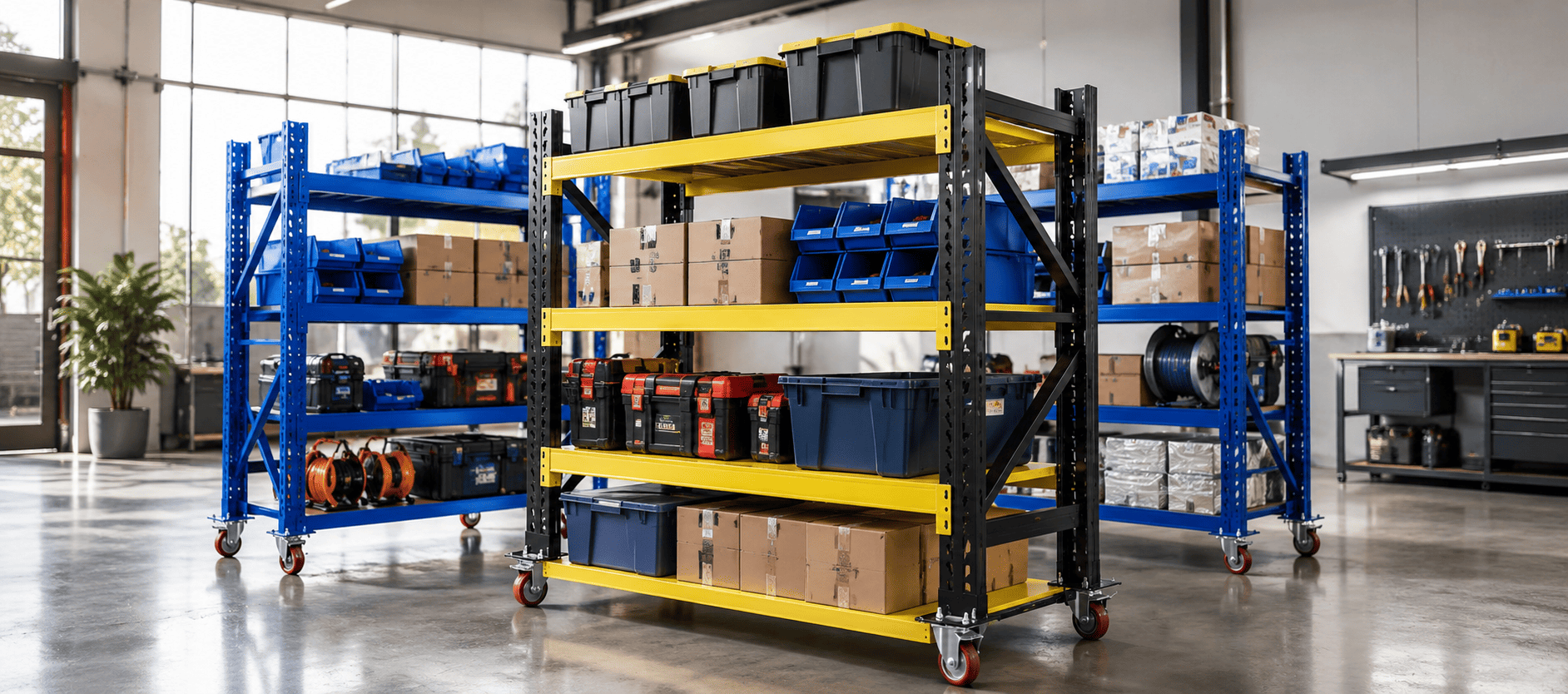
AI-generated illustrative image. Configuration-specific assessment determines allowable loads.
2. Verify Load Capacity at the Proposed Span
A longer beam or shelf span changes structural demand. Capacity information must therefore correspond to the proposed dimensions and loading conditions.
Request separate confirmation of:
Load per shelf or level.
Total allowable load per bay.
Loading arrangement, such as uniformly distributed load.
Approved shelf or beam elevations.
Required supports, connections and bracing.
Do not compare a rating for a narrow shelf with one for a wider bay without accounting for the different usable area and configuration.
For example, two shelves may each be described as “200 kg per level,” but have different widths, depths and support arrangements. The identical headline rating does not make them equivalent products.
Read What Is Shelving SWL? Safe Working Load Explained for more about level ratings, bay limits and loading conditions.
3. Choose Decking for the Actual Load Contact
The decking must suit how goods transfer their weight.
| Decking option | Questions to ask |
|---|---|
| Steel panel | Are supports and reinforcement suitable for the span and item footprint? |
| Engineered wood or board | What material, thickness, moisture conditions and support arrangement apply? |
| Wire mesh | Can small items sit securely, and are the mesh and support channels appropriate? |
An evenly distributed row of cartons creates a different loading arrangement from a machine resting on small feet.
Do not assume that replacing decking with a thicker panel increases the capacity of the complete shelving bay. Beams, connections and uprights may still govern.
Where sprinkler systems or other fire protection measures affect storage design, coordinate decking selection with the project’s fire protection requirements.
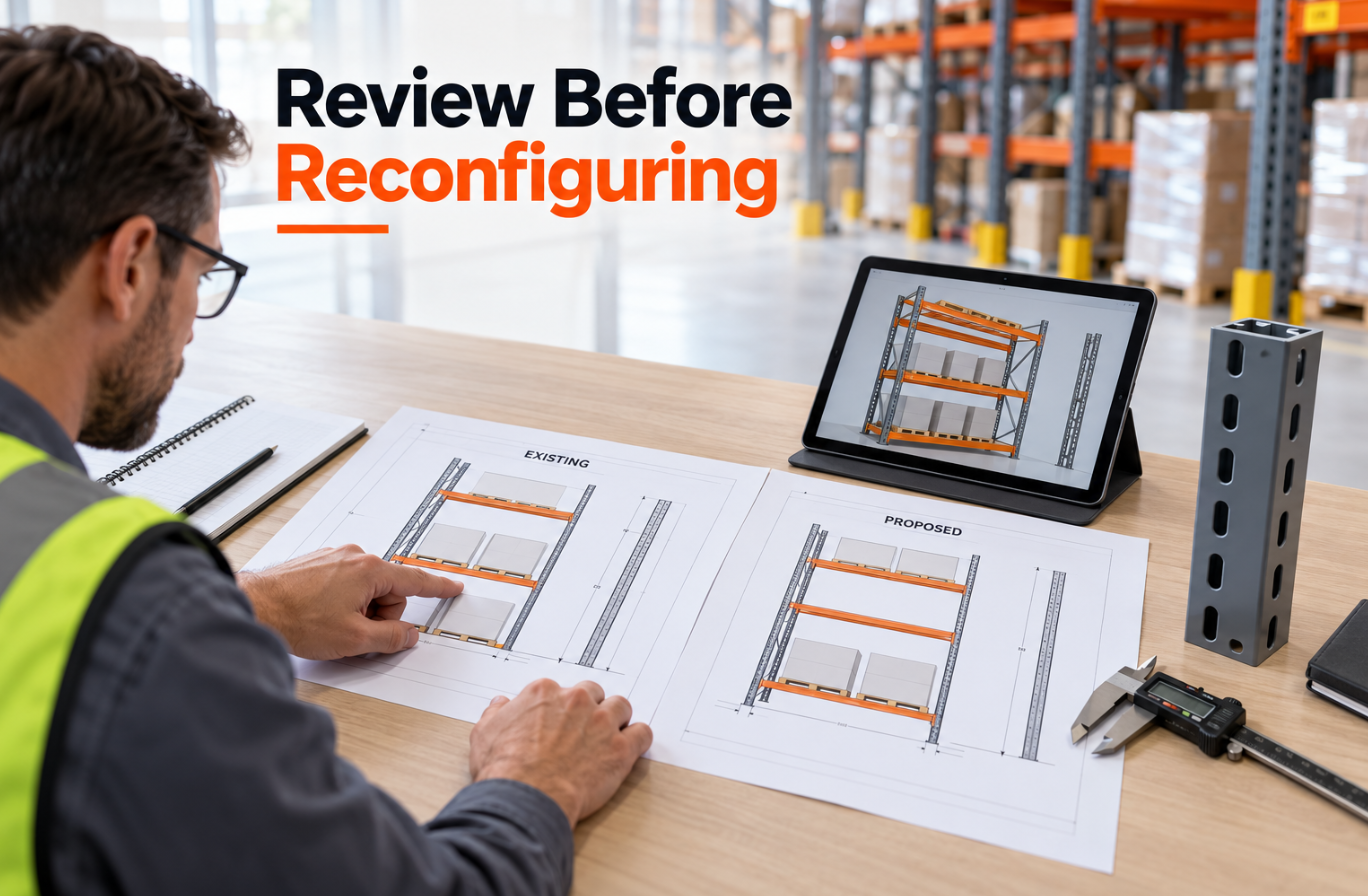
4. Compare Assembly and Future Adjustments
Boltless connections can simplify some assembly steps, but total installation work depends on the complete product.
Related guide: How to Assemble Metal Shelving
Before ordering, confirm:
Whether upright frames arrive assembled.
Which components need tools or fasteners.
Whether beam locks or retaining devices are required.
The installation and anchoring requirements.
Whether adjacent bays share frames.
What adjustment limits apply.
Adjustable levels are useful for changing inventory, but moving beams or removing levels may affect the allowable bay load. Obtain configuration-specific confirmation before modifying an installed system.
Also verify extension compatibility. Similar-looking components from different systems should not be assumed interchangeable.
5. Compare Total Cost, Not Only Price per Bay
A low unit price can be misleading when quotations contain different components or storage capacities.
For a fair comparison, ask suppliers to quote the same:
Overall and clear dimensions.
Number of usable levels.
Level and bay load requirements.
Decking and supports.
Starter and extension bay quantities.
Installation accessories.
Finish and packaging.
Documentation requirements.
Then compare:
Product cost + freight + applicable import costs + installation + maintenance
For overseas orders, assembled frames and knock-down frames can have different packing volumes and installation requirements. Request packing dimensions rather than assuming either format always offers the lowest delivered cost.
Two useful comparison measures are cost per usable shelf metre and cost per planned storage position. These are meaningful only when load requirements and access conditions are comparable.
Related guide: What Does Steel Shelving Really Cost?
When Compact Boltless Shelving May Be the Better Fit
Consider compact units when:
Storage is spread across several small rooms.
Cartons or tools fit comfortably within shorter shelf openings.
Individual units suit the layout better than continuous rows.
Frequent manual access is needed.
The documented capacity covers the intended goods.
Examples include maintenance stores, retail backrooms and workshop storage areas.
When Longspan Shelving May Be the Better Fit
Consider longspan configurations when:
Bulky cartons need wider openings.
Container dimensions fit poorly between closely spaced uprights.
A continuous picking row is planned.
Starter and extension bays suit future expansion.
The selected beam span and decking meet the required loads.
Examples include e-commerce picking zones, parts warehouses and commercial inventory storage.
If goods will remain on pallets and be handled by forklifts, assess an appropriate warehouse pallet racking system rather than assuming manually loaded shelving is suitable.
What to Send KAYOU for a Shelving Quotation
A useful enquiry includes:
Warehouse dimensions or a floor plan.
Stored-item dimensions and weight.
Required clear shelf width, depth and height.
Maximum load per level and per bay.
Number of levels and proposed elevations.
Quantity or required storage positions.
Preferred decking and finish.
Manual or mechanical handling method.
Destination country.
Packaging, inspection and technical documentation requirements.
Include photographs of unusual goods or their support points. This helps clarify whether a standard loading assumption represents the actual application.
You can also review KAYOU quality control and discuss the inspection records required for your order.
Frequently Asked Questions
Is longspan shelving the same as boltless shelving?
The terms describe different characteristics. Longspan refers to the shelving format, while boltless refers to a connection method. One system can be both.
Is longspan shelving always stronger?
No. Capacity depends on dimensions, materials, connections, supports and configuration. Compare documented ratings for the proposed use.
Is boltless shelving completely tool-free?
Not necessarily. Main shelf connections may be boltless while frames, accessories or anchoring require tools and fixings.
Which system is better for cartons?
Either can be suitable. Choose according to carton dimensions, weight, picking access and the available clear shelf opening.
Can I change the shelf spacing later?
Follow the approved configuration limits. A change outside those limits may require another assessment.
Can longspan shelving store pallets?
Do not assume it can. Pallet storage requires a system designed for the pallet, support conditions and handling method.
Which system is cheaper for bulk orders?
Compare equivalent specifications and total delivered cost. The answer depends on the required layout, components, packaging and installation.
Discuss Your Warehouse Shelving with KAYOU
Need compact boltless shelving or a wider longspan configuration?
Send KAYOU your goods dimensions, loading requirements, warehouse layout, quantity and destination country. We can discuss product options, packing arrangements and the documentation required for your purchase.
References
[1] Dexion — Longspan Shelving. Manufacturer product information illustrating a bolt-free beam connection system.
View the source
[2] LinkMisr — Long Span Shelving System. Manufacturer product information describing boltless assembly principles.
View the source
Manufacturer examples explain terminology; their product ratings and approvals do not apply to other shelving systems.
Choose Warehouse Shelving with KAYOU
Send your goods dimensions, shelf and bay load requirements, warehouse layout, quantity and destination country. Discuss shelving options, packing and technical documentation.
Contact UsWhatsApp KAYOU+86 158 3799 8881