


How to Plan Warehouse Racking Zones for Mixed SKUs
Warehouse planning guide
A warehouse can have enough pallet positions and still lose time every shift. A picker may walk past several bays to reach the same fast-moving carton, while a forklift waits to replenish that location. Elsewhere, long stock may occupy an entire pallet bay because there is nowhere else to put it. Each problem comes from assigning storage based on available space before considering how the goods move.
Start by separating full-pallet reserve storage, carton and piece picking, and specialty loads. Then choose equipment for each zone and check how stock will move between them. This approach helps importers, distributors and project buyers compare rack layouts using the same operating assumptions.
Match the rack to the work in each zone
On smaller screens, scroll across the table to see all four columns.
| Warehouse zone | Typical work | Rack to evaluate | What to verify before ordering |
|---|---|---|---|
| Mixed-SKU pallet reserve | Store and retrieve individual pallets by SKU or lot | Selective pallet racking | Loaded pallet dimensions, maximum gross weight, beam levels and forklift access |
| Bulk pallet reserve | Hold several pallets of the same SKU or compatible lot in each lane | Drive-in or push-back racking | Pallets per lane, permitted stock rotation and handling equipment |
| Date-sensitive pallet reserve | Feed full pallets from replenishment to dispatch in sequence | Gravity pallet flow | Separate loading and picking aisles, pallet base geometry and performance under actual loads |
| Fast-moving carton picking | Replenish cartons from the rear and pick from the front | Carton flow racking | Carton footprint and base condition, lane capacity and rear access |
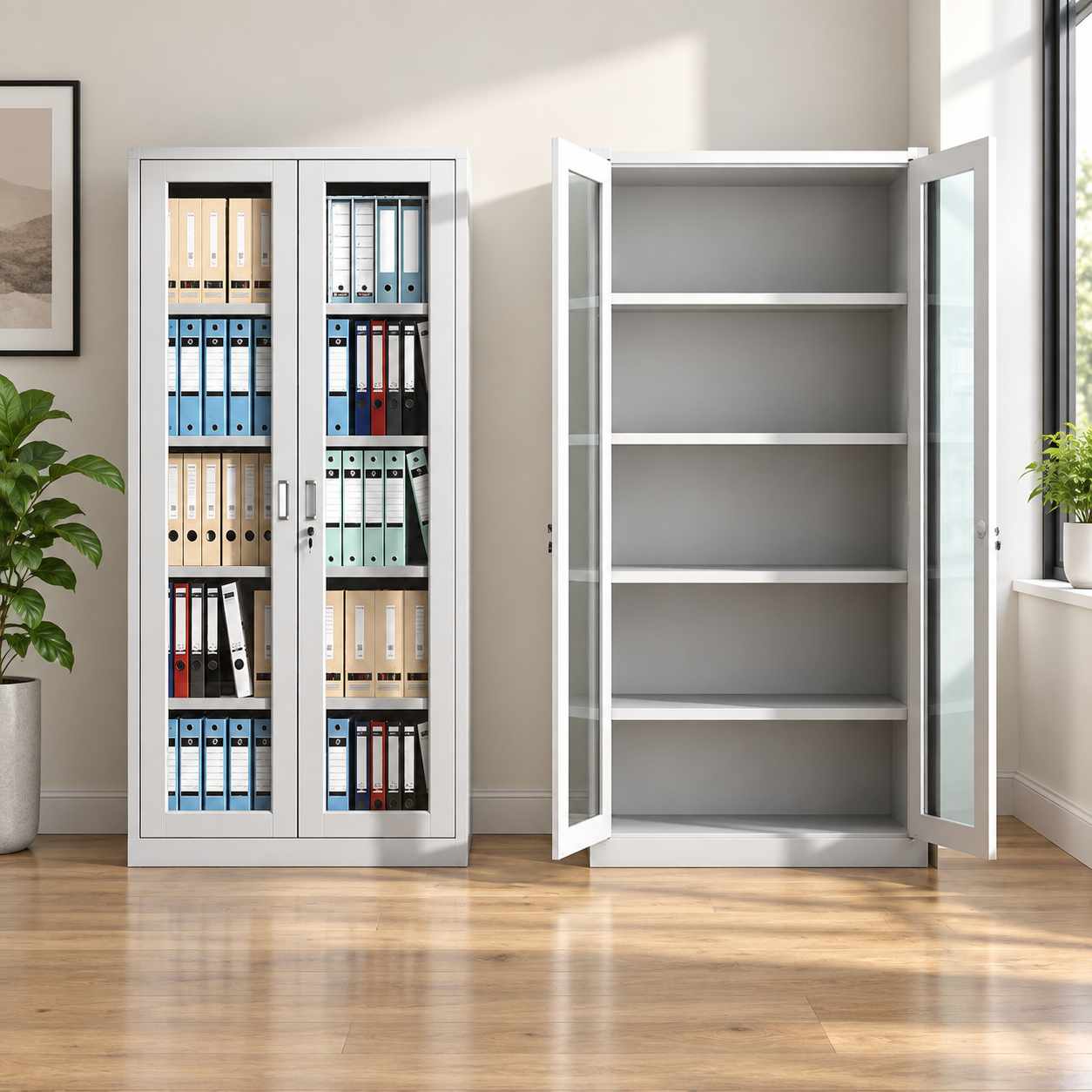
| Slow-moving cartons and parts | Pick individual cartons, bins or parts by hand | Longspan steel shelving | Shelf depth, maximum shelf load and how the items contact the deck |
| Long or irregular stock | Handle pipe, profiles, timber or other long bundles | Cantilever racking | Bundle length and weight, support points and handling method |
| Dense selective pallet storage | Preserve direct pallet access where aisle space is limited | Very narrow aisle (VNA) pallet racking | Truck model, aisle guidance and floor tolerances for the equipment |
Drive-in and push-back lanes commonly operate last in, first out (LIFO) when loaded and unloaded from the same face. Gravity pallet flow and rear-fed carton flow support first in, first out (FIFO) within a lane. If orders must ship by earliest expiry, use lot or expiry controls to decide which lane to pick first. MHI rack types and operating principles
Plan the reserve and pick faces separately
Reserve racking holds backup inventory. A pick face holds the quantity operators need between replenishments. Giving every SKU the same pick face can waste space on slow movers and create extra replenishment trips for fast movers.
For each SKU or product family, record peak carton demand, the unit picked, how often the pick face can be refilled and the longest expected interval between refills. Use those inputs to estimate pick-face capacity. If only a small group of SKUs moves quickly, compare carton flow for that group with adjustable longspan shelving for the remaining assortment.
Look at the handoff between the two zones on the layout. Mark where forklifts set down reserve pallets, where cases are transferred to the pick face and where pickers collect orders. For rear-fed flow lanes, check that the replenishment team can reach the rear while the front is in use. If the rear cannot be serviced as planned, the layout will lose much of the benefit of separate loading and picking faces. MHI guidance on carton flow
Layout example
Worked example for a distributor with 120 SKUs
Suppose a distributor carries 120 active SKUs. Most SKUs have one to three reserve pallets, eight products account for much of the carton picking, and a separate product line includes long aluminum profiles.
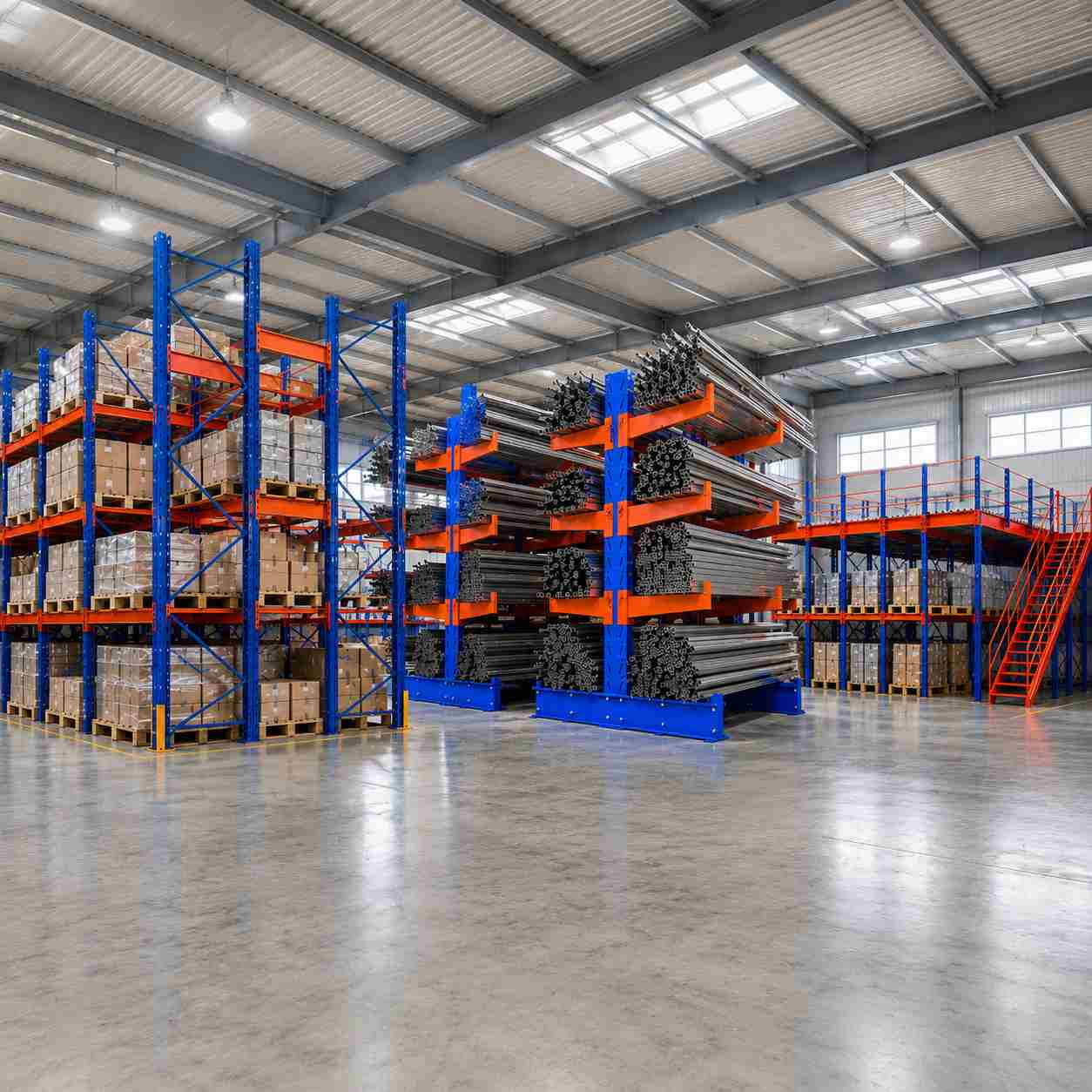
A first-pass layout could use selective pallet racking for reserve inventory, carton flow for the eight fast movers, longspan shelving for low-volume hand picks, and cantilever racking for profiles. If one fast mover needs up to 30 cartons between scheduled refills and the team wants a 10-carton buffer, the pick face should hold 40 cartons for that SKU. The supplier can then check how many usable lanes are needed based on the actual carton dimensions and weight, the available rack depth and how the cartons travel on the rollers.
These figures are illustrative. In an actual layout review, compare proposed layouts on usable pallet positions, cartons held at each pick face and the replenishment trips needed on a peak shift.
Treat specialty storage and automation as separate design decisions
A mezzanine or storage platform can add floor area for carton picking or packing where the building allows it. An automated storage and retrieval system (AS/RS) solves a different problem by bringing loads into and out of storage with integrated handling equipment. If either appears on the concept plan, identify how loads will be transferred and ask the relevant project specialists to review the building, equipment and operating interfaces before committing to the layout. KAYOU’s guide to automation-ready racking
Likewise, store tooling and molds by their actual footprint, weight and handling method. If you use steel pallets or nonstandard load carriers, send drawings or samples that show their underside and fork-entry direction. For gravity pallet flow, confirm suitability with representative loaded pallets before approving the lane configuration. Interroll pallet flow installation and testing guidance
What to put in a mixed-warehouse racking RFQ
Give each supplier the same project brief so the proposed layouts and prices can be compared.
Building plan. Provide clear height, columns, doors, obstructions and available floor information. Mark forklift and pedestrian routes, replenishment aisles and dispatch points.
Load schedule by zone. List pallet and carton dimensions, maximum gross weights, overhang and pallet construction. For long stock, provide bundle sizes, weights and intended support points.
Inventory and picking profile. Include active SKUs, peak pallets per SKU or lot, required pallet positions, peak carton picks and stock rotation rules.
Handling equipment. Include the forklift make and model, lift height and the equipment supplier’s aisle requirements. Identify any planned changes to vehicles or automation.
Quotation and acceptance scope. Ask for a dimensioned layout, a bill of materials, capacities per shelf or beam pair and per bay where applicable, the assumed load distribution, and a clear division of responsibility for engineering, installation and inspection.
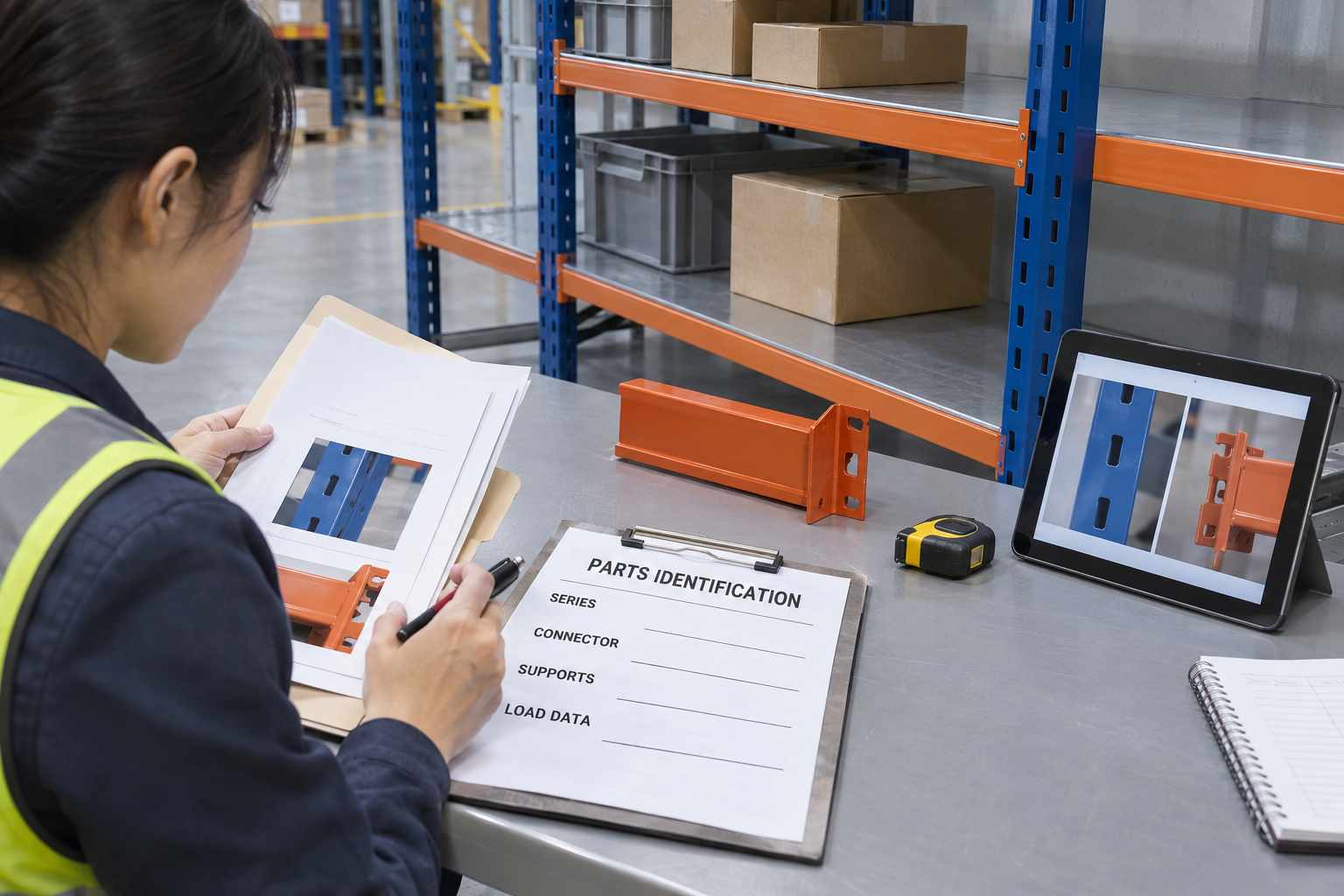
Before order approval, have the proposed configuration reviewed against the project site conditions and applicable requirements. Ask for the approved rack load notices and confirm that the loads and beam configurations shown on them match the installation. UK HSE warehousing and storage guidance
For pallet-specific input fields, see KAYOU’s pallet racking RFQ checklist.
KAYOU project enquiries
Request a warehouse racking layout and quote
Send KAYOU your floor plan, load dimensions, forklift model and a short description of what your team picks by the pallet, carton or piece. We can review your requirements and propose a layout and quotation for the relevant KAYOU warehouse racking systems.