

Importing Pallet Racking to Australia: Technical Document Checklist
By KAYOU/Sources checked: 25 November 2026
Australia / Import buyer's guide
Connect every document to the rack you are buying.
A pallet racking quotation can list the right height, colour and number of bays while leaving important engineering questions unanswered. Before importing pallet racking to Australia, establish which documents will connect the proposed layout, tested components, manufactured goods and installed system.
For Australian distributors, warehouse operators and project procurement teams.
This guide is for Australian distributors, warehouse operators and project buyers sourcing adjustable, static selective pallet racking. Specialised systems need their own design review. The checklist is a purchasing framework: the documents required for your project depend on the rack type, site, contract and applicable local requirements.
01 / Australian design basis
Confirm the Australian design basis before comparing certificates
Ask the supplier and the project's racking designer to identify the standards, editions and applicable amendments used for the proposed system. A statement that a product is “Australian standard” leaves the scope unclear.
SafeWork SA's pallet racking guidance identifies AS 4084.1:2023, Steel storage racking — Design, and AS 4084.2:2023, Steel storage racking — Operation and maintenance. Record the agreed design basis in the purchase specification and have the responsible professional confirm its application to your project.
A management-system certificate, a material certificate and a project design statement answer different questions. Ask who issued each document, what product or activity it covers, and whether it identifies the components and configuration you are ordering.
Use this distinction when reviewing claims of AS 4084 compliance. The useful evidence explains the assessment scope, design assumptions, supporting reports and limitations. A certificate heading alone cannot establish the suitability of a rack layout for your warehouse.
Also agree who will check state or territory requirements, engineering registration where applicable, and any building or fire-safety approvals relevant to the proposed installation. An overseas supply quotation should identify which of these services are included.
02 / Eight-part document register
Agree an eight-part pallet racking document register
Make the document register part of your request for quotation. Give every deliverable an owner, due date, revision and acceptance status. The following items are a suggested procurement package, rather than a claim that every document is a separate statutory import requirement.
On smaller screens, swipe horizontally to see the complete document register.
| Document package | What to check | Suggested review point |
|---|---|---|
| 1. Design basis and scope | Rack type, site, standards and amendments, loads, exclusions and responsible designer. | Before order approval. |
| 2. Layout and component drawings | Plan, elevations, beam levels, clearances, part references and revision. | Before manufacture. |
| 3. Engineering and load information | Assessment of the ordered configuration, load limits, assumptions and supporting evidence. | Before design release. |
| 4. Floor and anchoring details | Support reactions, baseplates, anchor specification and site assessment responsibilities. | Before production and installation commitments. |
| 5. Material and test records | Grades, dimensions, component identification, test methods and report applicability. | Agree before ordering; review records as available. |
| 6. Manufacturing and packing records | Approved bill of materials, inspection results, quantities and component or lot identification. | Before shipment release. |
| 7. Installation and handover documents | Assembly instructions, checks, as-built drawings, load signs and operating guidance. | Agree before ordering; complete before use. |
| 8. Shipment and import paperwork | Invoice, packing list, transport document and applicable declarations or evidence. | Broker review before shipment and arrival. |
For each item, record whether it will be provided by the manufacturer, importer, testing organisation, local engineer or installer. This prevents a gap between the supplier's delivery scope and the warehouse's acceptance needs.
03 / Drawings, loads & floor interface
Check the drawings, load schedule and floor interface together
Start with a revision-controlled layout
Request a dimensioned plan and elevations showing the bay arrangement, frame height and depth, beam spans, beam elevations and pallet positions. Identify aisle dimensions, columns, doorways, pedestrian routes and relevant building services.
Specify the actual pallet dimensions, entry direction, loaded height and maximum gross weight, including the pallet. Mixed pallet formats need explicit review. A rack designed for one pallet's support arrangement may be unsuitable for another.
For an initial drawing review, use KAYOU's pallet rack layout drawing guide. Supply the forklift model and its operating requirements instead of choosing an aisle width from a generic photograph.
Match load information to the actual configuration
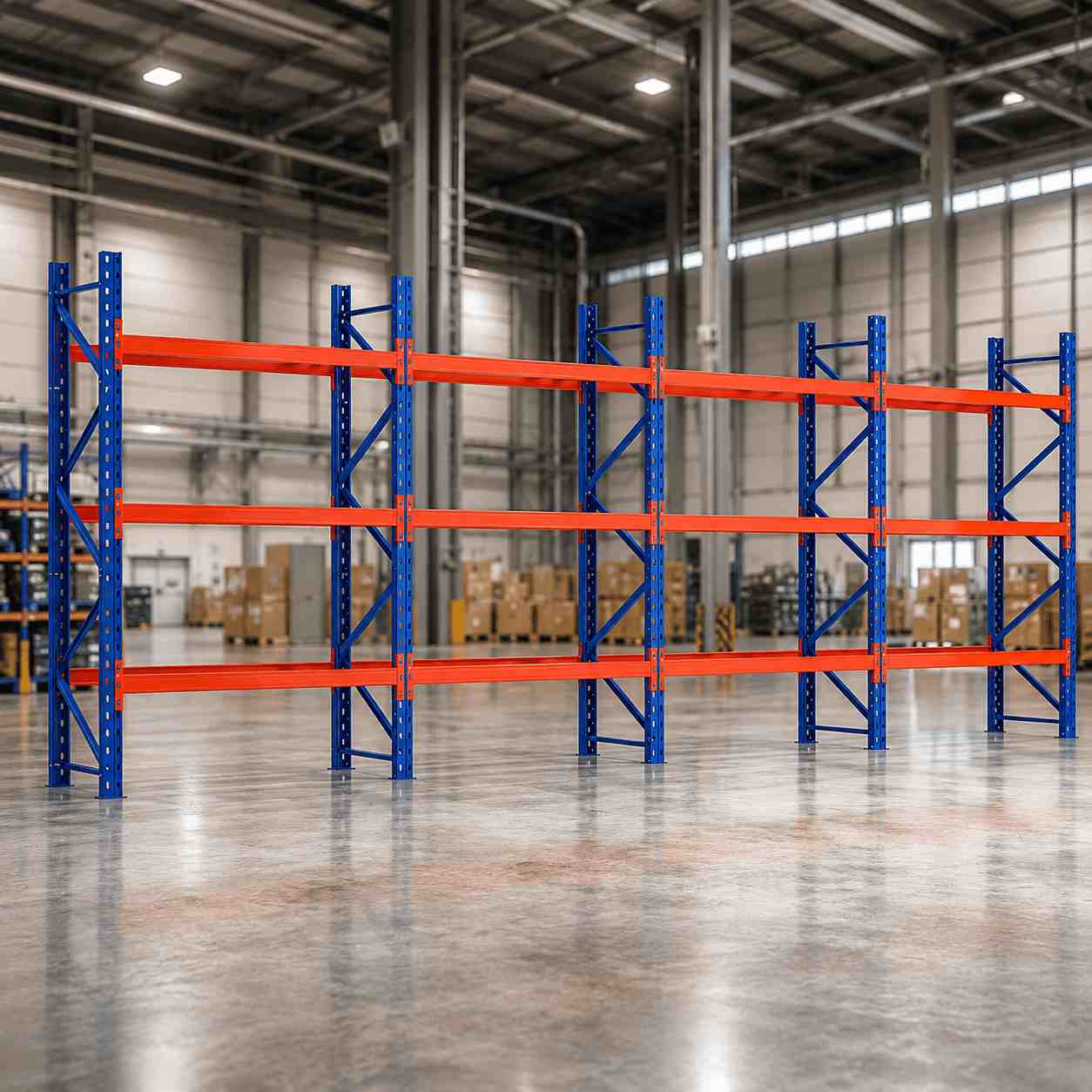
Request a load schedule that distinguishes the maximum unit load, beam-level load and bay load. Ask how the limits relate to the specified beam lengths, first beam elevation, spacing between levels, frame arrangement and pallet supports.
SafeWork NSW's fact sheet describes these load and configuration details and calls for review of modifications. Treat a later change in beam spacing, stored goods or components as a design change requiring assessment and updated documentation.
Ask the designer which site actions and assumptions have been assessed, including seismic effects and wind exposure where applicable. A marketing load rating does not identify those assumptions. Avoid inferring bay capacity by multiplying a beam rating unless the designer has confirmed the complete arrangement.
Resolve the floor and anchor design interface
Ask for baseplate details, anchor specifications and support reactions for review against the actual slab. Identify who supplies the slab information and who assesses the connection between the racking and the building.
The review may need concrete properties, slab thickness and condition, joints, edge distances, reinforcement or post-tensioning information, and restrictions on drilling. Have the responsible engineer determine the information and checks needed. A warehouse floor's appearance cannot establish its suitability.
Also agree how installation tolerances, levelling and any required anchor installation records will be checked. Defining these responsibilities before production helps avoid an imported package arriving with an unresolved floor interface.
04 / Material & test evidence
Verify material and test records against the ordered parts
A material test certificate can identify a steel grade and its reported properties. Its value for your order depends on traceability: can the supplier connect the record to the material used in the relevant components?
Agree the material specifications, thickness definitions and tolerances in writing. Ask how inspections distinguish the steel substrate from its coating where thickness is being verified. KAYOU's material certificate and steel-thickness guide explains the distinction between material evidence and other product records.
For structural testing relied on by the designer, request enough information to establish:
The testing organisation, report number, date and test method.
The specimen's section, geometry, connection details and material identification.
The reported results and any stated limitations.
How the designer applies the report to the offered component family and configuration.
A test of a different beam connector or upright section may not support your proposed system. Ask the designer to confirm applicability and any accreditation or independent testing requirements in the project specification.
Do not substitute a photographed load demonstration for an engineering assessment. Equally, do not require an arbitrary certificate format without checking that it provides the evidence your reviewer actually needs.
05 / Manufacturing & handover
Plan manufacturing checks and operational handover
Before shipment: reconcile the supplied components
Agree the bill of materials against the approved drawing. It should identify the ordered frames, beams, braces, connectors, locking devices, pallet supports and protective components. Record accepted substitutions through the design change process.
Define the inspection scope in the contract, including the checks and records appropriate to the order. These may cover dimensions, material identification, finish, component quantities and packing condition. Photographs can document visible features; they do not by themselves establish structural adequacy.
For distributors, retain part references and compatibility information for future extensions and replacement components. Similar colours or hole patterns are insufficient grounds for assuming parts are interchangeable.
Before use: complete the installation records
Agree who provides the installation instructions, who erects and checks the system, and who records completion. Obtain the final layout and any approved changes so the documents describe what was installed.
Request safe working load signs matched to that configuration, operating instructions, damage-reporting procedures and an inspection plan. WorkSafe Victoria's guidance addresses configuration-specific instructions and load signs, and recommends a formal inspection by a competent person every 12 months alongside appropriate informal inspections.

The handover package should also identify the supplier's technical contact, replacement-part process, warranty scope and limitations. Agree how the operator will obtain a reassessment if loading or the layout changes.
06 / Import & biosecurity paperwork
Keep engineering evidence separate from import paperwork
Prepare the commercial and transport records
Have the importer or licensed customs broker confirm the required commercial invoice, packing list, bill of lading or other transport document, and supporting declarations. Keep the seller, exporter, manufacturer, product descriptions, quantities and shipping terms consistent across the records.
The Australian Border Force's import declaration guidance explains the importer's responsibilities. Confirm tariff classification, customs value, origin evidence and applicable charges for the actual shipment. Customs clearance and engineering acceptance address different matters.
Check current steel pallet racking trade remedies
As checked on 25 November 2026, Australia's current Dumping Commodity Register lists steel pallet racking from China and Malaysia. The commodity-specific guidance addresses covered goods, components and exporter-related information.
Ask your broker to assess the actual goods description, exporter, applicable measures and any valid exemptions before committing to the landed-cost calculation. The ABF confirms that dumping duties can still apply under free trade agreements. Recheck the current position before shipment rather than relying on a previous order.
Confirm packaging and biosecurity evidence
If solid timber is used for pallets, crates or dunnage, check the relevant treatment and declaration conditions. DAFF's timber and bamboo packaging guidance explains that conditions depend on the material and that containerised cargo has packing-declaration requirements.
DAFF also explains ISPM 15 and accepted alternatives. Have the broker or biosecurity adviser check BICON for the actual consignment, packaging and route. Do not assume that steel goods remove packaging or contamination concerns.
07 / Three approval stages
Use three approval stages to control document changes
A useful document package stays connected throughout the order. Consider the following illustrative chain:
Illustrative document-control chain
Layout AU-01 Rev C → design assessment referencing Rev C → matching component schedule → production and packing records → verified as-built information.
This is a document-control example, not a KAYOU engineering approval or a customer project. If the proposed layout changes to Rev D, identify which calculations, quantities, test applicability and signs need review before proceeding.
Approval stage 1
Before manufacture: agree the design basis, drawings, load information, floor interface and document responsibilities.
Approval stage 2
Before shipment: reconcile the goods with the approved specification and review the agreed inspection, packing and import records.
Approval stage 3
Before use: close out installation checks, approved changes, load signs, instructions and the inspection plan.
For each deliverable, ask whether it is included in the quoted price, who prepares it, who reviews it and what happens if it cannot be supplied. An open item should have an agreed resolution and owner.
Use the same document register when comparing KAYOU with other suppliers. Start with the KAYOU pallet racking range and supplier evaluation guide, then request written confirmation of the scope available for your project.
08 / Frequently asked questions
Frequently asked questions
Is an AS 4084 certificate enough to approve imported pallet racking?
A certificate alone is insufficient to assess your proposed installation. Review its issuer, scope, component references, drawings, design assumptions and limitations. The responsible project reviewer needs evidence relevant to the actual configuration and site.
Does an MTC prove the rack's load capacity?
An MTC provides material information, subject to traceability. Rack capacity also depends on the sections, connections, geometry, loading and design assessment. Keep material records and structural evidence as related but distinct parts of the package.
Can one beam rating be used for every rack layout?
No. Ask for the load schedule applicable to the beam span, frame arrangement, beam elevations and other design conditions. A layout or component change may require a reassessment and revised load signs.
Does every shipment require the same Australian engineering certificate?
Do not assume one universal certificate format applies. Agree the design review, sign-off, qualifications and approvals required for the project and jurisdiction. Engineering acceptance and the documents used for customs clearance serve different purposes.
Can packing documents be completed after the container leaves?
Some final shipping documents become available during dispatch, but agree the required information and responsibilities beforehand. Have your broker review draft records early so errors can be corrected and packaging evidence retained before departure.
Can KAYOU confirm document availability before I place an order?
Send KAYOU your required document register with the warehouse plan, pallet details and destination. Request an item-by-item response identifying included deliverables, exclusions, timing and any local engineering or installation services to arrange separately.
Start with a clear project brief
Prepare your Australian pallet racking enquiry
Before importing pallet racking to Australia, connect the paperwork to the system you intend to buy. Drawings, load schedules, material evidence and installation records become more useful when they identify the same components and approved configuration.
Send KAYOU your site location, warehouse plan, pallet dimensions and gross weights, forklift information, target pallet positions and document requirements. Ask for a configuration-specific quotation showing the supply scope and any services you need to arrange locally.
Please include your required document register so each deliverable can be confirmed in the quotation.
Explore KAYOU warehouse racking systems.
Sources & image references
WorkSafe Victoria — Pallet racking operation and maintenance
Australian Trade Remedies Commission — Current Dumping Commodity Register
Australian Trade Remedies Commission — Steel Pallet Racking, September 2026
Sources checked on 25 November 2026. Images are from KAYOU's public application and product library and are shown as configuration references. They do not document Australian certification or project approval.