

Manual vs Electric Mobile Shelving for Archives | KAYOU
By KAYOU / Archive storage selection
Archive project buyer's guide
Choose the drive around your archive workflow.
Two archive shelving proposals can offer similar filing capacity and very different operating arrangements. One uses a handwheel; the other moves at the touch of a button. For a procurement team, the useful question is which arrangement fits the people, records and building involved.
For archive managers, institutional buyers, project contractors and distributors.
This guide gives archive managers, project contractors and distributors a practical way to compare both options. The final choice should follow an agreed layout, a site assessment and a written operating specification.
01 / Drive types
What is the difference between manual and electric mobile shelving?
Mobile archive shelving places shelving rows on moving bases, usually guided by floor rails. Opening an aisle where needed reduces the floor area reserved for permanent aisles. Both drive types use this principle.
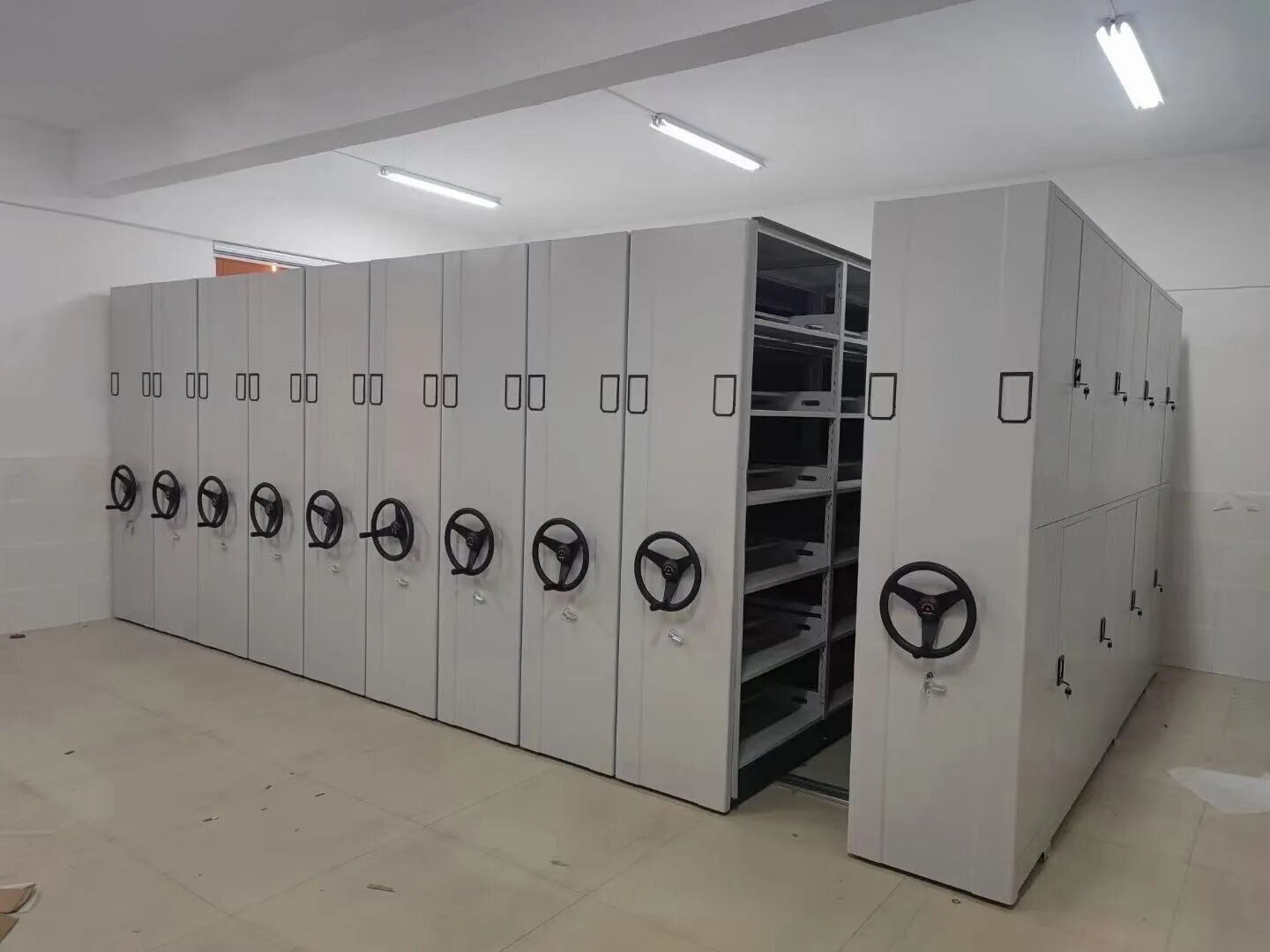
Manual mobile shelving, as used in this article, means a handwheel or hand-crank system with mechanical assistance. Turning the wheel drives the carriage through its transmission. It differs from a direct push-pull system, where the operator pushes the shelving row itself.
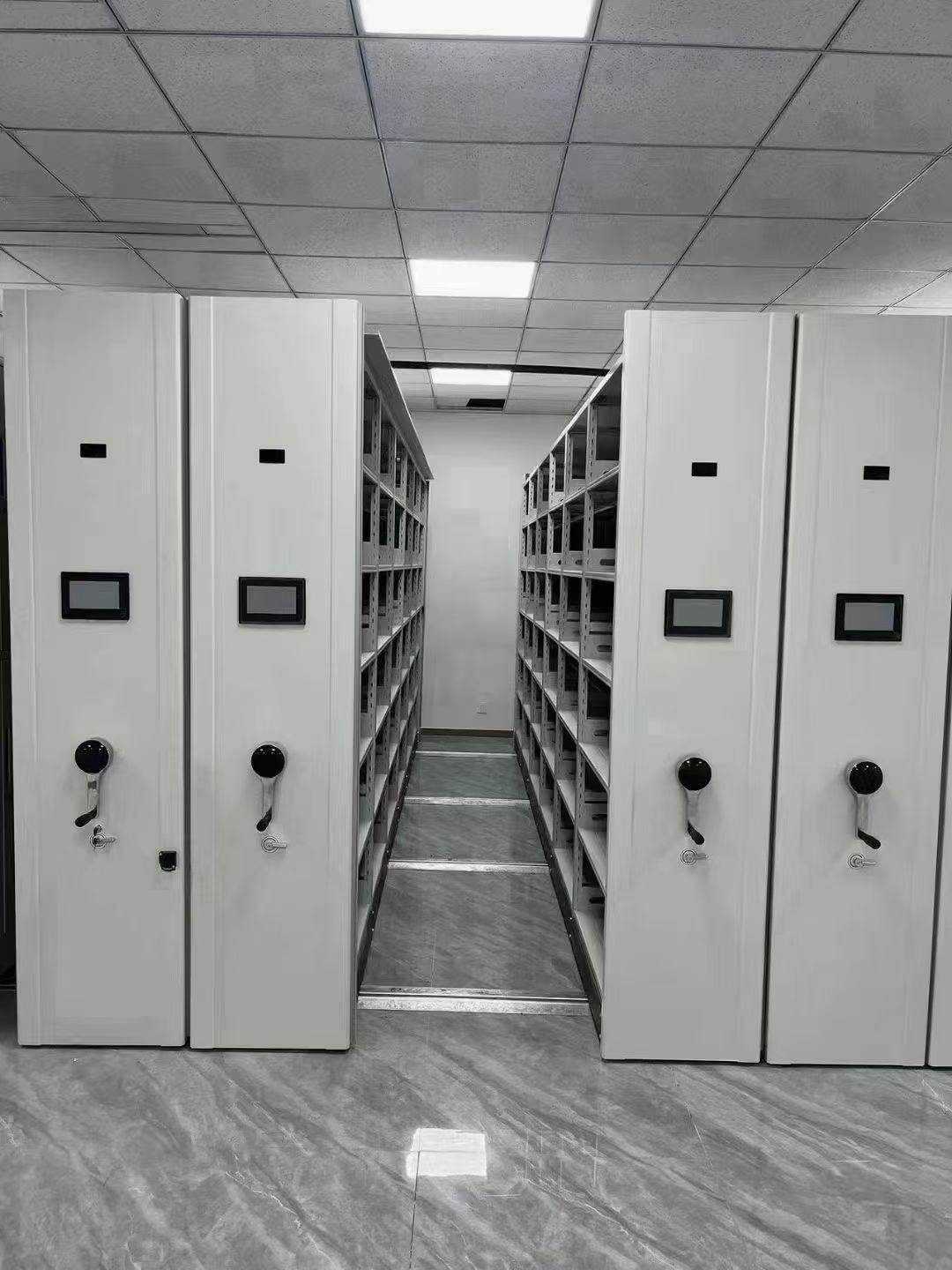
Electric mobile shelving uses motors to move the carriages through specified controls. Buttons, control panels and other functions depend on the selected model. Occupancy detection, access control, backup power and software integration should each appear in the quotation if required.
The distinction between mechanical-assist and powered storage is also used in Montel's manufacturer comparison. Its published features relate to its own systems; buyers should check the specification of any alternative offered.
For KAYOU's handwheel configuration, see the manual mobile shelving product page.
02 / Side-by-side comparison
Manual vs electric mobile shelving at a glance
On smaller screens, swipe horizontally to view all comparison columns.
| Buying consideration | Handwheel / mechanical-assist | Electric / powered |
|---|---|---|
| How rows move | The operator turns a handwheel. | Motors move rows through the specified controls. |
| Operating effort | Depends on the drive, loaded carriage and installation. | Reduces the need to turn a wheel; control usability still matters. |
| Purchase scope | No motor or powered drive controls to include. | Include motors, controls, electrical work and agreed safety functions. |
| Storage capacity | Determined by usable shelf dimensions and layout. | The drive type alone does not determine capacity. |
| Concurrent access | Depends on the number of available aisles and blocks. | The same layout constraint applies. |
| Power interruption | The mechanical drive does not require electricity. | Access depends on the specified power-loss arrangements. |
| Maintenance | Mechanical drive, wheels, rails and locking devices. | Mechanical items plus applicable electrical and control components. |
| Floor and safety review | Required for the proposed installation. | Required for the proposed installation. |
Use the table to identify questions for suppliers. Actual suitability depends on the offered configuration and your site.
03 / Archive workflow
Match the drive to the archive workflow
Record how people retrieve files
Count aisle changes during a representative working period. Record peak activity, how long people remain inside an aisle and whether requests arrive in batches. A room accessed occasionally has different needs from a records centre serving several departments throughout the day.
Handwheel operation may be a suitable starting point for occasional retrieval by trained staff, provided loaded operation is comfortable. Frequent aisle changes make powered movement worth evaluating. There is no universal number of daily retrievals that makes electric operation the better investment.
Evaluate effort with a representative load
An empty showroom row cannot establish how a proposed system will feel when filled. Request operating-effort information for the intended carriage length and loading. Where possible, arrange a demonstration using a comparable configuration and representative operators.
Consider repeated handwheel use, reach, grip and posture. The UK Health and Safety Executive's assessment guidance identifies task frequency, load, working conditions and individual capability as relevant factors. Apply those assessment principles to the actual task; the guidance does not certify a particular shelving system.
Plan for simultaneous users
For this wider layout decision, see KAYOU's mobile vs static archive shelving comparison.
04 / Floor, safety & power
Check the building, safety functions and power arrangements
Confirm floor suitability before ordering
Both systems transfer the weight of the records and shelving into the building. The UK's National Archives states that archive-store floors need to support collections, packaging and shelving in its Archive Principles and Practice guidance.
For a rail-mounted installation, ask the supplier for the loaded system weight, rail positions and wheel or rail reactions needed by the structural engineer. An average load figure across the room does not fully describe concentrated loads at the supports. Floor finish, levelness, anchoring and any proposed rail recesses also need coordination.
Do not choose a universal slab thickness from a brochure. Have a qualified structural engineer assess the proposed arrangement against the building information and applicable local requirements. KAYOU's floor-load and track-layout guide explains the information to assemble.
Specify what prevents unsafe movement
Ask how movement is prevented while an aisle is occupied and how users confirm that entry is safe. For a handwheel system, establish the operation of its aisle locks and other supplied protective devices.
For powered shelving, request a written explanation of the offered occupancy or obstruction detection, stopping behaviour, emergency stop where applicable, and restart sequence. Confirm the detection coverage and limitations. Agree how the installer will demonstrate these functions during commissioning using the manufacturer's procedure.
Electric operation alone does not establish safety or accessibility compliance. Check aisle width, thresholds, control reach and operating instructions for the intended users and local project requirements.
Agree how access works during a power failure
Confirm the required voltage, frequency, connection and isolation arrangements before ordering a powered system. Ask what happens to an open aisle when power is lost, which access remains available, and how normal operation resumes.
Backup power or a manual recovery mechanism is model-dependent. Include any required provision in the purchase specification and obtain the approved recovery instructions.
05 / Capacity & lifetime cost
Compare equal capacity and whole-life cost
Use the same storage requirement for both proposals
Compare usable filing metres or the number of your actual archive boxes. Cabinet count alone can hide differences in shelf length, depth and available levels.
For example, consider five double-sided rows, each with four bays, 0.9 metres of usable shelf length per bay and six storage levels:
Illustrative capacity calculation
216 linear filing metres
5 rows × 4 bays × 0.9 m × 6 levels × 2 faces = 216 linear filing metres.
Both drive options provide 216 linear metres if those usable dimensions remain identical. This is an illustrative calculation, not a KAYOU project result or a verified room layout. Drive housings, clearances, end panels and access arrangements can change the final design.
For boxed records, confirm how many boxes fit each usable shelf and check their loaded weight against the specified rating. Use KAYOU's archive storage capacity guide to prepare a consistent brief.
Compare the full installed and maintained scope
Request separate costs for equipment, delivery, floor preparation, tracks, installation, electrical work and commissioning. Then compare maintenance, spare parts and expected service arrangements over the same ownership period.
For an overseas project, identify who can diagnose faults locally and which parts must come from the manufacturer. For powered options, ask about replacement motors, sensors and controllers, component availability and technical documentation. For handwheel options, include transmission parts, wheels and locking devices.
If a supplier proposes labour savings, ask for the retrieval pattern, measured task times and labour assumptions behind the estimate. A universal price multiplier or payback period cannot represent every archive project.
06 / Project quotation brief
Turn the comparison into a project brief
Two hypothetical scenarios show how the decision can change:
An institutional archive with occasional retrieval: assess a handwheel layout first when trained staff can operate the loaded rows comfortably and the project values a simpler maintenance scope.
A busy records room with frequent aisle changes: assess powered movement alongside user access needs and service support. If several people need different aisles at once, revise the block layout as well.
These are planning examples, not reported customer outcomes. Neither removes the need to review the building and operating specification.
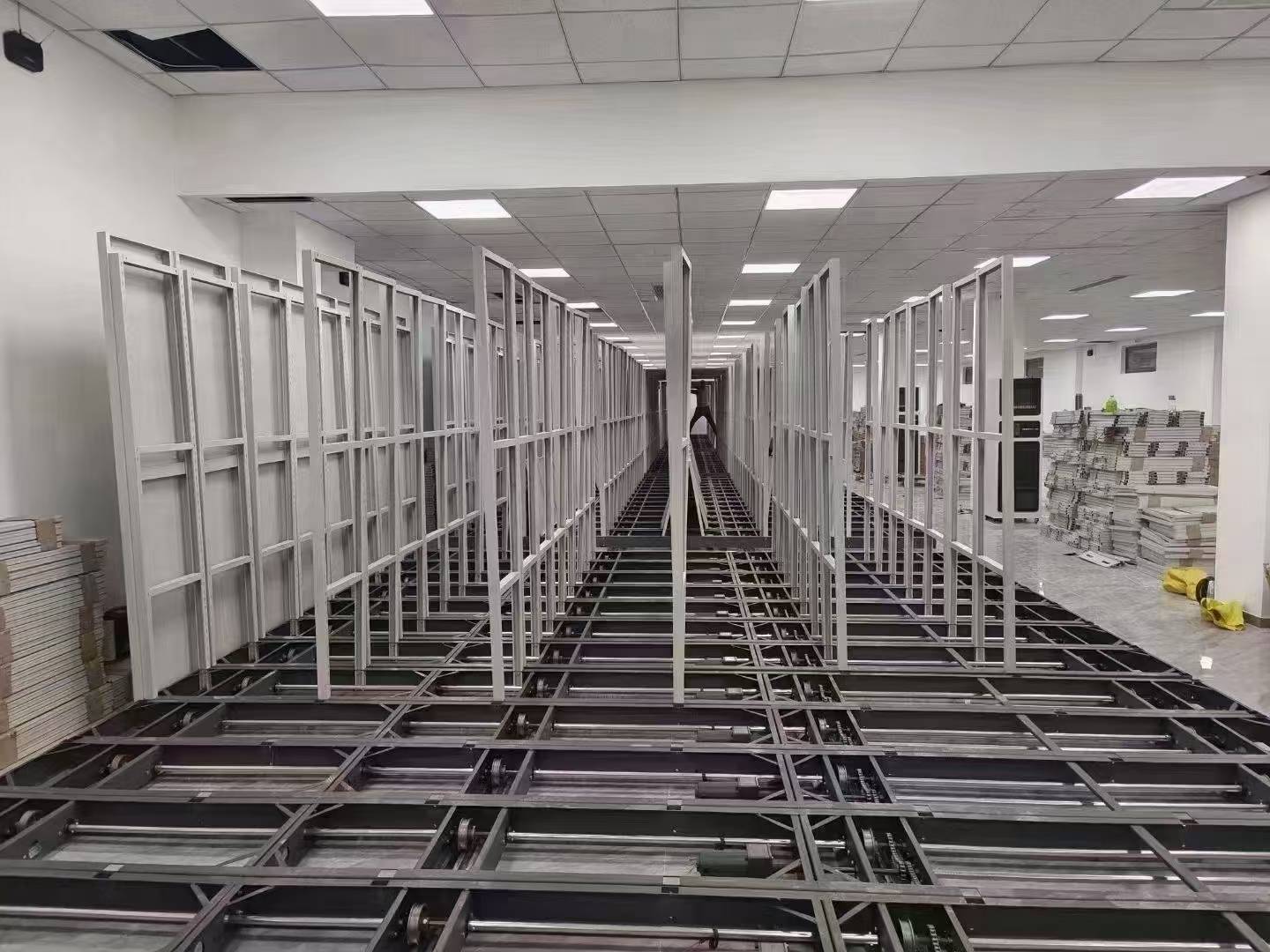
KAYOU's published mobile shelving installation record shows floor rails, mobile bases, steel framework and fitted rows with operating handles. The photographs help explain how the assembly fits together. They document installation stages; powered functions and commissioning results need separate confirmation.
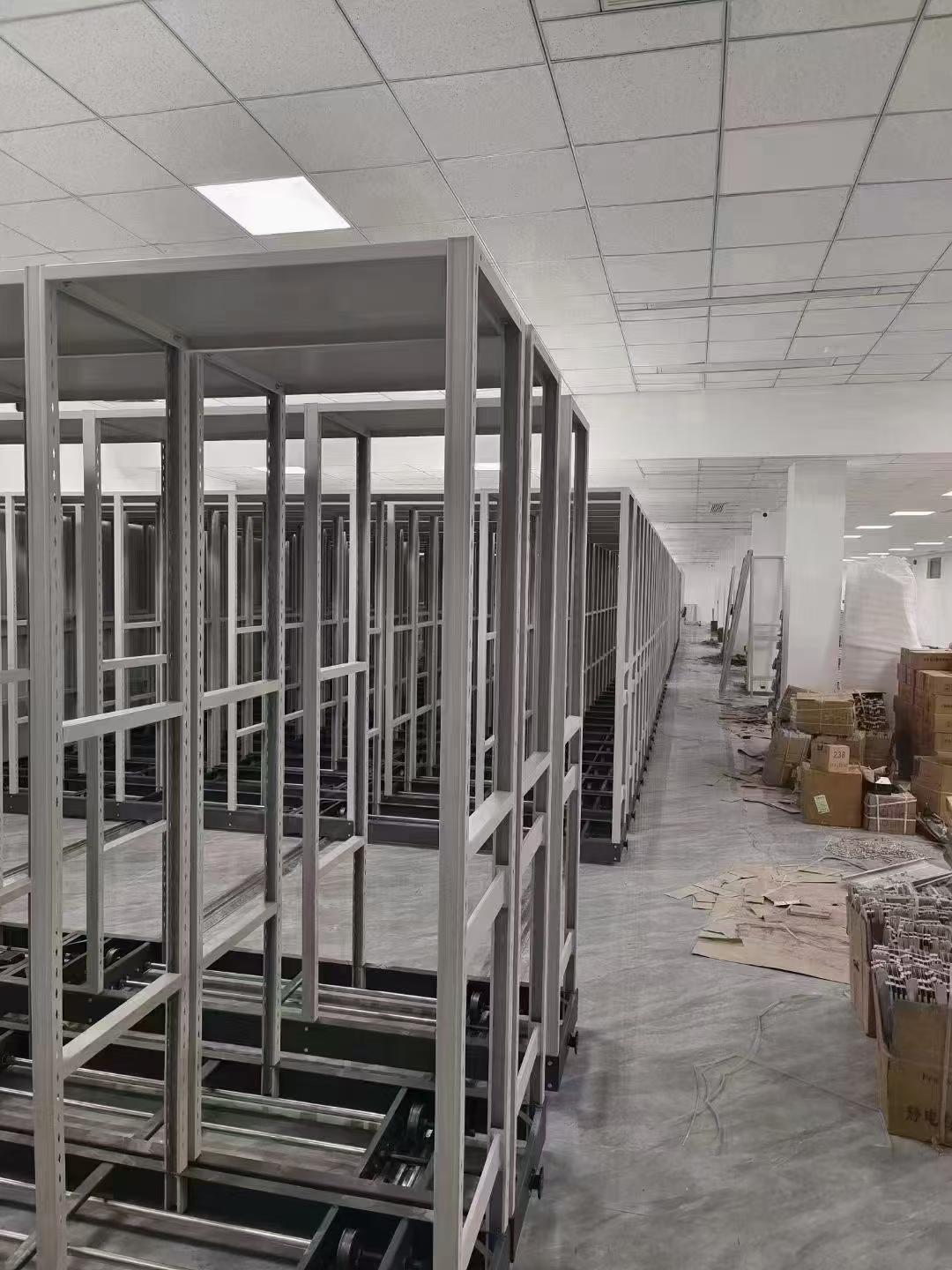
To obtain comparable manual and electric proposals, send suppliers the same information:
Room drawing: dimensions, ceiling height, columns, doors, escape routes and fixed services.
Stored items: file or box dimensions, current quantities and representative loaded weights.
Capacity: usable filing metres or box positions, plus your growth allowance.
Workflow: retrieval frequency, peak simultaneous users and intended operators.
Site information: available structural drawings, floor condition and installation access.
Powered-system requirements: local electrical supply, controls, agreed protective functions and power-loss arrangements.
Delivery and handover: destination, installation responsibilities, training, documentation, warranty and spare-parts support.
Before accepting the system, agree checks for assembly, loaded operation, aisle access, locking and applicable protective functions. Record the approved load limits and obtain operating and maintenance instructions.
07 / Frequently asked questions
Frequently asked questions
Does electric mobile shelving store more than a handwheel system?
Not automatically. With identical usable shelf dimensions and quantities, their filing capacity can be the same. Compare the approved drawings because drive components and required clearances may affect the final arrangement.
Is manual mobile shelving difficult to move when full?
Operating effort depends on the transmission, carriage size, loading, alignment and maintenance. Evaluate a representative loaded configuration and the intended users. An empty display unit cannot establish the effort required for your archive.
Can electric mobile shelving work during a power cut?
It depends on the selected configuration. Some systems may offer backup power or an approved recovery provision; neither should be assumed. Ask the supplier to document access during an outage and the restart procedure.
Can several people use mobile archive shelving at once?
Yes, when the layout and operating arrangements provide suitable simultaneous access. The number of available aisles and independent blocks matters. Changing from handwheel to electric movement alone does not create more open aisles.
Can either system be installed on an existing upper floor?
Possibly, subject to a structural assessment of the proposed fully loaded installation. Provide the engineer with building information, system loads and rail or support details. The appearance of the floor cannot establish suitability.
Which option costs less over its lifetime?
There is no universal answer. Handwheel systems avoid motor and powered-control costs, while powered systems may reduce repeated manual operation. Compare installed costs, realistic use, maintenance, repairs and service availability over the same period.
Plan your archive project
Request a project-specific shelving comparison
Choosing manual vs electric mobile shelving starts with the archive's daily work. A handwheel system may meet the requirement when loaded operation suits the users and retrieval pattern. Powered movement may be worth the additional investment where it addresses frequent movement or specific operator needs.
Ask for both options against the same capacity, layout constraints and handover requirements. This gives your purchasing team a clear basis for evaluating the extra equipment and service scope.
Send a room plan, file or box dimensions, capacity target, access needs and delivery destination.
Explore KAYOU mobile shelving systems.
Sources & project reference
Installation images: KAYOU. Photographs show assembly stages; control functions and commissioning results require separate confirmation.