

Buying steel storage equipment from China is rarely as simple as selecting a rack from a catalogue.
An importer may need a private-label shelving range. A warehouse contractor may already have structural drawings. A distributor may want to modify an existing rack with different dimensions, shelf levels, colors and packaging. A project buyer may need a complete layout designed around pallets, forklifts and site constraints.

These requirements are often described as OEM or ODM, but the terms are used inconsistently. The practical question is not which label sounds better. It is:
Who controls the design, who verifies the technical requirements and what exactly will the factory manufacture?
This guide explains how OEM and ODM steel storage equipment projects normally work, what can be customized and how buyers can reduce risk before mass production.
Quick answer: Choose OEM when you already control the drawings, specifications or proprietary design. Choose ODM when you want to adapt a supplier-developed platform. For many warehouse projects, a hybrid model provides the clearest balance between buyer requirements and supplier engineering.
OEM vs. ODM: The Short Answer
In a typical OEM steel storage equipment project, the buyer provides the product design, drawings, specifications or performance requirements. The factory manufactures according to that approved information.
In a typical ODM warehouse racking project, the supplier starts with an existing product platform or develops a proposed design, then adapts it for the buyer’s market, branding or application.
| Question | OEM | ODM |
|---|---|---|
| Starting point | Buyer’s drawings or specification | Supplier’s existing design or proposed solution |
| Design control | Mainly buyer-led | Mainly supplier-led, with buyer approval |
| Development time | Can be longer for new tooling or validation | Often faster when using a proven platform |
| Buyer responsibility | Provide complete, accurate requirements | Define application, target market and acceptance criteria |
| Typical use | Proprietary products, tender drawings, established brands | New product ranges, distributors and buyers needing design support |
| Main risk | Incomplete or unmanufacturable buyer specification | Assuming a standard design automatically suits every market |
Many projects are hybrids. A buyer may provide the warehouse layout and loading requirements while the supplier designs the rack members. The buyer may select an ODM cabinet body but request OEM doors, locks, colors and packaging.
Define responsibilities in writing instead of relying only on the words OEM or ODM.
What Can Be Customized?
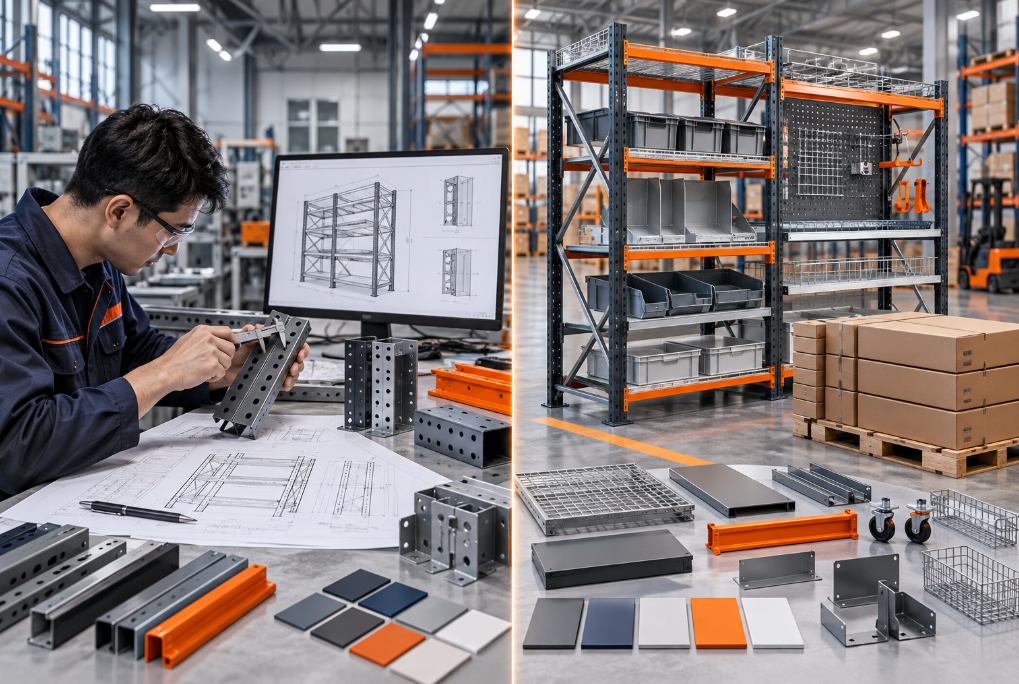
Customization depends on the product, order quantity, tooling and technical review. Common options include:
overall height, width and depth;
number and spacing of shelf or beam levels;
nominal shelf load or pallet load;
upright, beam, shelf and bracing profiles;
steel grade and specified thickness;
solid panels, wire decking, pallet supports or timber panels;
powder-coated or galvanized finish;
color reference and surface texture;
locks, handles, doors, drawer slides and casters;
rack guards, dividers, back mesh and other accessories;
logo, labels, cartons and instruction manuals; and
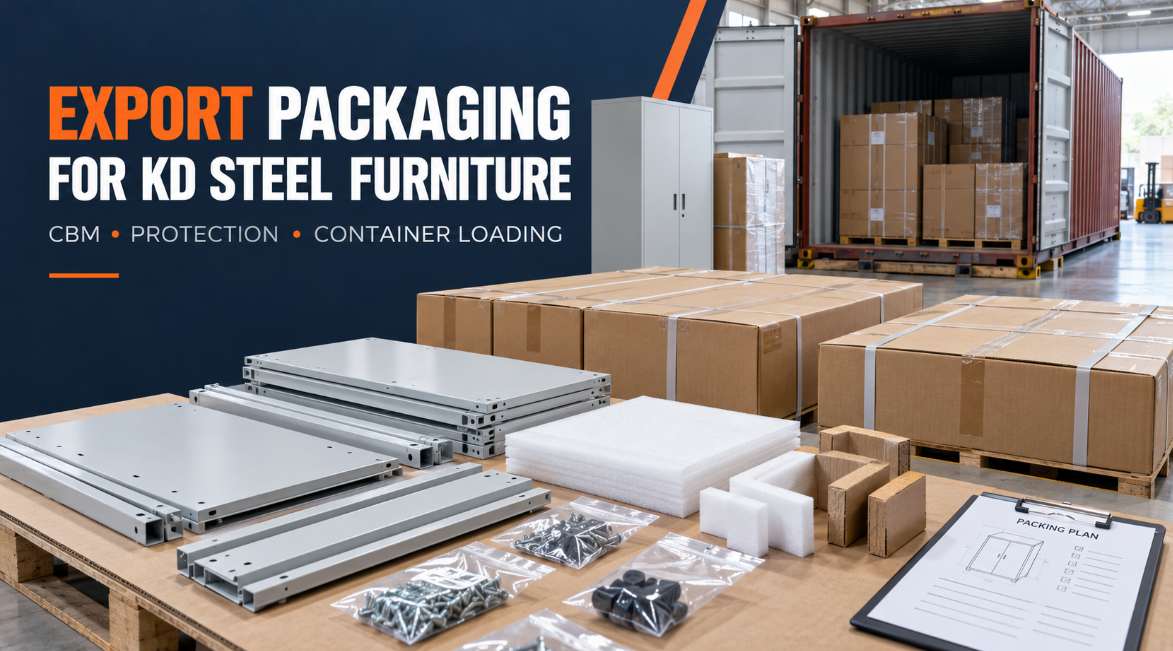
knock-down or assembled export packaging.
KAYOU supplies configurable storage shelving, warehouse racking systems, mobile shelving systems and steel furniture for different B2B applications.
Customization does not mean every requested combination is automatically feasible. Changing a beam span, rack height, shelf spacing or load can change the required member sizes, bracing and anchorage. A logo or color change is primarily commercial; a structural change requires technical confirmation.
Step 1: Define the Application Before Asking for a Price
A useful RFQ explains how the equipment will be used.
For pallet racking, provide:
warehouse plan, clear height and obstructions;
pallet length, width, height and orientation;
maximum total loaded pallet weight, including pallet tare weight;
pallets required across each level;
forklift model, aisle requirement and lift height;
floor information and project location;
required pallet positions; and
applicable codes, permits or engineering documentation.
For shelving or cabinets, provide stored-item dimensions, load per level, access method, door or drawer arrangement, external dimensions, quantity, delivery format and destination.
Use KAYOU’s pallet-racking RFQ checklist to prepare comparable information for each supplier.
Step 2: Convert the Requirement into an Approved Specification
Do not approve a mass order from a product photograph alone.
The final specification should identify:
Product model and revision.
Overall and critical internal dimensions.
Component profiles and steel thicknesses.
Material grade or agreed material requirements.
Load basis and configuration.
Surface preparation, coating and color.
Accessories, fasteners and spare parts.
Labels, branding and packaging.
Inspection and acceptance criteria.
Drawings and documents required before shipment.
For a racking project, approve the layout, elevations and bill of materials together. A capacity stated for one beam pair does not automatically establish the capacity of the upright frame or complete bay.
KAYOU’s guide to reading a pallet rack layout drawing explains how to verify bays, beam levels, aisles and pallet positions before order approval.
Step 3: Prototype, Sample or First-Article Approval
The right approval method depends on risk.
A standard shelving color change may only need a finish sample and signed specification. A new cabinet may need a complete physical sample to check doors, locks, shelf fit and knock-down assembly. A custom structural rack may require drawings, calculations, material documents and component testing rather than a miniature sample.
Before approving the sample, check:
dimensions and tolerances;
material and thickness evidence;
hole pitch, connectors and assembly fit;
weld appearance and critical joints;
coating color, texture and coverage;
function of locks, slides, wheels or electrical parts;
load or performance test requirements;
carton strength, protection and markings; and
differences between the sample and mass-production method.
Record approval with photographs, measurements and a signed sample report. A verbal “looks good” is difficult to use during final inspection.
Step 4: Control Material and Manufacturing Changes
The approved sample is valuable only if production follows the same controlled specification.
Your contract or purchase order should require approval before changing:
steel grade, thickness or supplier;
member profile or reinforcement;
weld design or production method;
coating system or color reference;
locks, slides, motors, sensors or other hardware;
packaging material; or
subcontracted process or factory location.
ISO explains that a quality management system uses documented processes, monitoring and continual improvement to help organizations consistently meet customer and regulatory requirements. Certification can support supplier evaluation, but it does not replace product-specific drawings, inspections or test evidence. ISO also clarifies that ISO develops standards while independent certification bodies perform certification. See the ISO 9000 quality-management overview and ISO certification explanation.
Review KAYOU’s quality-control process when agreeing material, dimensional, welding, coating, assembly and pre-shipment checkpoints.
Step 5: Clarify Branding, Tooling and Intellectual Property
Private-label products need more than a logo file.
Confirm:
trademark spelling, size, color and placement;
whether branding is printed, labeled, laser-marked or embossed;
ownership and storage of paid tooling;
who may use buyer-supplied drawings;
confidentiality obligations;
whether the factory may display the product in catalogues or exhibitions;
ownership of supplier-created drawings and modifications; and
what happens to tooling and files when cooperation ends.
Do not assume an NDA automatically transfers design ownership. Put confidentiality, permitted use, tooling ownership and intellectual-property terms in the manufacturing agreement, and obtain legal advice appropriate to the countries involved.
Step 6: Design Packaging for International Shipping
Steel storage equipment can arrive damaged even when production quality is acceptable. Common risks include coating abrasion, bent panels, lost fasteners, glass breakage, moisture and cartons collapsing under stacking.
Confirm:
knock-down component arrangement;
foam, film, corner and edge protection;
hardware bags and part identification;
carton or crate construction;
palletization and handling marks;
package dimensions, net weight and gross weight;
container-loading method and estimated quantity; and
special wood-packaging or destination requirements.
Compare suppliers using complete delivered specifications, not only EXW unit price. A lighter carton may reduce cost but increase damage claims; an assembled cabinet may simplify installation but use more container space.
OEM or ODM: Which Model Should You Choose?
Choose an OEM route when you already control a proven design, must match a tender specification, need proprietary geometry or want multiple factories quoting the same controlled product.
Choose an ODM route when you need faster market entry, want to adapt an established platform, lack internal product engineering or need a supplier to propose a layout and component configuration.
Use a hybrid model when the buyer controls branding and performance requirements while the supplier develops the manufacturable product. This is common for custom warehouse racks from China.
The best model is the one that makes design responsibility, approval and change control clear.
Ten Questions to Ask a Chinese Rack Manufacturer
Which parts of this project are OEM, ODM or standard catalogue supply?
Who is responsible for structural design and local compliance review?
Which drawings and calculations will be submitted for approval?
What material, thickness and load evidence can be provided?
What is the sample or first-article approval process?
Which production changes require written buyer approval?
Who owns drawings, tooling, branding files and modified designs?
What inspections and test reports will accompany the shipment?
How will spare parts and future expansion compatibility be handled?
What packaging, container loading and installation support are included?
For replacement and expansion planning, see KAYOU’s pallet rack components and spare-parts compatibility guide.
How KAYOU Supports OEM and ODM Storage Projects
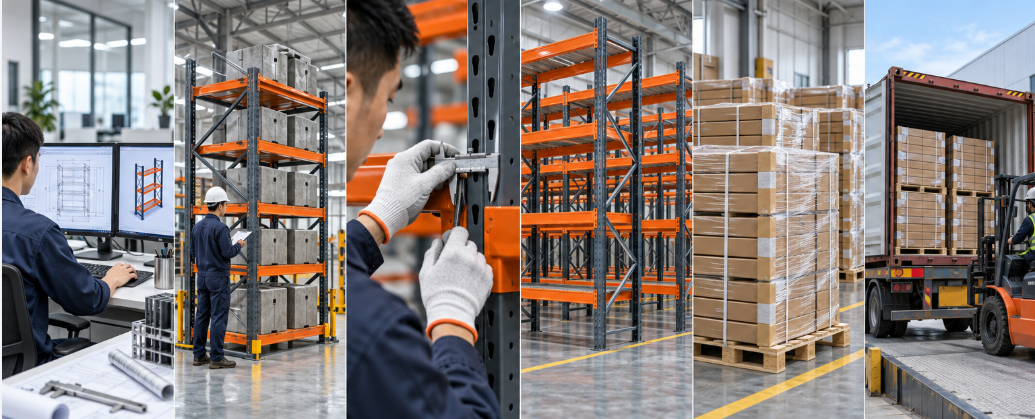
KAYOU works with importers, distributors, contractors and project buyers on configurable steel storage products. The workflow can include requirement review, product or layout proposal, specification confirmation, sample or drawing approval, production, inspection, export packaging and shipping coordination.
For an efficient enquiry, send:
product type or reference image;
required dimensions and quantity;
stored goods and load requirement;
warehouse layout or application;
preferred material, finish and color;
accessories, logo and packaging requirements;
destination country and trade term; and
required standards, tests and documents.
KAYOU will review feasibility and prepare a project-specific proposal. Final specifications, loads, documents, lead time, MOQ and commercial terms remain subject to written confirmation.
Frequently Asked Questions
Is OEM always more expensive than ODM?
Not necessarily. Cost depends on development work, tooling, quantity, material, testing and packaging. ODM may reduce development time, while OEM can be efficient when the buyer provides a mature, production-ready design.
Can KAYOU manufacture racks from our drawings?
Drawings can be reviewed for manufacturing feasibility and quotation. Structural assumptions, loads, interfaces and approval responsibility must be clear before production.
Can we customize color and logo at a low MOQ?
Possibly, but MOQ depends on product, coating batch, printing method, packaging and production setup. Request written confirmation for the exact configuration.
Does a sample prove the rack load capacity?
No. A visual or assembly sample confirms selected features, but structural capacity requires the appropriate design basis, configuration and evidence for the project.
Who owns an ODM design?
Ownership depends on the agreement. Do not assume that paying for development automatically transfers all intellectual-property rights or prevents the supplier from using its pre-existing platform.
What files should buyers keep after delivery?
Keep approved drawings, revision records, specifications, bill of materials, test and inspection documents, manuals, spare-parts information and the original order reference.
Start Your Custom Steel Storage Project
Send KAYOU your drawing, reference product, warehouse layout, load requirement, quantity, branding needs and destination. Our team can help determine whether an OEM, ODM or hybrid approach is most suitable and prepare a project-specific quotation.
For a faster quotation, include the product type, dimensions, load, quantity and destination country.