
Steel Shelving Cost Breakdown: What Changes Your Factory Quote?
KAYOU INSIGHTS / PROCUREMENT & COST PLANNING
Why do similar-looking shelving units come with different prices?
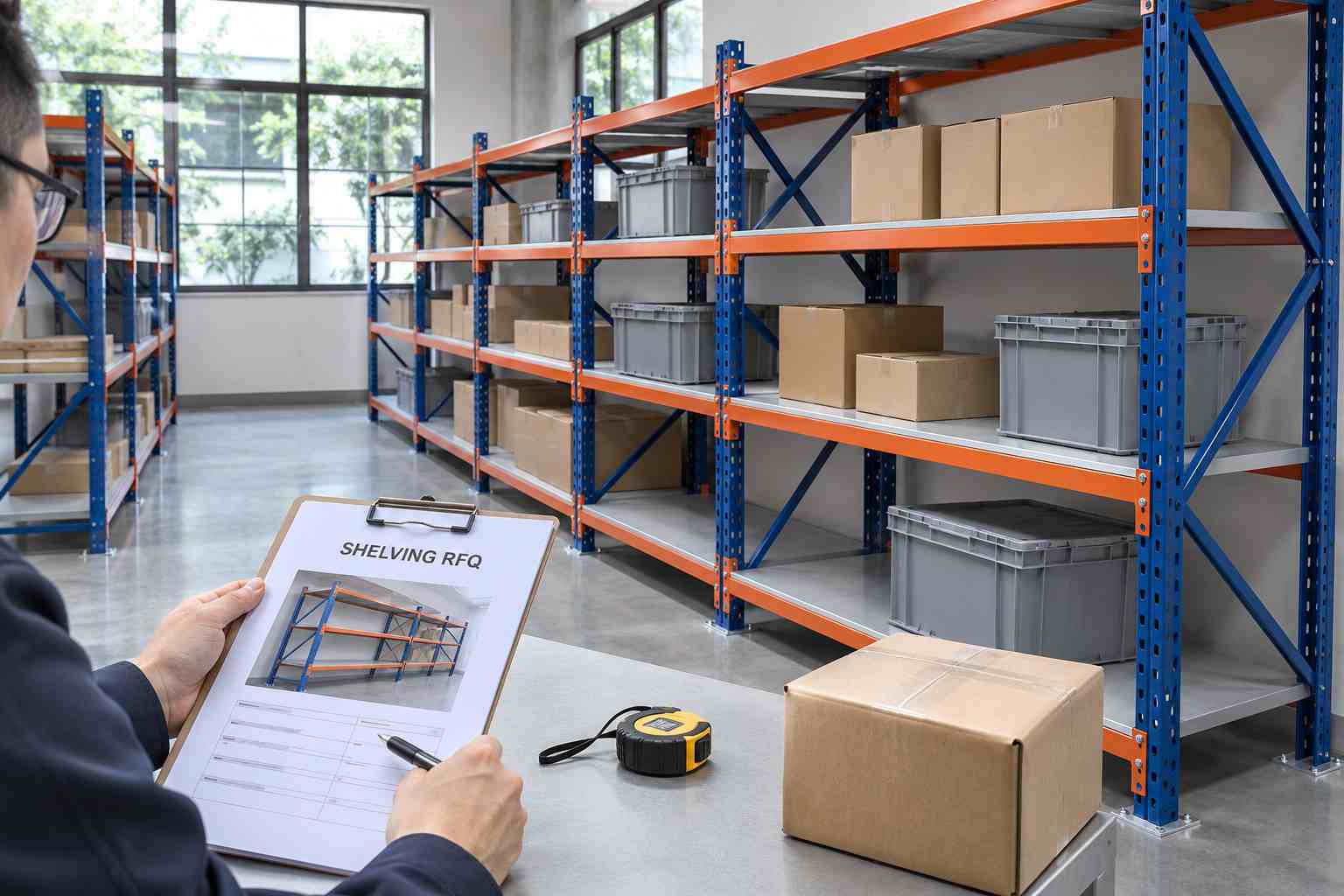
Two suppliers quote steel shelving with the same overall dimensions and number of levels. The photographs look almost identical, yet the prices differ. Before asking either supplier to match the lower offer, check whether both quotations describe the same product and delivery scope.
Steel shelving cost depends on the complete configuration: steel specification, component dimensions, shelf supports, load requirements, surface finish, order quantity, packaging and the services included. A price per “set” does not explain those differences.
This KAYOU guide helps warehouse buyers, importers and distributors compare factory quotations for fixed shelving used to store manually handled cartons, bins, tools and parts.
1. What Is Included in a Steel Shelving Factory Quote?
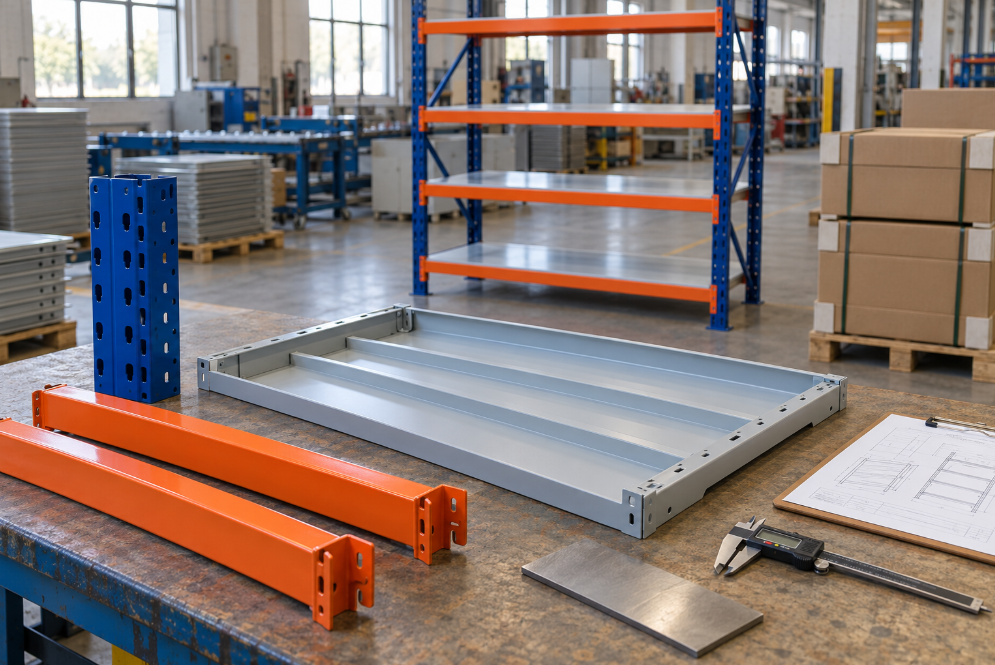
A factory selling price combines materials, production work, finishing, agreed packaging, overhead and the supplier's margin. Testing, customization, transport and installation may be included, excluded or quoted separately. There is no universal percentage breakdown that applies to every shelving order.
You do not need a factory's confidential internal costing to make a useful comparison. You need a clear specification, a component list and a written statement of what the quoted price covers.
| Cost factor | What can differ | What to confirm |
|---|---|---|
| Steel components | Grades, profiles, thicknesses and quantities | Component-level specification and tolerances |
| Shelf construction | Panels, supports and reinforcement | Underside drawing or photographs |
| Load requirements | Permitted loading and complete bay configuration | Applicable ratings and supporting evidence |
| Surface finish | Preparation, coating system and color | Agreed process and intended environment |
| Order setup | Quantity, mixed specifications and custom work | Price breaks, minimum quantities and setup charges |
| Packing and supply scope | Cartons, pallets, documentation and transport | Packing list, inclusions and delivery term |
2. Steel Specification Changes the Material Being Purchased
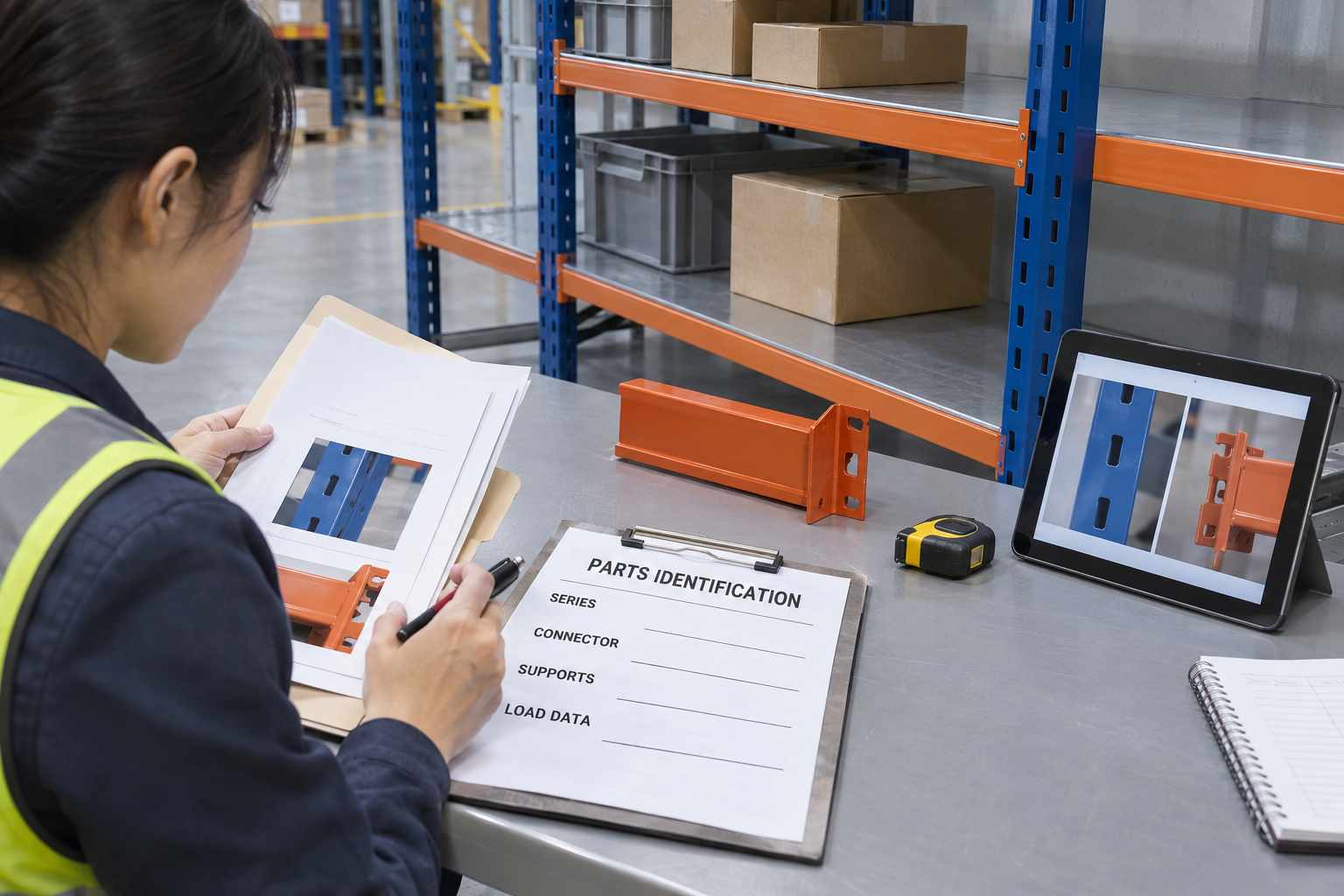
“Steel shelving” does not identify the material specification of its uprights, beams, panels or braces. Ask for the agreed steel grade and thickness of each relevant component rather than one thickness figure for the whole unit.
For the same geometry and material, a thicker component uses more steel. However, total weight alone does not establish product quality or load capacity. Profiles, connections, reinforcement and the complete configuration also matter.
Clarify whether a thickness value refers to the base steel or the coated component, and agree how it will be checked. KAYOU's steel thickness verification guide explains the purchasing checks.
3. Shelf Size, Supports and Load Conditions Must Match
A wider or deeper shelf changes the amount of material and may require a different support arrangement. Increasing the number of levels adds components, but it does not automatically increase the permitted total bay load.
Published manufacturer guidance illustrates why configuration matters: Lyon's shelf capacity document distinguishes shelf sizes and specifications and considers loaded shelf count, shelf loads and spacing when assessing posts.[1] Those ratings apply to Lyon's documented systems, not to KAYOU products.
Also distinguish a uniformly distributed load from weight resting on small feet or runners. MHI's Storage Manufacturers Association defines these as different loading conditions.[2] A matching total weight is not enough to establish equivalent performance.
Ask suppliers to identify the per-level rating, total bay limit and configuration covered by the evidence. Read the steel shelving load capacity guide before comparing “heavy duty” claims.
4. Starter Bays and Add-On Bays Are Different Purchases
A standalone bay and an add-on bay may have similar storage openings while containing different quantities of structural components. Some connected systems share frames between adjacent bays; their add-on units cannot stand independently. Lyon, for example, explicitly requires its referenced bulk-storage add-on to connect to a starter.[3]
Illustrative component comparison: five independent bays, each with two frames, require ten frames. A compatible five-bay row using one shared frame at each internal boundary requires six. This example explains a quantity difference; it is not a layout recommendation or a capacity assessment.
Compare the complete row drawing and bill of materials. Confirm frames, beams, panels, supports, braces, connectors and specified fixings. The cheapest price per bay may simply describe a different component package.
For related selection questions, see boltless vs. longspan shelving.
5. Finishing, Customization and Batch Size Affect the Offer
The phrase “powder coated” does not fully define the finishing requirement. Record the agreed surface preparation, coating system, color and any inspection requirements. Tell the supplier about humidity, outdoor exposure or cleaning conditions so the proposed finish can be reviewed for the actual environment.
Custom dimensions, special hole patterns, unusual colors, branding and retail packaging can introduce additional production or preparation work. Ask which requirements use existing components and which need new tooling, samples or setup.
Order quantity and the mix of sizes also affect how production is organized. Request quantity-based offers against one specification, then compare the total commitment. A lower unit price on a larger order can still mean more cash tied up in inventory.
6. Packaging and Delivery Terms Change the Cost You Compare
Ask whether the offer includes cartons, edge protection, hardware packs, palletization, labels and assembly instructions. Request package quantities, dimensions, gross weights and any handling restrictions before estimating freight or container loading.
Do not assume that a visually compact package will produce a particular container quantity. The complete packing and loading arrangement must be checked.
Compare quotations under the same delivery term and named place or port. Under EXW, loading and onward transport are generally the buyer's responsibility; ICC Academy's explanation also identifies the importance of specifying the exact delivery location.[4] Confirm any separately agreed services in writing.
Compare total procurement cost: start with the quoted goods and add only costs not already included—transport, applicable import charges, local delivery, assembly and installation. Keep recoverable taxes separate where relevant, and avoid counting the same charge twice.
7. How to Compare Two Shelving Quotes Fairly
Use one comparison sheet and mark every unresolved field. “Not specified” is a question to resolve; it is not evidence that the cheaper supplier omitted the item.
| Comparison point | Information both offers should show |
|---|---|
| Storage arrangement | Overall size, usable openings, levels and row layout |
| Loading | Per-level rating, bay limit, loading pattern and applicable configuration |
| Components | Materials, thicknesses, supports, connections and component quantities |
| Finish | Agreed treatment, color and intended operating environment |
| Evidence | Drawing revision, relevant load information, inspection scope and instructions |
| Commercial scope | Quantity, currency, quote validity, lead time, packing, delivery term and exclusions |
Where a test report is supplied, check the model, dimensions, components and loading arrangement it covers. A general certificate or a report for another model does not resolve a configuration difference.
8. Reduce Cost by Simplifying the Order
Ask suppliers to price practical alternatives: fewer size variants, a standard color, an agreed shared-frame layout where suitable, or different packaging options. Compare each proposal against the same storage and handling needs.
Changes to material thickness, supports, connections or fixings require review against the intended configuration. Keep them visible as revised specifications rather than accepting an unexplained “same product, lower price” offer.
The useful saving is a lower cost for a clearly defined, suitable storage arrangement. A cheaper unit that changes usable space, assembly work or the supply scope needs a fresh comparison.
Frequently Asked Questions
Does a heavier shelving unit always represent better value?
No. Weight can help identify a specification difference, but value also depends on usable dimensions, verified loading, construction, finish and delivery scope. Compare the complete system.
Can a supplier quote accurately from a photograph?
A photograph can start the discussion. A comparable quotation also needs dimensions, loading requirements, level quantities, a component specification and the order scope.
Why can a repeat-order price change?
Ask whether material purchasing conditions, quantity, specifications, currency assumptions, packaging or delivery services have changed. Check the earlier quote's validity and compare both offers line by line.
Sources and Scope
Lyon: 8000 Series Shelf Loading Capacities — manufacturer example of configuration-dependent ratings.
MHI / Storage Manufacturers Association: FAQs — definitions of distributed and concentrated loads.
Lyon: Bulk Storage Rack Add-On with Solid Decking — example of a dependent add-on configuration.
ICC Academy: DDP & EXW Incoterms® 2020 Explained — delivery location and allocation of responsibilities.
This article explains purchasing considerations, not a universal price list. Manufacturer examples do not establish KAYOU product ratings. Confirm the final configuration, documentation and commercial terms for the actual order.
REQUEST A COMPARABLE SHELVING QUOTE
Discuss Your Steel Shelving Requirements with KAYOU
Explore KAYOU steel storage shelving or review an adjustable metal shelving configuration for your next order.
Send your required width, depth, height, shelf levels, maximum load and loading pattern, quantity and destination. Include a layout or reference photograph and tell us which packing and documentation options you need.
Contact KAYOU for a Quote Chat on WhatsApp
WhatsApp: +86 158 3799 8881 | B2B supply | OEM / ODM enquiries